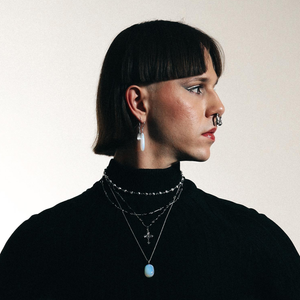
Bianca Sturchio & riel Sturchio
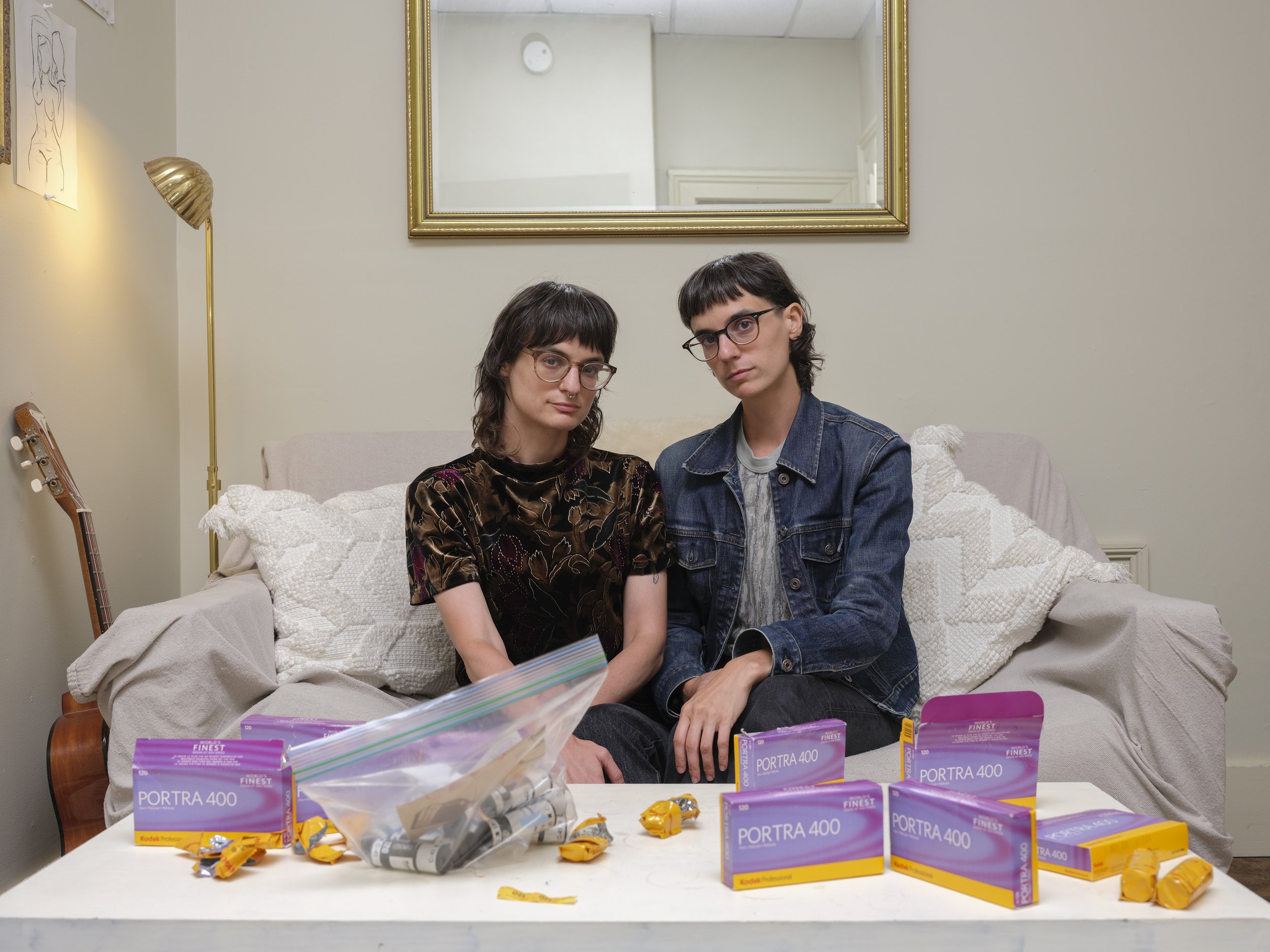
Photographers Bianca Sturchio & riel Sturchio won the Film Photo Award in 2023. Jack Fox, Bianca and riel catch up on their work.


© Bianca Sturchio & riel Sturchio
Jack Fox: What initially interested you in photography and what keeps you working in this medium? Why film? Being twins, I'm curious if you began photography around the same time.
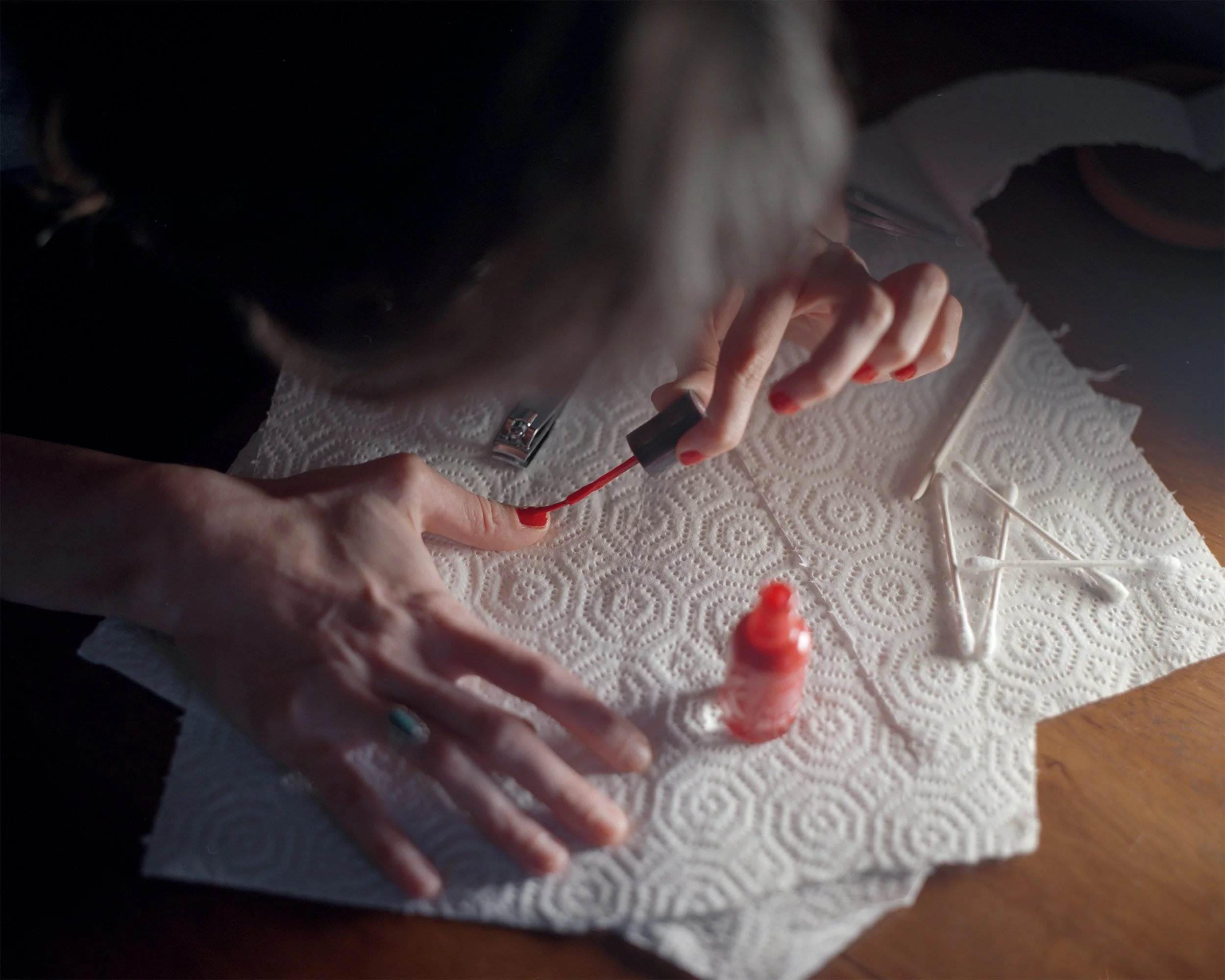
riel Sturchio: Bianca actually started making pictures before I did. My interest grew out of the foundation of being able to access the darkroom differently. I was really interested in being able to, one, collaborate with my sister. It was a way of world-building creatively. We often were in locations where there weren’t a ton of kids our age. Just being younger and having a really creative mind, being able to use the camera to world-build and collaborate, and see myself reflected through that felt really meaningful to me.
Being in the darkroom is still magical to me. Watching something come out of nothing feels dreamy. I find that whole process enchanting, and it’s really nice being able to put my phone away and just designate some time and focus and attention to making images appear in trays of chemistry. There are so few times in life when you have the opportunity to intentionally detach from your phone and have an embodied practice. For me, a lot of photography is about collaboration and embodied practice. Film represents that in a tangible way, where I get to hold what I have made and physically feel the passage of time in my hands.

Bianca Sturchio: I was initially drawn to photography as a way to distill my surroundings into something I could reflect on and return to, which I found deeply compelling. Although it was an early interest of mine, starting around the same time riel began photographing, I stepped away from it due to physical inaccessibility.
This project has allowed me to reconnect with that original interest in a way that feels both meaningful and accessible, particularly through collaboration with my sister. I also share riel’s perspective on photography’s ability to anchor one in the present moment. Working with film, in particular, requires a level of intentionality and attentiveness that differs from using a phone. It demands presence, both in how time is spent and in how care and attention are given to the subject, which is something I find especially compelling.
JF: riel, you had mentioned that, when the both of you were growing up, you weren't around a lot of kids your age. I'm just curious why that is?
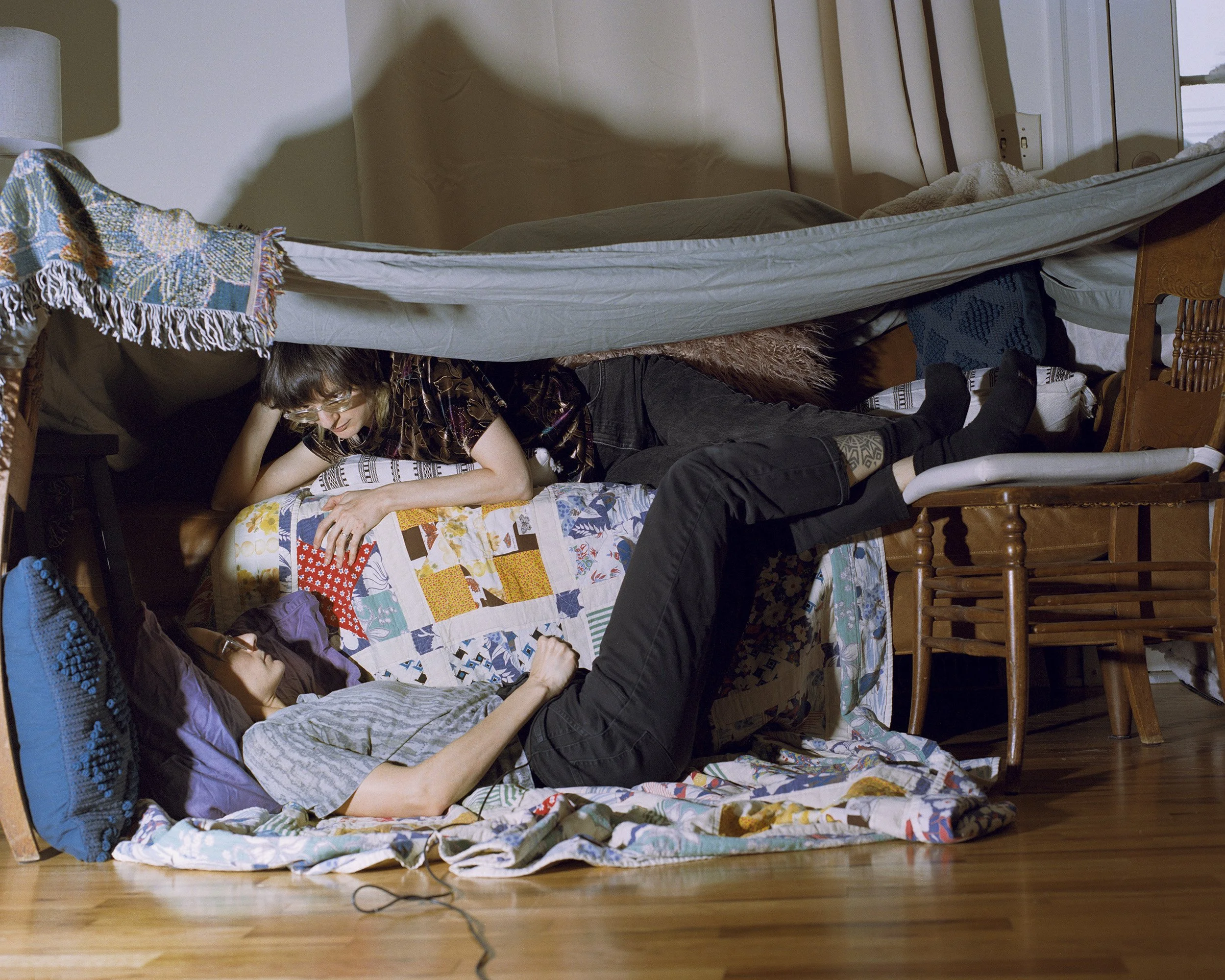
RS: We moved around a lot and we were often in areas on the outskirts of a city or more of a business or industrial zone. We were in the boonies in Maine and basically a back country before that area was gentrified. We lived in northern Maine for a while in the capital and those areas that we lived in were middle-class or sometimes lower than that. By extension, there weren't a lot of young families around. There were a lot of older families or couples who owned houses. Um. A lot of our childhood was just Bianca and I world building, making forts, looking at bugs, and just being in a shared curiosity for the world.
BS: When we were teenagers, we didn’t have access to a vehicle, which limited our ability to socialize in the same ways as our peers. That lack of mobility was isolating at times, but it also meant we spent a great deal of time together and had to find creative ways to engage with one another. Photography became one of those outlets. We became each other’s canvases and, throughout high school, each other’s subjects, often by necessity. Whether we intended it or not, nearly every project involved the two of us, which shaped both our creative process and our relationship.
JF: How does your siblinghood aid in navigating your individual practices?
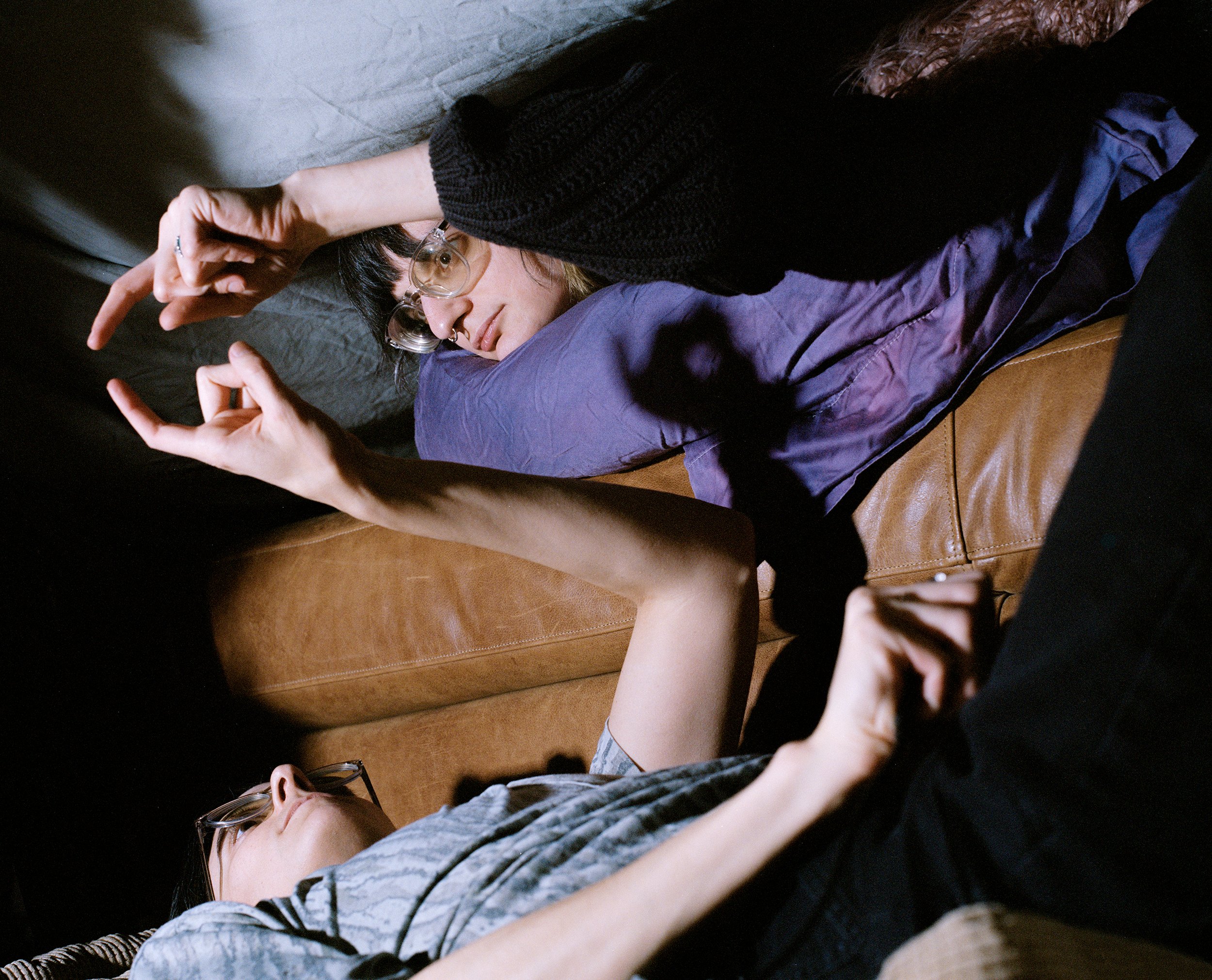
RS: Bianca is a trained social worker, so she comes to our collaboration not only from a social standpoint, or a social justice–oriented lens, but also with a kind of naivety that I find really refreshing. I’m trained with two degrees in photography. I teach photography. My world really kind of circumnavigates around photography—teaching visual media, thinking about visibility, the freedom of photography, and also the surveillance and harm that can exist within it. So I’m thinking about the medium conceptually and theoretically, about the canon. I have this backlog of information of the greats, of whose stories were left out, of what has already been done.
With Bianca’s perspective, because she doesn’t have that robust of a framework—and because that isn’t necessarily her interest—she comes to our collaboration with ideas that aren’t being judged against what’s already been done. And that is so refreshing. She’ll have an idea that, when I first hear it, I’ll be like, oh God, five hundred other people have already made this picture.
B cuts in: But then I’m like, who cares? Let’s do it anyway.
riel continues: We make the picture, and nine times out of ten, her ideas are the ones we go with. They’re brilliant. She has this ability to have a beginner’s mind, which I really appreciate and can borrow from and lean on. I have the technical skill to make it happen, and that feels really special because together we can lock in and make some really fun, collaborative pictures.
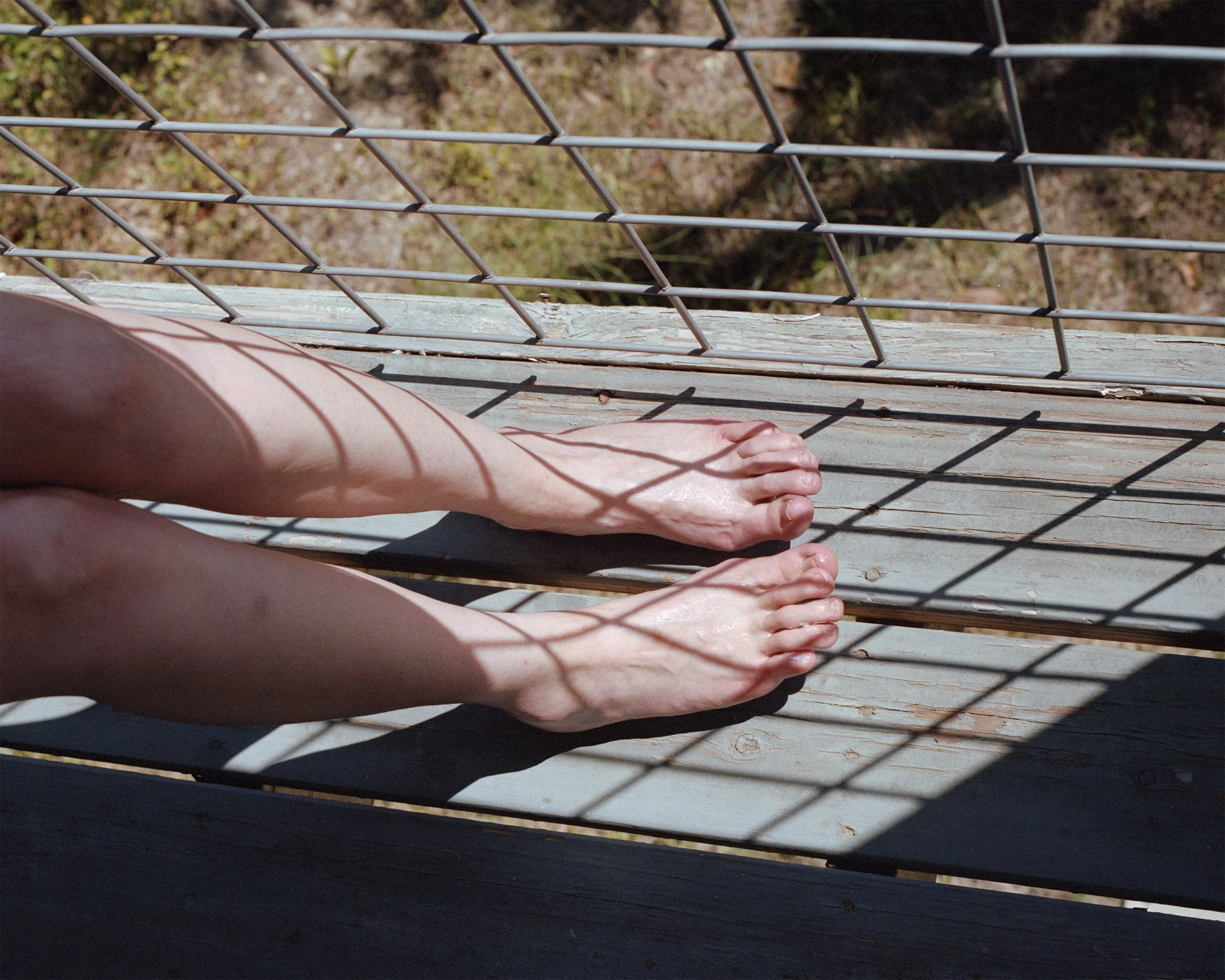
A lot of that comes down to our connection and the trust we’ve built with one another. We have a very nonlinear practice. We had a pretty rocky start, where I was photographing Bianca in a way that was very voyeuristic of her life and her circumstances, without turning the lens back on myself. There was a dynamic that was disproportional to what our relationship actually looked like in real life, in terms of the level of care and intention we have with each other. That was a hard lesson in learning how photography can be used in a damaging way—used in a way that was incongruent with how I wanted to use photography, which was to establish connection with other people and to share my lived experience and what I was witnessing at the time.
What ended up happening was that I was making pictures that put Bianca in a position of not having a voice, and our trust was broken because of that process. It took a lot of work—trust, collaboration, and active conversations—around questions like: what is the use of the camera? What does visibility look like when it’s shared? How can we deconstruct existing models and think about shared agency? Our siblinghood is a direct link to how we’ve been able to do that.

BS: riel’s intentions were always positive; however, the impact did not fully align with my experience, which is where a rift emerged. It was only through honest, open dialogue about those moments that we were able to move forward, both in the development of this project and in our relationship. Without that level of transparency, we would not have the momentum or the solid foundation necessary to continue building together.
RS: We had some hard lessons, me in particular. And I just say that to be transparent, yes, we're collaborating now, but it wasn't always a collaboration. If we didn't have the foundation of our relationship and being twins and being very connected to one another— we wouldn't have had the kind of courage or bravery to have those conversations with each other.
JF: You won the FPA with a collaborative project for Before the Last Lilac Blooms, which examines your identities through queerness, illness, and disability. The project spans over a decade. What did you learn about yourselves and your identity through making this work?
RS: Communication is essential. That's something that we knew but that was definitely put to the test. I think about the practicality of making photos and trying to do that when one of us has an idea that hasn't actually been fully verbalized. And the other one is trying to figure out how to make it happen. But we are assuming that one another knows what our intention is and what our vision is. Usually, if we don't speak about it openly, we miss the mark with each other. We are not good at reading each other's minds, although that'd be really cool. Twin-tuition is a thing, but not in collaboration. We try to be as open as possible and as clear as possible when we're communicating. Because if we don't, I feel like we set ourselves up for expectations that are not met, because we have not had that conversation.
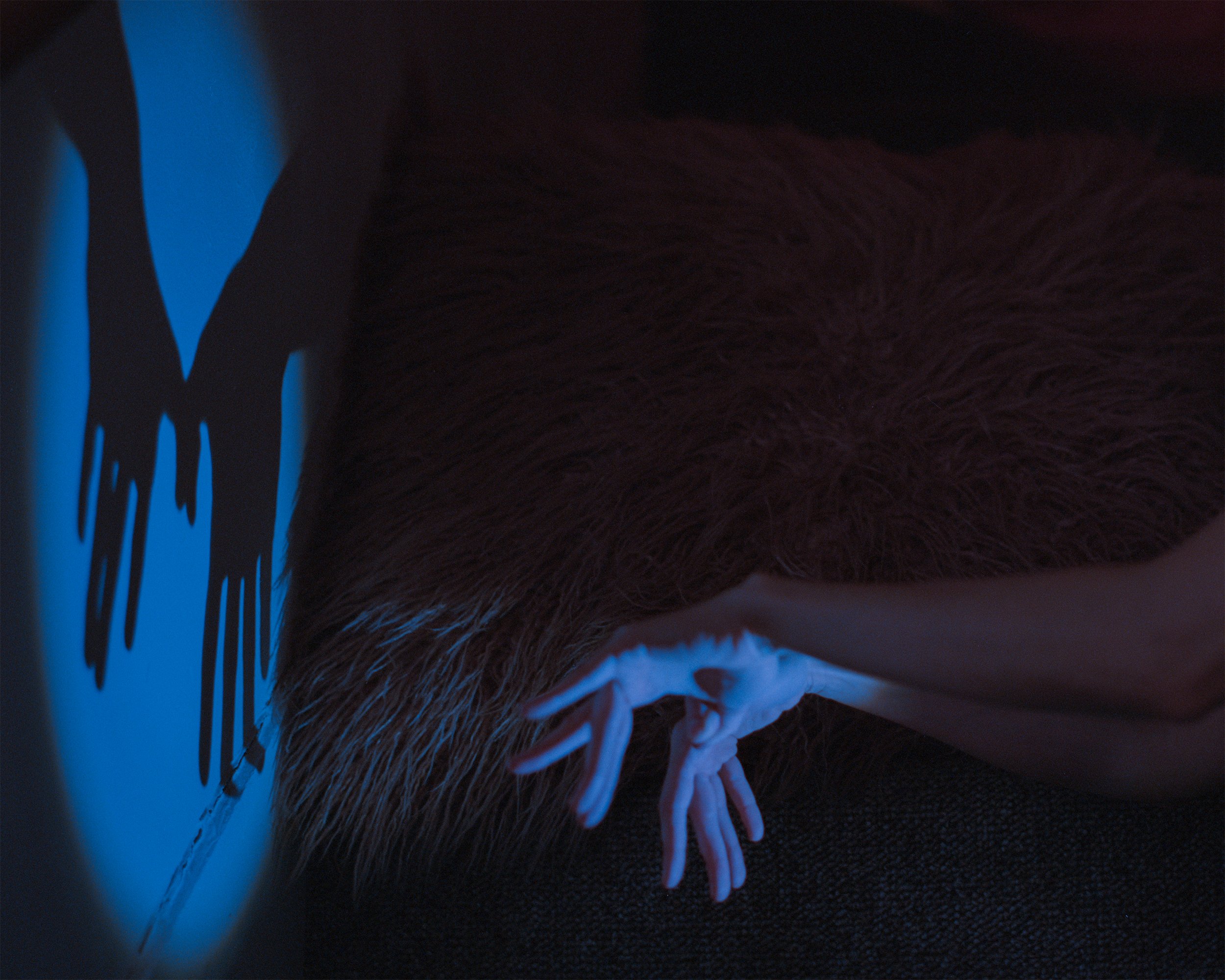
BS: I’m physically disabled, and using the camera allows me to step outside of how that identity is immediately perceived. In everyday interactions, my disability is often the first thing people notice, particularly when I am in motion. In a static image, however, that is not necessarily the first point of focus. That shift is deeply liberating and offers a sense of peace and comfort that I don’t often experience in my day-to-day life, or at least not in the same way.
At the same time, I want to be clear that I am comfortable with my disability and do not seek to hide or minimize it. What feels meaningful is having the choice. The ability to control when and how my disability is visible is not something I am afforded on a daily basis, and photography offers that agency.

RS: We use the camera in opposite ways. My disabilities don't show as visibly as Bianca's do. I'm often using the camera to reveal hidden aspects of my identity that are easy to conceal. Whereas Bianca is using the camera as an objective or as a mechanism for intentionally concealing or reimagining. I find that to be a really exciting dichotomy, how we're using the camera together for the same kind of effect, but in different ways and within the same frame sometimes.
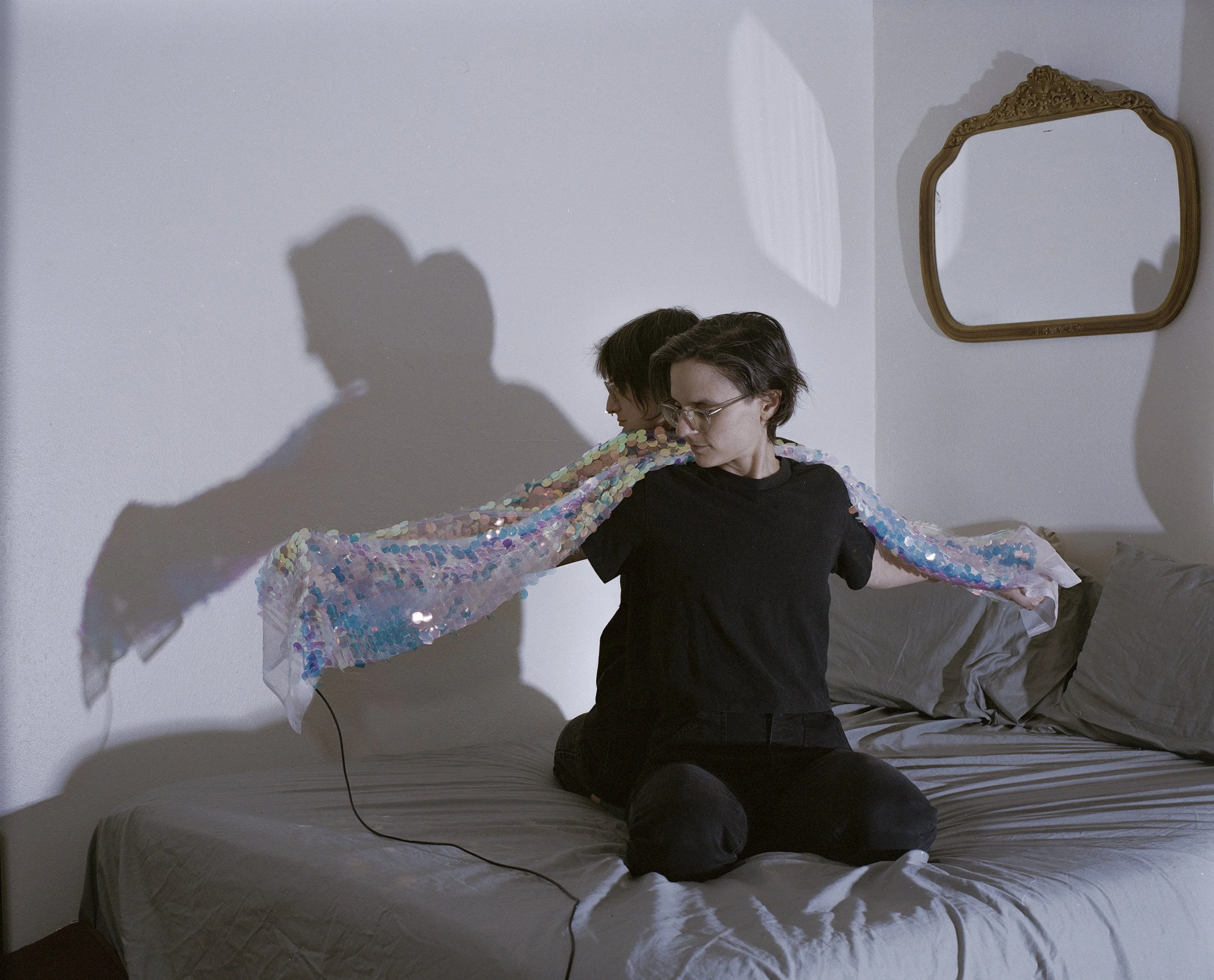
The cameras also allowed me to explore my gender in a way that's more expansive. Bianca and I are fairly academic people and we love theory and we are often pulling from Jose Esteban Munoz's Cruising Utopia and the idea of possibility and potentiality–using the frame as an arena for possibility and potential, as a place for dreaming, as a place for holding each other, and as a place to construct representations of the truth, but also representations of fantasy and play. That has been a place for me to also explore my queer identity and to be able to hold my body in space in ways that either I wish to be held by someone else or ways that allow me to visualize myself as if I were someone else in the room looking at me. Something that's amazing about photography is that it gives you the ability to see yourself in the ways that others see you in ways that mirrors and selfies don't. There's something special to me about the way that film can be a site for self-possession.
JF: You mentioned earlier that originally this was not a collaboration and it was more Bianca in front of the camera. Was it challenging to put yourself in front of the camera and change the dynamic of authorship?
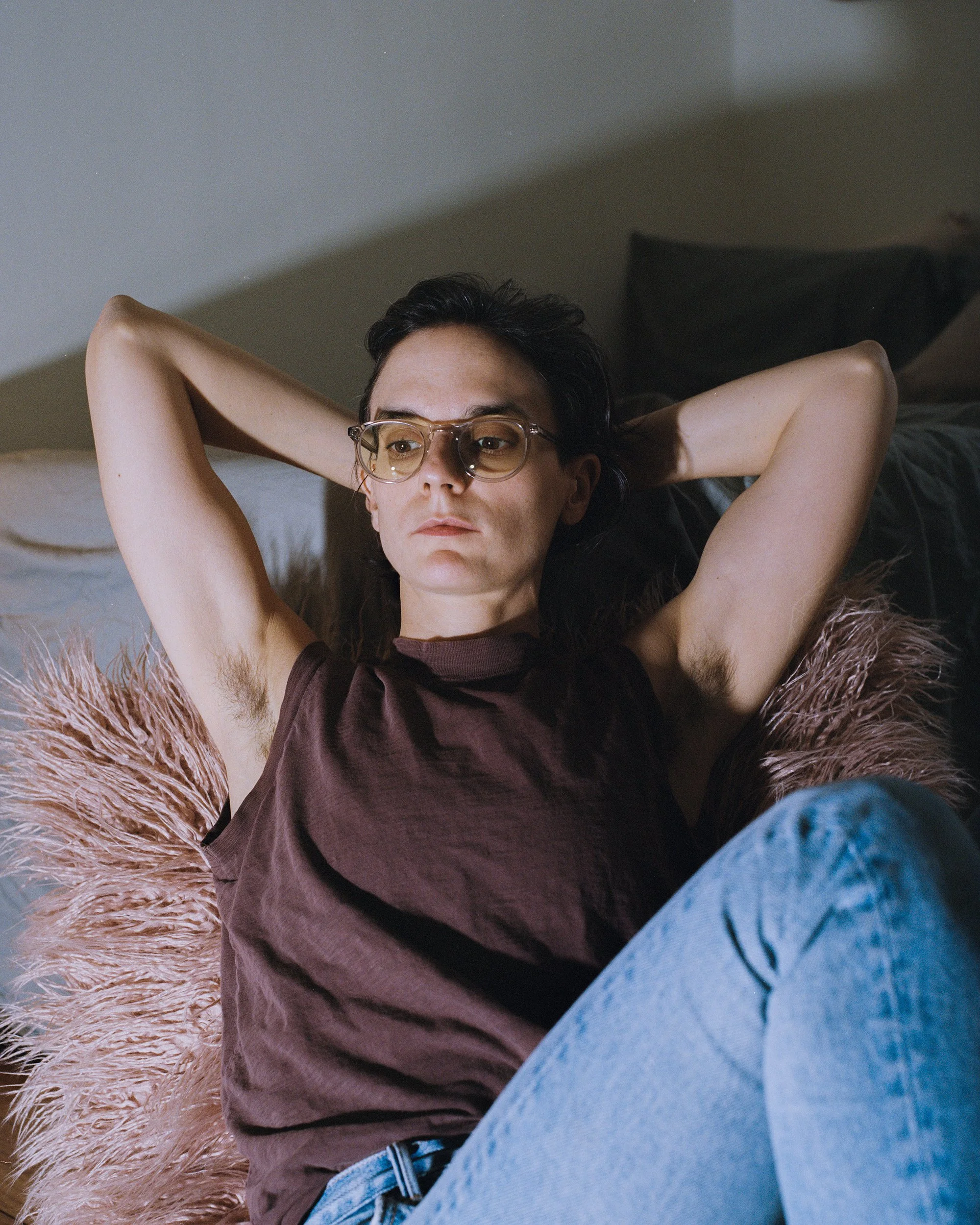
RS: After you've been behind the camera a lot, it's pretty scary to be in front of it. I had a, I don't want to say rude awakening but I was kind of like, 'Sure, I'll do it.' and then I realized that it's really hard. In art school, we were each other's models all the time. So I had a lot of practice being in front of the camera. With Bianca, it was just different because she really knows me, so I feel like I was really being seen. It was scary and it took a lot of practice and we still practice it.
Bianca photographs really well. She knows how to work her face. Oftentimes we'll be working and she'll be like, "You can't make straight on photos of you, it doesn't do the job.” There's definitely a learning curve. It was one of those things where I felt kind of timid and I was like, 'Oh God.' Then afterward, I was like, 'Wow, that felt really good.' I felt a little brave. It did something for me. This is a process that took years.
JF: I think working through that discomfort in such an intimate way seems like it would really inform your practice as to how you approach a subject once you have those experiences.
RS: Absolutely. Something that was really important was that I was asking Bianca to be very vulnerable in front of the camera. I wanted to also be able to do that.
JF: Do you see yourselves ever stopping this project? It seems to me that this project could span a lifetime in many different forms as you change and grow.
BS: I don’t want to stop the project, though I will acknowledge that I’m often the first to feel discouraged or consider stepping away. Those moments tend to come from my focusing on the immediate challenges rather than the larger context of the work. When I step back and consider the scope of what we’ve created - the hundreds, if not thousands, of photographs we’ve made over time, I’m reminded of how meaningful and beautiful the collection truly is.
Revisiting the photographs allows us to remember specific moments in our lives: who we were with, what our lives looked like at the time, what we were focused on, and what our hopes and dreams were. Seeing how those elements shift across images - whether from year to year or across longer spans of time - adds a powerful sense of continuity and change to the work.
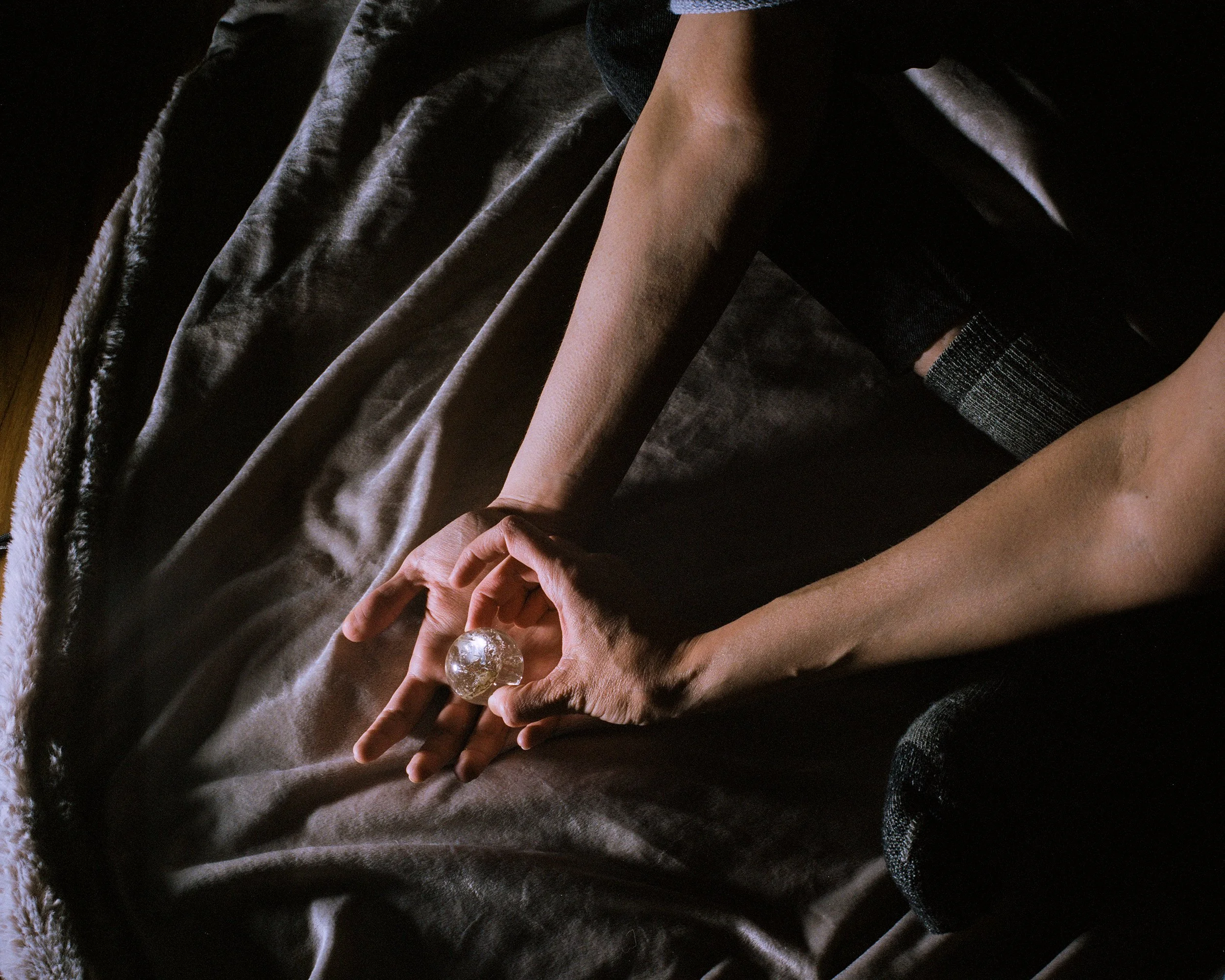
I also deeply value the intentional time riel and I spend together through this project. We no longer live in the same state, and while we once shared everyday moments like walking to each other’s houses, watching movies, spending time casually…that is no longer possible. Dedicating our time together to this project has strengthened our bond and allowed us to understand one another in a more layered and nuanced way. As we’ve changed and grown over the years, the project has created space for relearning each other as our perspectives evolve and our self-understanding deepens.
RS: We spent last summer at Light Work. We were able to spend an entire month there working on our book. We found all of our raw files for the top 150 or so pictures. We've been trying to make a book for six years now. We were like, 'What if we just scrapped everything we've ever done and started over?' And it was remarkable. We got to a point where I feel pretty comfortable with our edit. We probably need to take some pictures out, but we've made a lot of the pictures that we need.
Just to be transparent about the project, we haven't made pictures since last summer. It's been a full year and change of not making pictures, but intentionally so. Right now the project's on pause, but it's definitely a project that I want to keep putting energy towards as we grow and change, because the passing of time is really cool in the project and we're both starting to get silver hair and wrinkles and aging is happening. The youngest picture we have in there is one of us at around 18. We're getting close to 20 years of working on this project.
JF: Are you self-publishing? Where are you in the process?
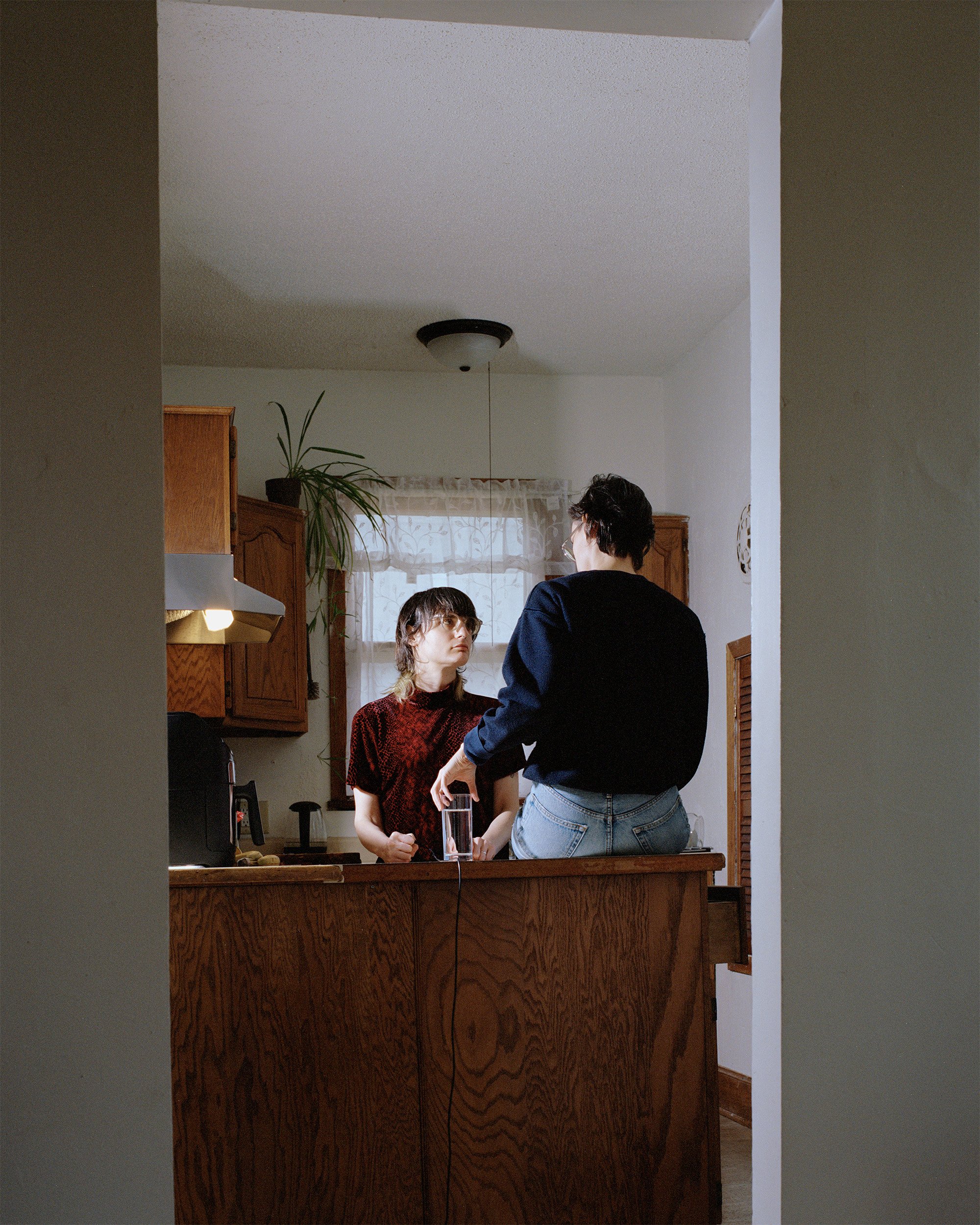
BS: Publishing is currently at a standstill. While it remains a shared goal to be published by an external publisher, pursuing that path requires financial resources that we are still in the process of securing.
RS: We've been fielding the book around for a while and we've spoken to a lot of people and there's been a lot of ‘Wow, your project's really important, your photos are amazing.’ But I don't think that a project about queer siblinghood that touches on disability in the 90s is a super sexy subject right now. It's a fairly diaristic project, but it does have a large audience. Anyone who grew up in the 90s, I think, could appreciate the book. The book spans a few decades. There are also these vignette text passages that are the only linear strings through the book. The pictures, they come and go. They're from different timelines, different locations. The images use a different kind of logic than the text does. The text is more or less a timeline that's told from an omnipresent perspective that is a blend of both Bianca's voice and my voice. Through it, we are asking important questions about visibility and identity. But I digress–we don't have a publisher right now. We're looking for a publisher!
JF: How has the awarded film shifted your approach to this project?
RS: We use the film to make a bunch of pictures with a synced flash. We were using a Profoto B10 kit, though I would say 95% of our pictures are made with natural light, out in the wilderness or in a domestic space that has beautiful light in it. We started using flash as a way to think more about performance and how light can be used as a constructive tool. We’re playing around with shadows and the images look pretty different. It allowed us to make pictures that were more staged and had a little bit more theater to them.
JF: Yeah, I feel like off-camera flash really lends itself to world building the sort of fantastical mode you're often working in. riel, I've been fascinated by a line in your artist bio. “They're interested in how their body is forced into disorientation through disease and use this disoriented perspective as a foundation for active witnessing rituals.” I’d just love to hear more about this.
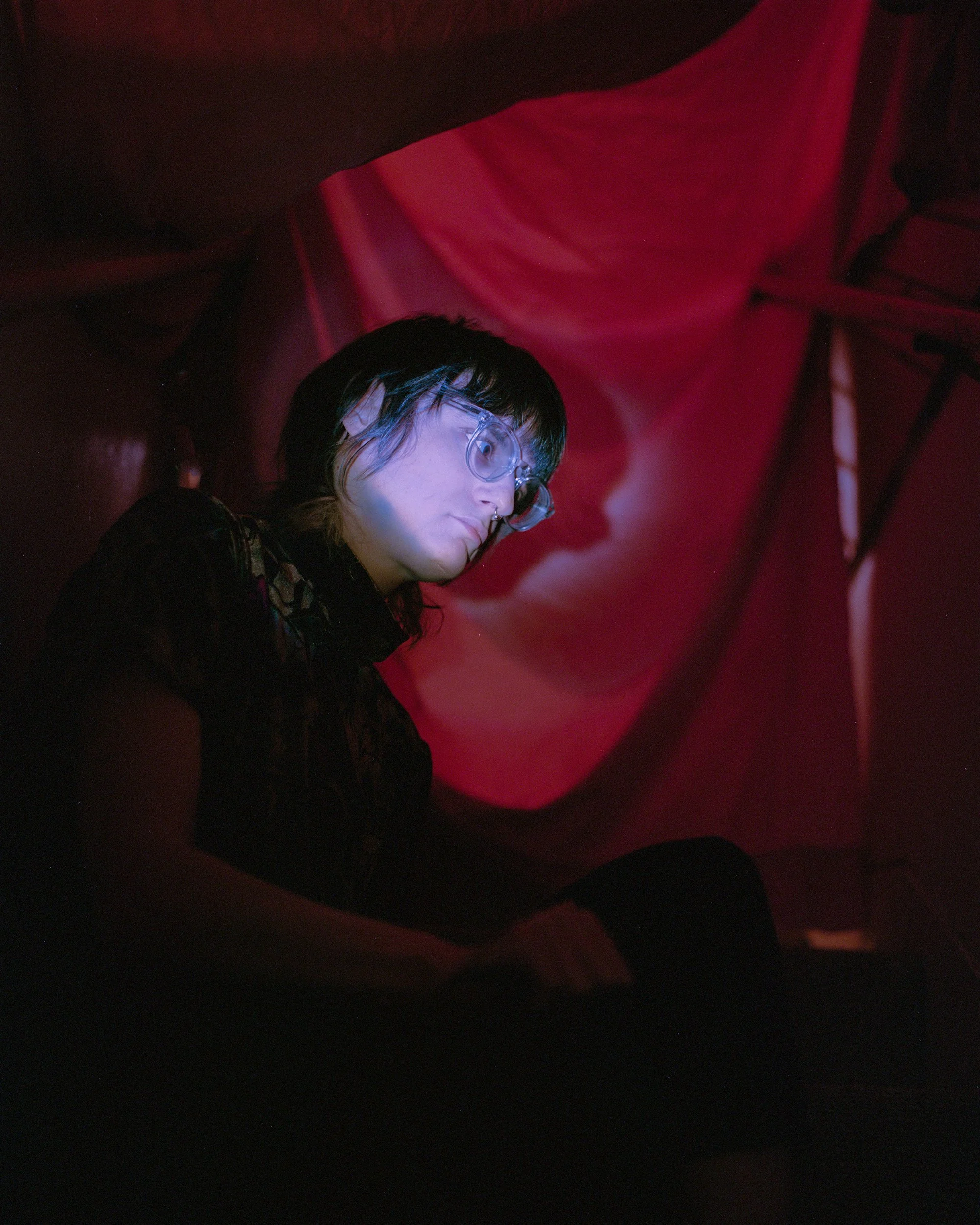
RS: I've been using this idea of active witnessing rituals as a way to talk about what it means to collaboratively and intentionally look at one another in a space. Disease, chronic illness and disability have this interesting way of reorganizing time and space, often known as crip time. Crip time is a kind of time that exists in a non-linear form where the expected routines of the day no longer fit within a disability framework. The disabled body is rarely on time, because of flare-ups, because of the way that the world is built very inaccessibly. So within that is a slowing down. It's like a real slowing down. Because a disabled body often does not move through the world in an expected way, nor in a way that is necessarily on time with everyone else.
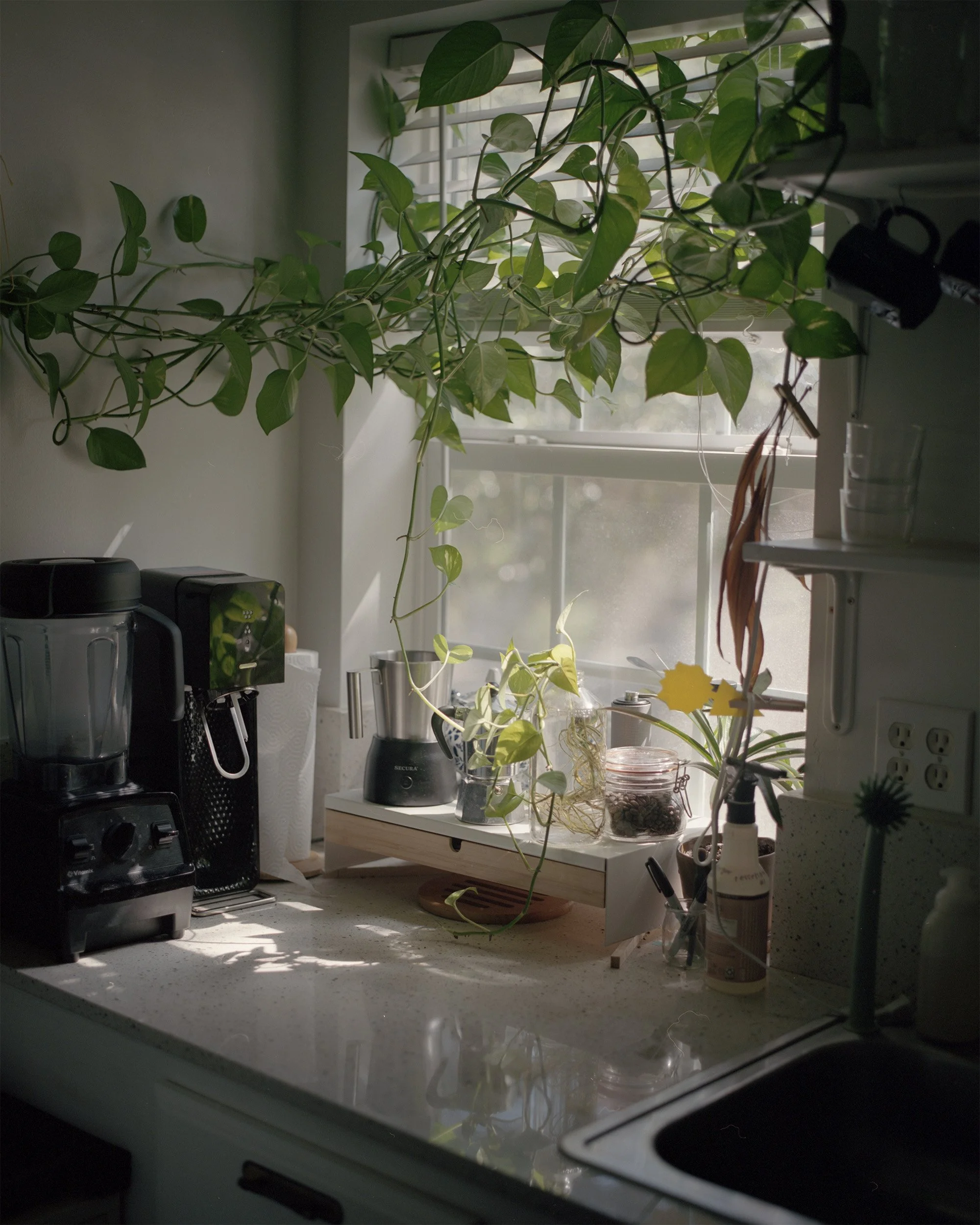
I think that this kind of perspective is an amazing one that lends itself to photography, especially film photography, because it's slow and it allows for things to take time. Setting up the camera and watching light move around a room is a kind of mediated experience that feels a lot like being in the dark room watching development.
In my circumstance, my own desires and my own expectations of how my body feels, but also how I want to spend my time often looks different than how I “should” be spending my time. I have this other project called Signal, for example, where I am meeting people for the first time and spending time in their home with them. Sometimes we don't even make pictures. Sometimes I will just sit in someone's house and I get to know about them. We ask each other questions and we find some kind of familiarity and we hold each other in that space–not literally–but sometimes literally. I've learned how to use my own experiences with illness and how that has slowed my life down as an asset in a way of perceiving the world rather than a hindrance. Being okay with slowness and actually inviting that in and letting things take as much time as they need to.
JF: Tell me about Begin Collective, how it began, what you've accomplished, and where you see it going from here. Community building in this way feels ever more vital and urgent right now.
BS: We founded Begin Collective in late 2019 or early 2020, just as the pandemic began. It was created as a platform for developing creative projects that allowed us to build community and expand our network of collaborators. One of our earliest initiatives focused on working with adults who identify as queer and disabled, many of whom did not have formal training as artists or photographers. Our goal was to provide tools and support for participants to create a body of work without expectations related to cost, prior knowledge, or technical skill. We intentionally invited individuals who had an interest in photography but lacked access to resources, equipment or financial support needed to pursue that interest independently. This approach led to our first collaborative engagement project, I See You See Me, which we have continued to develop over several years.
RS: In the pandemic, we also realized that we weren't going to be able to photograph with each other. It was the first time where we were forced to not photograph each other for over a year. And we were like, what do we do? And we realized that in the process of working together, we have learned so much from each other. We've had really tough conversations and we didn't have a framework or many roadmaps on how to navigate visualizing disability and what equitable collaboration looks like and it would be really cool if we could share what we've learned with other people.
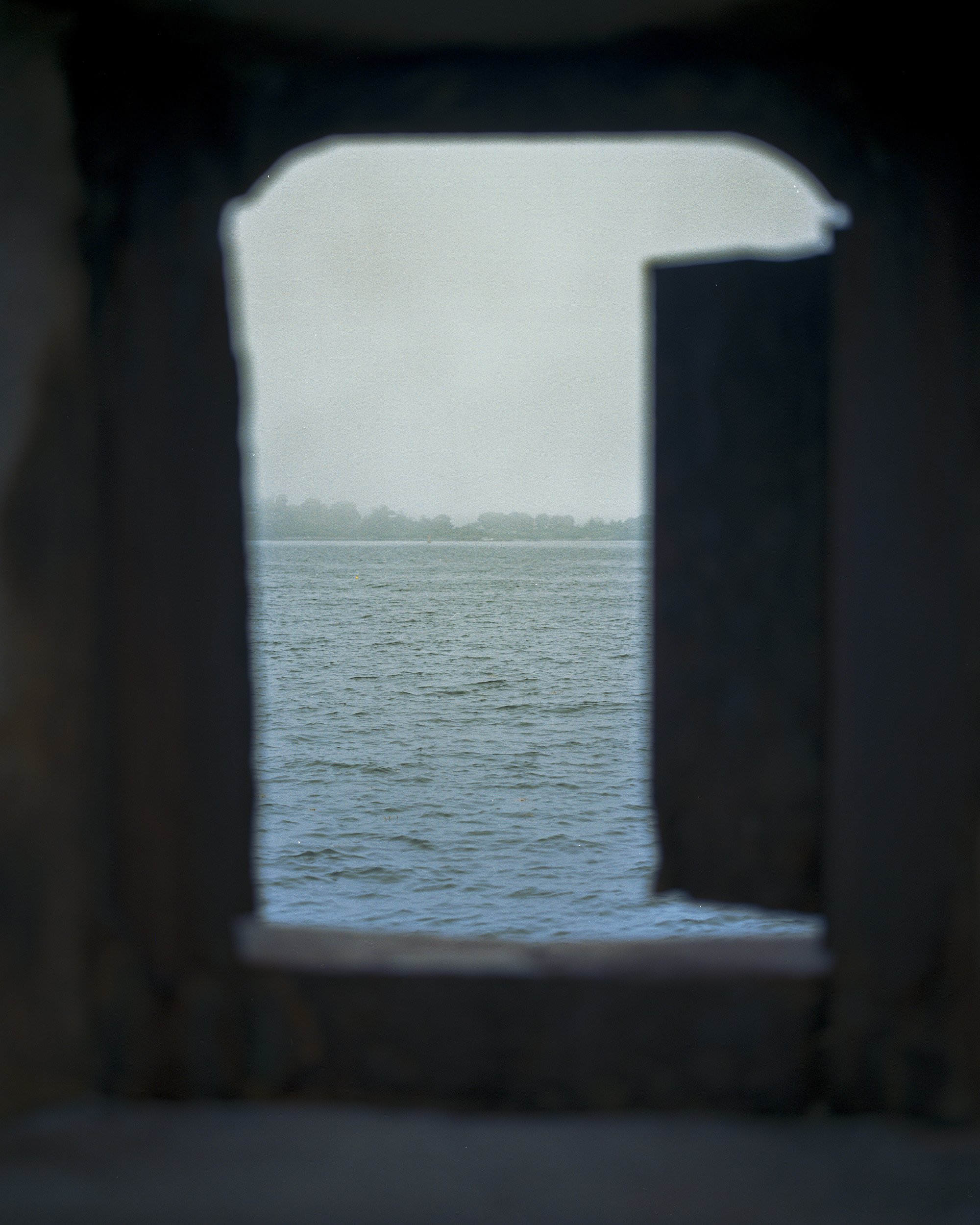
B cuts in: For me, an important part of the process was wanting to shift the focus away from ourselves and toward a broader community. There was a moment of reflection when I realized I was uncomfortable with the work feeling overly self-referential. I wanted to create space to invite others into the conversations we were having and to expand the project beyond our own experiences.
RS: Since starting Begin Collective we had a pilot session of “I See You See Me” and then we had two sessions after in Austin, Texas. We gave 21 individuals cameras and film and resources to make collaborative portraits and we talked about agency in front of and behind the lens. In this project when making portraits, I often hand the cable release over so people get to make their own self-portraits.
We also had a huge show at the Dougherty Art Center in Austin, Texas in 2024, which Bianca and I curated, and we had work from every participant from all three sessions and all of the participants got to meet each other. Hundreds of people came out. Honestly, it was really cool and very gay at a time when trans rights continued to be at risk and rights for LGBTQ+ people were going down the toilet. In Texas, we were able to have a counter to the dominant narrative and be like, look at this community that is thriving–not that we have to be thriving–but we happen to be thriving, regardless. We have recently received three awards that are three grants that allow us to extend “I See You See Me” to Iowa and Maine. We are working on those next chapters. I'm really excited that we can continue to build momentum and I would love for it to continue to be a place of community and collaboration, but also a resource.
Few things feel better than being able to get a bunch of money from rich people and then give it away, which is basically what we do. We buy cameras or sometimes we'll get some sponsorships and we buy film. We give it all away and we teach people how to use those tools. We are actively creating community through doing that.
BS: I think that, remarkably, we've been able to take groups of people who have very little to no training in photography. At the end of the project session, not only do they have a body of work that they feel good about, they're able to self-represent themselves in ways that feel meaningful to them. They’re able to have a show in a professional gallery and be recognized in a formal capacity. I think we need more disabled artists represented within fine art spaces! It feels really cool knowing that we could be a part of making that happen for people.
RS: With Begin Collective, we have started prioritizing over the last few years of only showing our work in accessible spaces which means turning stuff down sometimes. In the art world, that's a difficult thing to come by. You would think maybe not, but very few spaces actually are accessible beyond the bare minimum requirements of galleries and museums.
JF: How can we work to approach a more egalitarian and accessible art world?
BS: There’s so many things that could change to increase accessibility within fine art spaces.
One of the most consistent barriers I encounter, particularly because it affects me directly, is the lack of seating in gallery spaces. Artwork is often installed in ways that require viewers to stand for extended periods of time, which excludes people whose disabilities limit their ability to do so. Personally, I can only stand for a few minutes before needing to sit, and many galleries do not account for that reality in their design. As a result, these spaces become inaccessible not because of intent, but because of oversight.
Another critical issue is meaningful accessibility for people who use wheelchairs or mobility aids. Spaces frequently describe themselves as “accessible,” yet the functionality does not align with that claim. Bathrooms may be too small to maneuver a wheelchair, ramps may be absent, or key areas of the gallery may be difficult or impossible to access. Accessibility cannot be evaluated solely through language or intention - it must be assessed through how a space actually functions for disabled bodies.
In our own experience planning exhibitions, we have been told repeatedly that venues were accessible, only to arrive and find there was no accessible bathroom or no ramp into the gallery. Too often, accessibility is treated as an afterthought in relation to a building’s aesthetic. Gallery spaces, whether DIY, artist-run, or federally funded, need to conduct comprehensive accessibility audits. Accessibility must be a foundational consideration, not an optional add-on.
RS: There's so many other ways. I think another one could be having low sensory experience days, and including multiple ways of accessing work within a space. Now with photography, this is a little bit challenging because it is such a visual media, but something that we're thinking of often is how can we incorporate other kinds of senses within a space, whether that is something that you listen to or something that you touch. Oftentimes, deafblind people are left out of the space of visual art spaces because they are visual art spaces, so there isn't much attention given to other ways of accessing art, and tactile art is something that is really missing from the art world.
BS: I also think about how cost-prohibitive art-making is more broadly, and how those financial barriers are often amplified for disabled artists. Many people with disabilities have significantly less financial flexibility, as they must allocate resources toward expenses that others may not, such as medical devices, medications, transportation to appointments, and out-of-pocket healthcare costs not covered by insurance. These are essential expenses that make daily life possible, yet they inevitably limit the extent that can be used toward creative passions. As a result, the art world becomes increasingly inaccessible when participation depends on disposable income that many disabled people do not have.
RS: Also, gatekeeping's a thing. Once I find a knowledge or I learn a knowledge, I love to share it. I think that we could be more generous with each other. I really do think that we could be more generous with each other in the art world.
JF: What's next?
RS: I want to say pizza. I always want pizza to be the next thing.
BS: That's so funny. I just bought myself pizza.
RS: Twin-tuition. I can feel it.
I am a professor at the University of Iowa and I have the next five weeks to do whatever I want. And I'm going to read for pleasure. And do some writing. And bask in the sun like a cat. Just marvel at the sheer brilliance of being alive in this hellhole.
BS: I currently work as an outpatient therapist, so I do not have the luxury of taking chunks of time off. I will be taking care of myself by means of lots of baths and spending time with my cat Sophie, who is the love of my life.