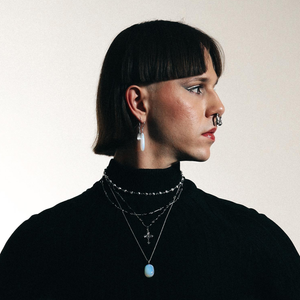
Chance Deville
Photographer Chance Deville won the Film Photo Award in 2022. Jack Fox catches up with Rachel on his work.




Jack Fox: What initially interested you in photography, and what keeps you working in this medium, and why film?
Chance Deville: What got me interested in photography? I don't really know. It's one of those weird, cheesy kind of answers, where I was a kid and was just fascinated with what were the point and shoots at the time, the small, little digital ones. I was around 10 years old, when I picked one of those up for the first time, and just got obsessed with making images and taking photographs with those. It was one of my mom's and from then on, I just became obsessed with photographs as a medium. When I was 10, I wrote a lot, and I read a lot, that never really stopped, which is where language also leaks itself into my practice.
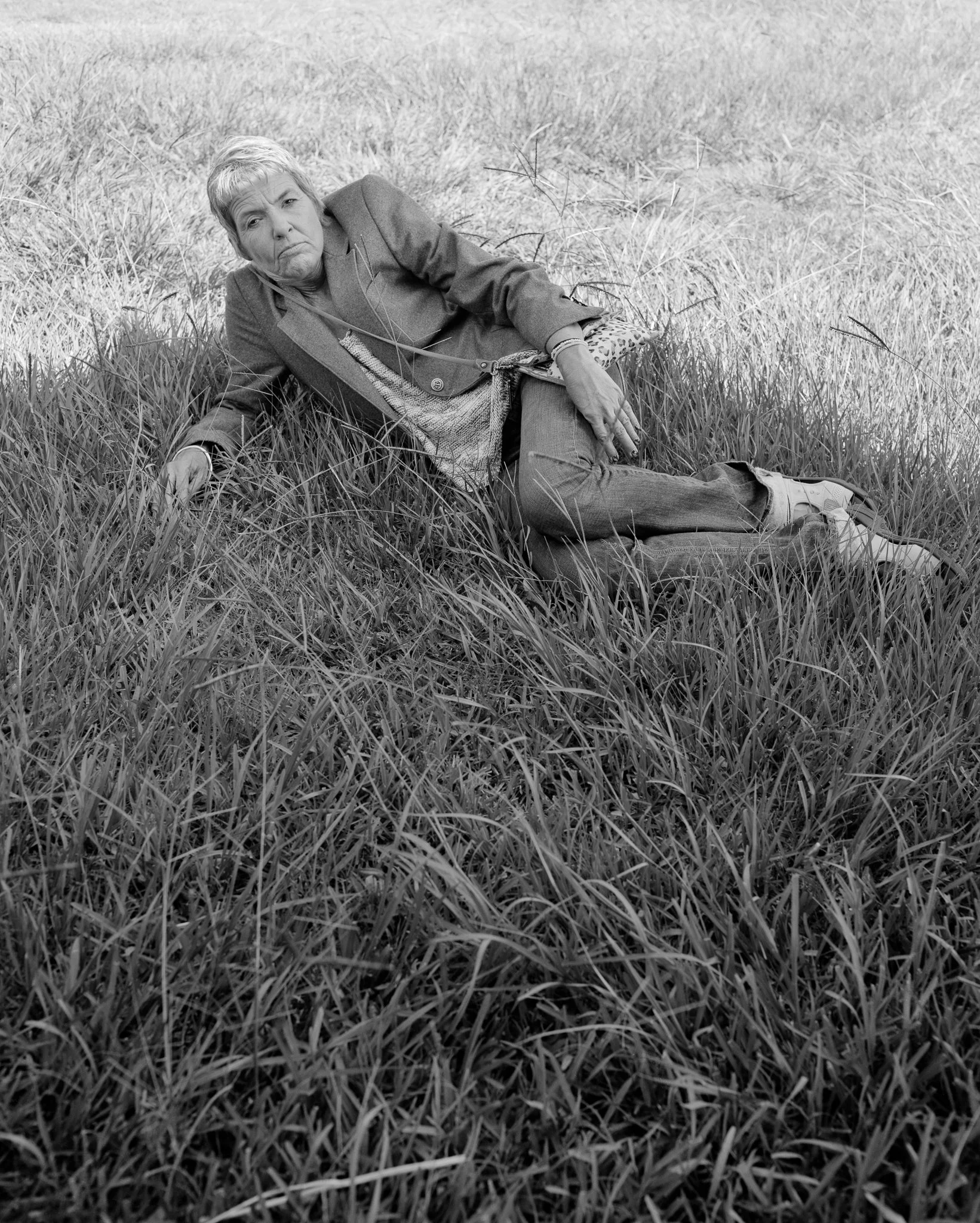
As far as film goes, there is something about the materiality of film. I've lost my home in Louisiana twice now to two different hurricanes, so all of the belongings that I had growing up as a child in two different stages of my life, once when I was 10 years older than the other, when I was around somewhere in my mid 20s. The material presence of film is important to me, because I've lost a lot of material proof of existence as a child and my family life because of climate crises, and so the act of having a physical negative and photographing in that way feels necessary. I also think about film as a religious medium, and the ritual of it, the presence of life in negatives.
JF: Did you lose any of your negatives in the more recent hurricane?
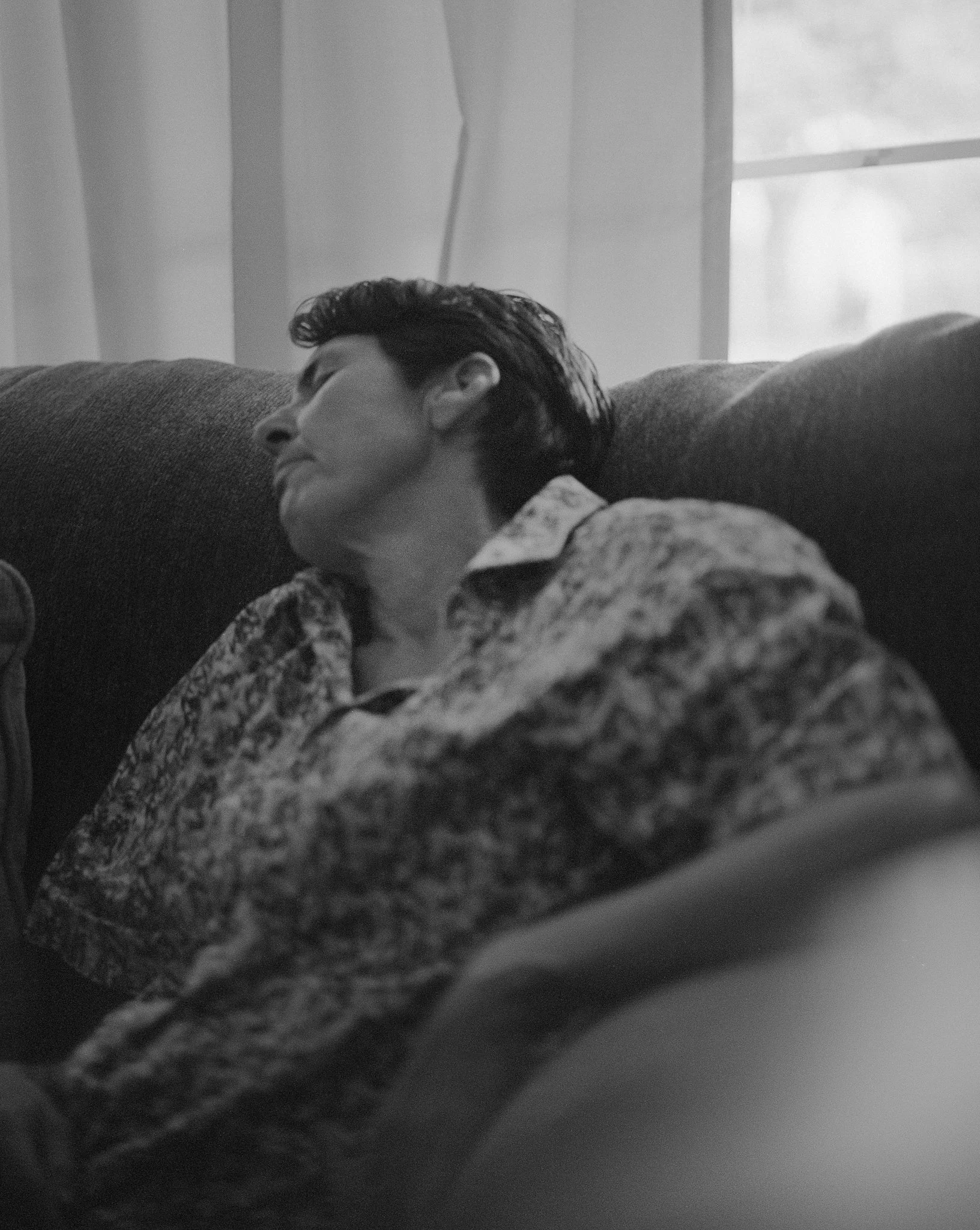
CD: No, thankfully, all of my negatives were in Rhode Island where I was living at the time. That was Hurricane Laura, in August of 2020 right after the pandemic hit, which was the largest hurricane to hit Louisiana. It completely leveled my grandparents house again with some flooding and some tree loss. The first one was Hurricane Rita, which hit the same year as Hurricane Katrina in 2005. The entire Gulf coast of Louisiana was just essentially destroyed in that one year. But thankfully, no negatives were lost in that.
JF: Did you move back to the Deep South right after grad school?
CD: No, I stayed in Rhode Island until this fall, for about five years, and then moved to Mississippi once I got my job at the University of Mississippi.
JF: You won the Film Photo Award for your project, Growing Tired of Calloused Knees. Can you introduce this project and where you're currently at with it, and how the Film Photo Award aided in its development?
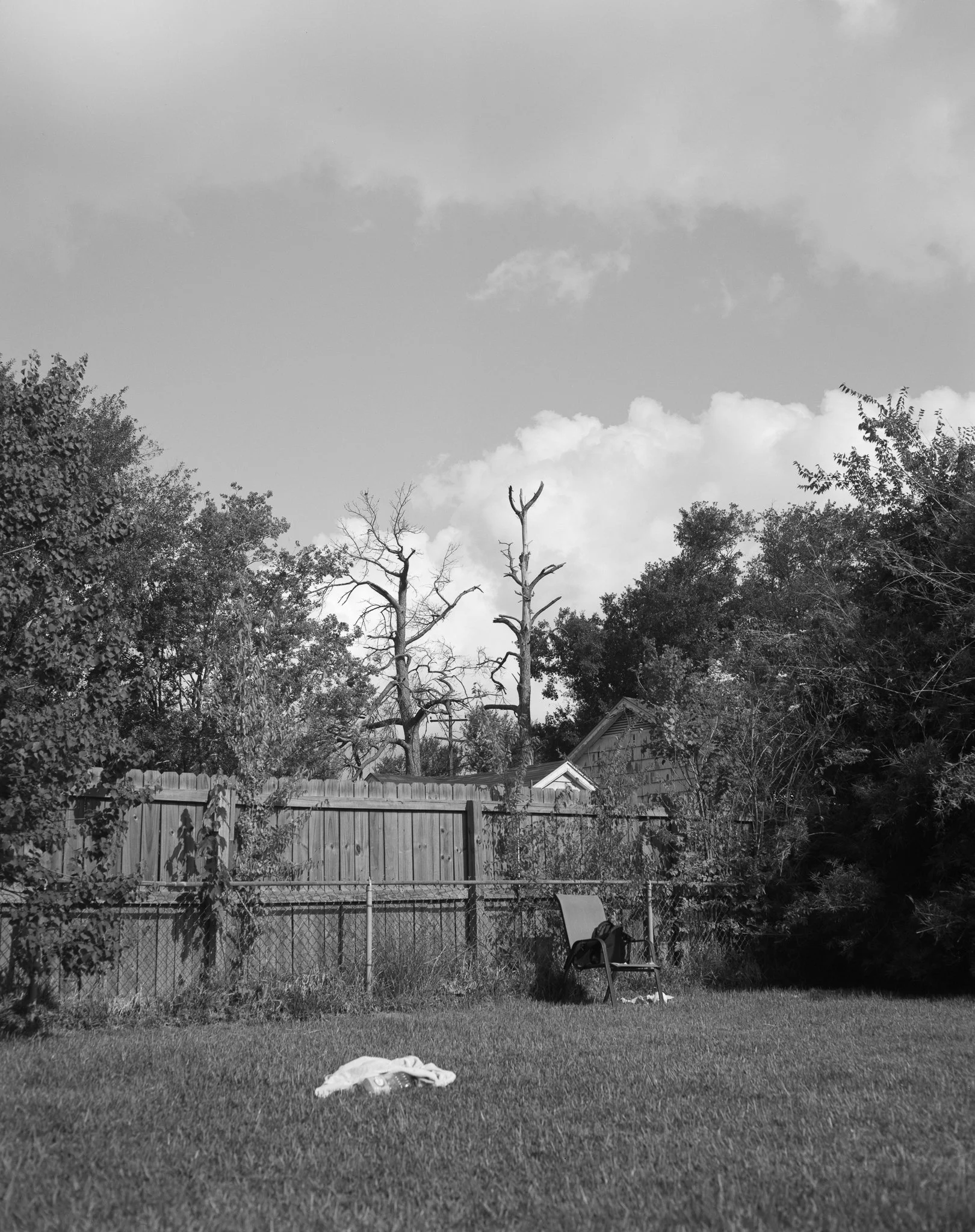
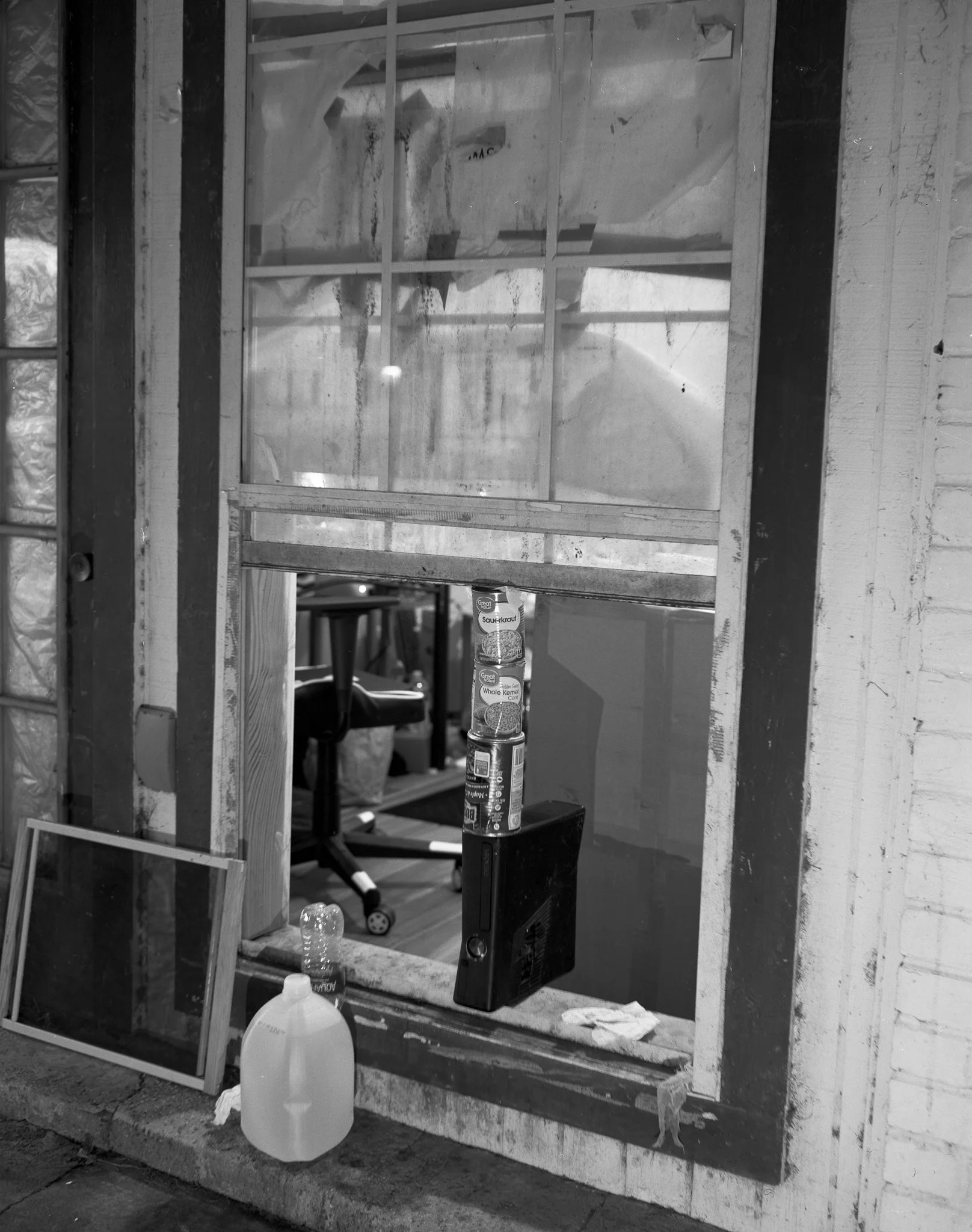
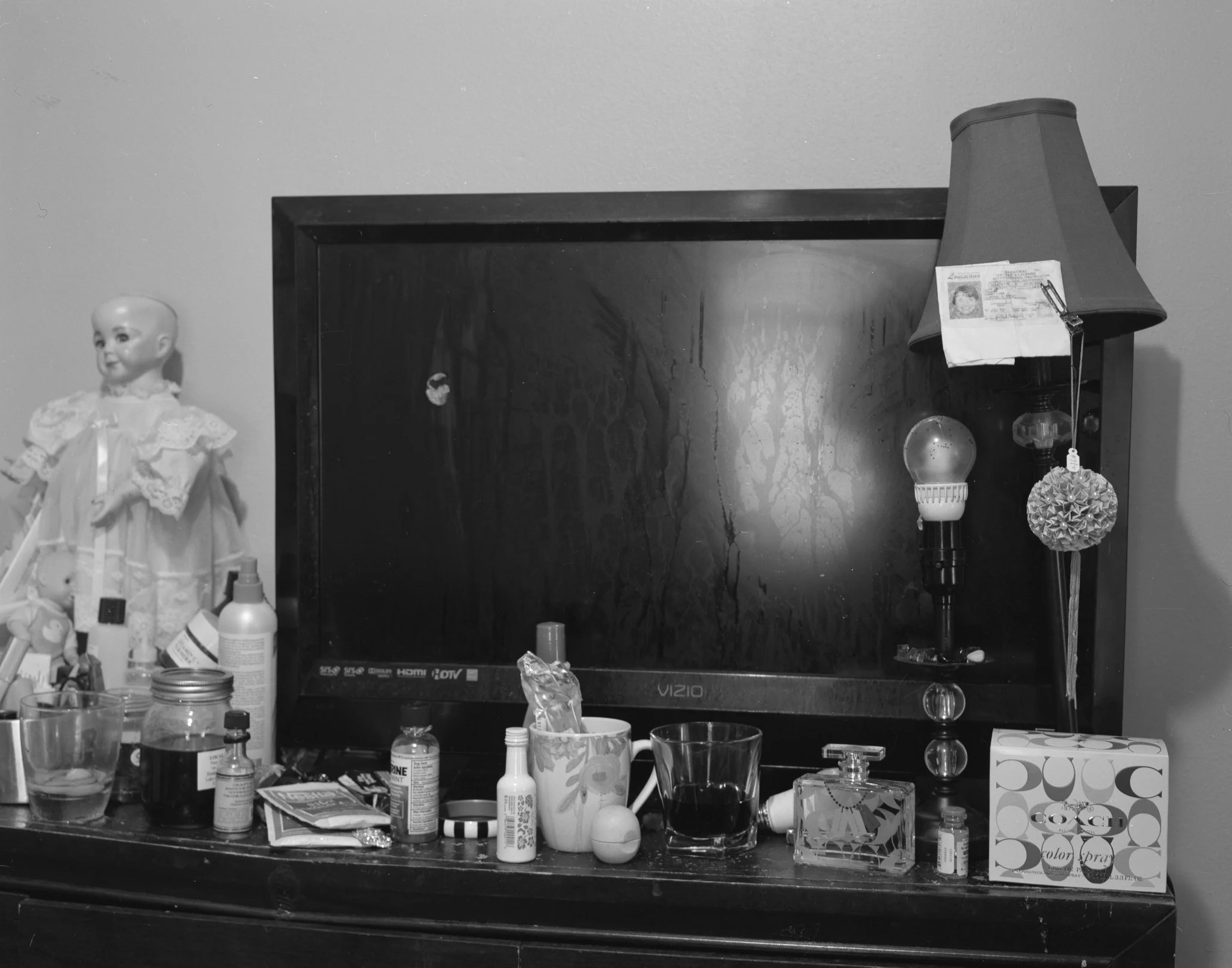
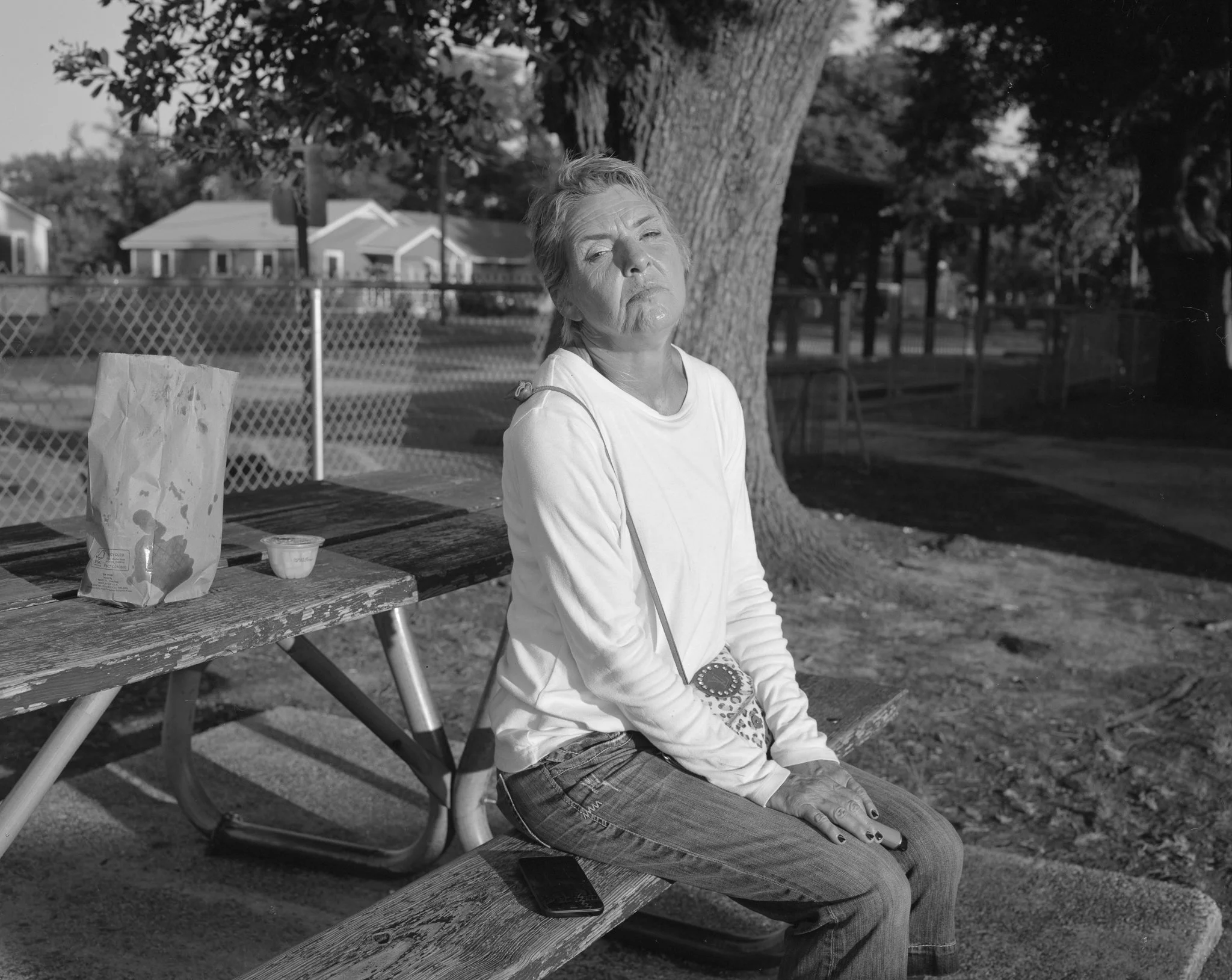
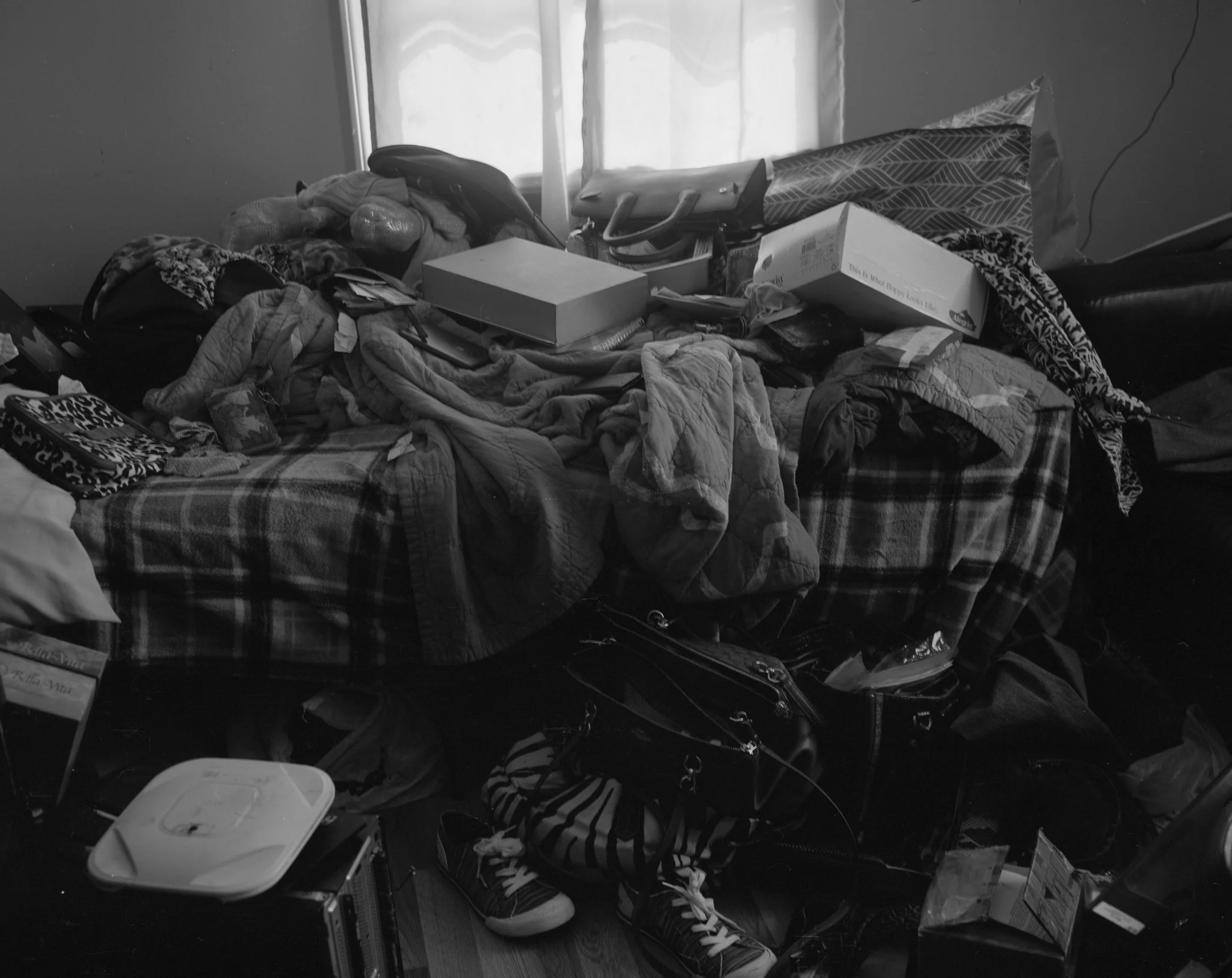
CD:Growing Tired of Calloused Knees is a project that I've now been working on for over a decade. It chronicles the lifelong project that I've been working on with my mother, who is schizophrenic due to domestic assault against her from her third husband. Because of severe domestic abuse, she now has a metal plate inside of her skull from an eye and head fracture wound. After the head wound, there were complications, of course. It started this cycle of violence, when I was growing up, of mental health problems, poverty, substance abuse, and then that cycle is what I got interested in whenever I started photographing seriously around 20 years old. This project started as a way for me to understand the cycle of violence. Understand what was shifting between me and my mother from caretaker to child, and then that having that role swapped, as well as building a new relationship through the medium.
Again, this ties back to film, because there is now a sort of physical evidentiary result of this relationship that wouldn't have existed otherwise, one that's in the negatives. Over the past 10 years I’ve gone back to Louisiana, photographing my mother how she's changed her environment, but it's all stayed within the radius of my childhood and my grandparents' home. All of the photographs in the project are within, I’d say, a 300 foot radius.
The film photo award really helped me, because it allowed me to “finish” the project. It allowed me to finish it at a time where I needed a goal post. The last photographs that I took for that time were in 2023 for the photo award, and those negatives were what finished up my work to be made into the monograph.
JF: How did it feel to have the book out in the world, and was it challenging to tell yourself that it was “complete”?
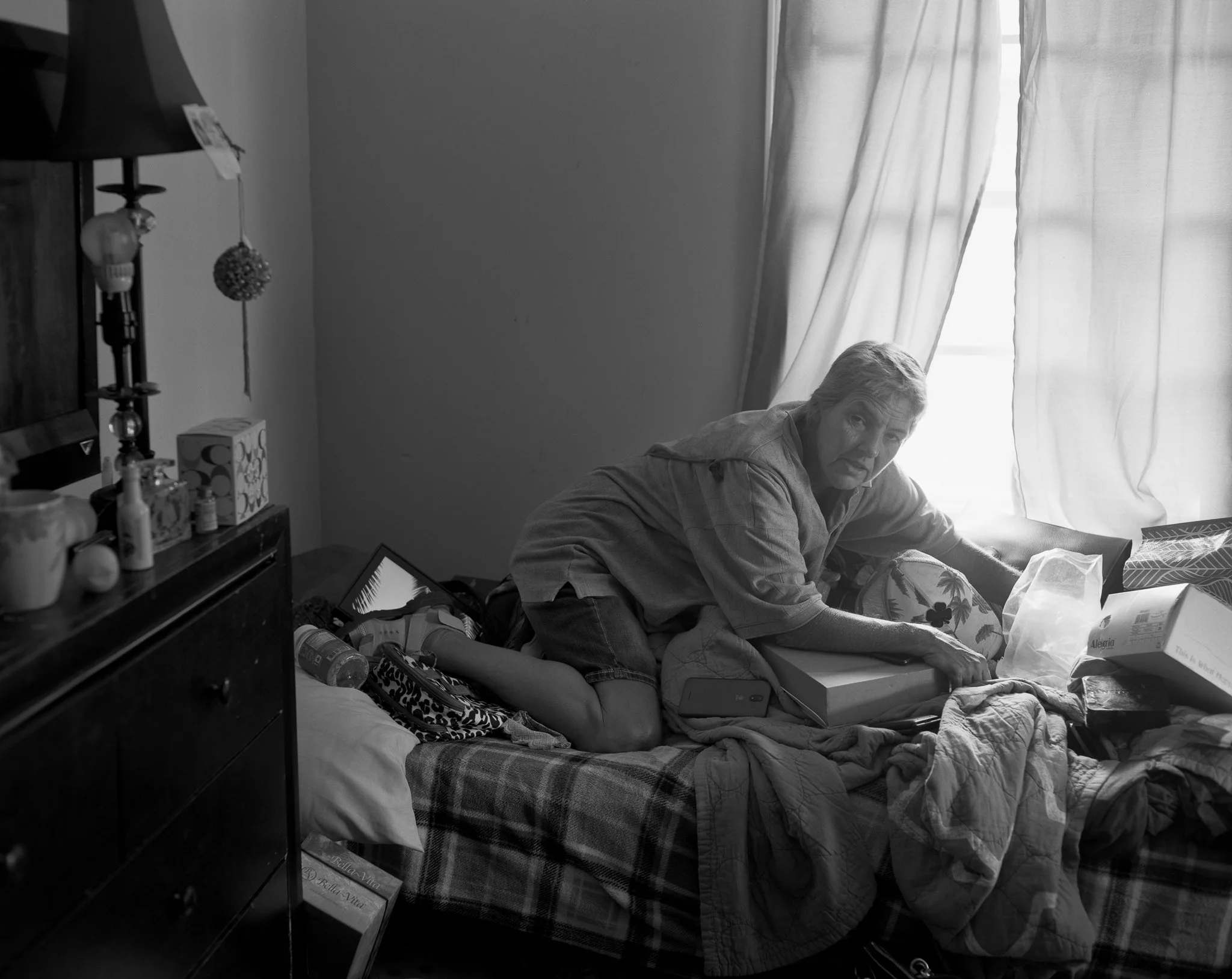
CD: There's levels to that. It feels great having a solid object that people can look at and handle and sit with, and that I can move on in a sense of it being done. I have come to the realization that it is going to be a lifelong project, and it is going to manifest in other ways throughout my life. But for those 10 years, it really was just so siloed in making. It's an incredibly emotional project to work with. It takes a lot of energy.
Photographing with your family is difficult to say the least, especially whenever there's other ailments involved. But it feels good to be done in some way, where I feel happy about it being completed. I'm really happy with the book. I'm happy that it's in the hands of people who it needs to be in the hands of, and hopefully the text can really help, alongside the photographs to aid in some kind of breathing that people are having.
JF: Why did Gnomic feel like the right home for publishing it?
CD: I worked a lot with Shane Rocheleau to edit the book, and I talked to other publishers, but me and Shane really had a great understanding between ourselves. His editing process was very blunt, and I needed that. We worked together a lot, and this project felt like it needed an editor.
I had a lot of preliminary meetings with Shane as far as getting the book down to what it is now. 10 years is a lot of work, and there's a lot of ways that the work has existed. I had no doubt, after my first meeting with Shane, that I just wanted to keep working with him and working with Gnomic in that way.
JF: You briefly mentioned the parameters of this project being about a 300 ft area around your mother's home. I'm wondering if you could talk more about how those parameters refined this project, and if that's a mode you've worked in in other projects?
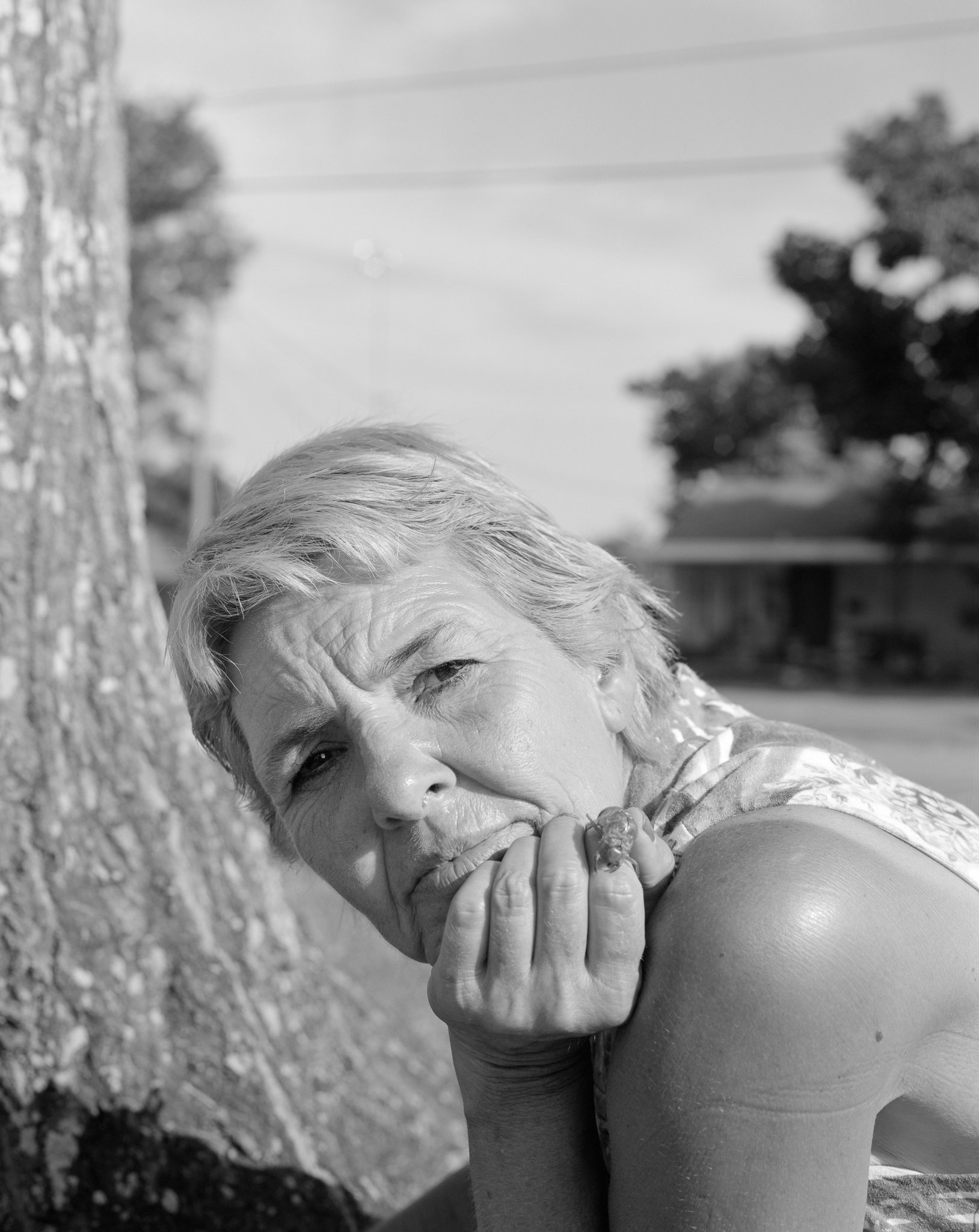
CD: There are definitely images that I've made outside of that radius. Whenever I first started making the work, I would go to places that my mom was going to, bars and different spaces that she was in and photographing her out and about, as well as inside of the home. But I found that whenever I started enacting those parameters, it really became a different kind of insanity, a sort of stationary insanity around the home. I found that to be way more effective than what the outside world was imposing onto our relationship.
This created tension that helped with the project. I think I work better with parameters; I tend to get very manic with my practice. If I don't have some sort of tether, then I get a little too in the clouds. It worked for me as far as enforcing a kind of boundary for the work to exist in. The work is about our relationship and my grieving and her cycles of violence that she's trapped in, so having that radius really helped. I don't think I work in that way necessarily with other things, but I do try to set some kind of preliminary rules to where I can then say to myself, Okay, I can probably break this rule, but having them there helps me not get crazy out of the weeds with my making.
JF: How has collaborating with your mom on making photographs changed your relationship, if at all?
CD: I don't think there would be a relationship if I didn't photograph her, to be completely honest. It gave us a point of reference where we both could start healing, and we could both start addressing things that we would have just swept under the rug and not spoken about as a family. My photographing was a kind of offering. It was me extending my hand and saying, "Hey, let's be vulnerable in creating together and see what happens and see what comes of it."
Without photography acting as a mediary, I don't think I would have been able to do that.
I was so young when I started doing this, I was 20 years old when I started. I had no idea what I was doing. I had my camera, and I just needed to make something, and I needed to figure out what this grief is, was, and forever will be; and this was my way of doing that.
JF: In the early stages of this project, did you ever get the sense that this would span such a long time of your life?
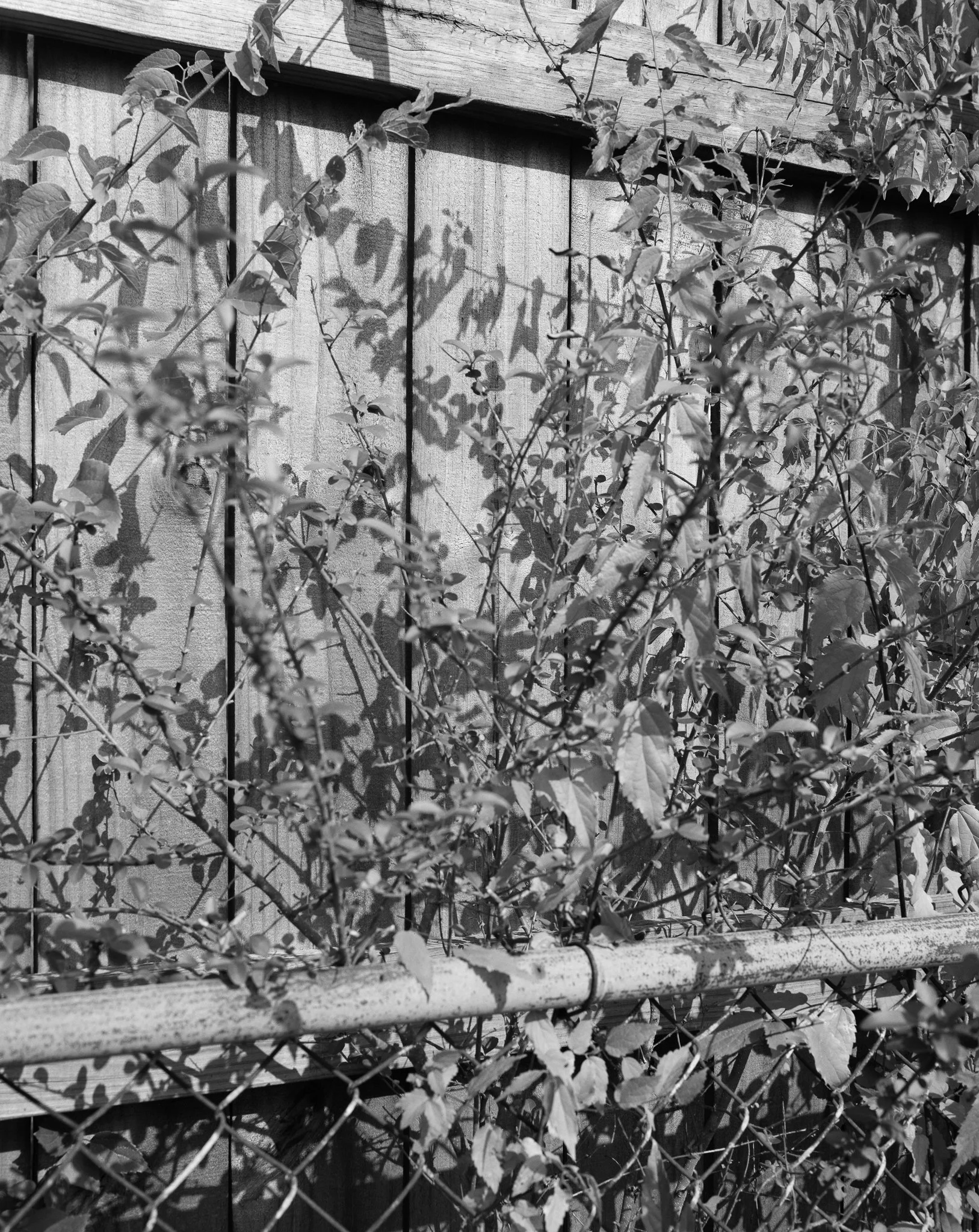
CD: Probably not. I remember being in undergrad and finishing it for my thesis. I was like, Yeah, I've done it. But here we are, however many years later, and I'm still making images with her. It's not something that I can put away, it's such a touchstone for my practice that it would feel weird not having it there. But I don't think I ever thought it would last as long as it did.
JF: Do you think that photography is a useful tool for navigating grief?
CD: Yeah, I would say it's a good tool. It can be a tricky one, and if you're not careful, it can do the opposite of what you're trying to do, creating more grief.
JF: I’m not asking you to speak for her in any way, but what do you think your mom's perspective on the work is?
CD: It changes. She also understands that this is a sort of lifeline for us, and it's a way for us to reciprocate something together. She doesn't really have an interest in the images themselves. I've tried to show her images before. I've printed images out for her before, but she’s never really cared to have input or critique about them.
I have had to learn along the way, a lot along the way, how ethics is born into this, and that's been the trickiest thing. How far can you push a photograph until it's unethical, especially when it's such a weird power dynamic that's happening in the image? All in all, she doesn't really give a shit about the pictures. She just wants to have me photograph her, whatever the outcome of the actual images, she couldn’t care less. This is our relationship and how it’s survived.
JF:Center of the Wind, also includes portraits of your mother, but it seems to have a significantly wider scope in where you're photographing. I'm wondering about your motivations for that project, and what the parameters for that were?
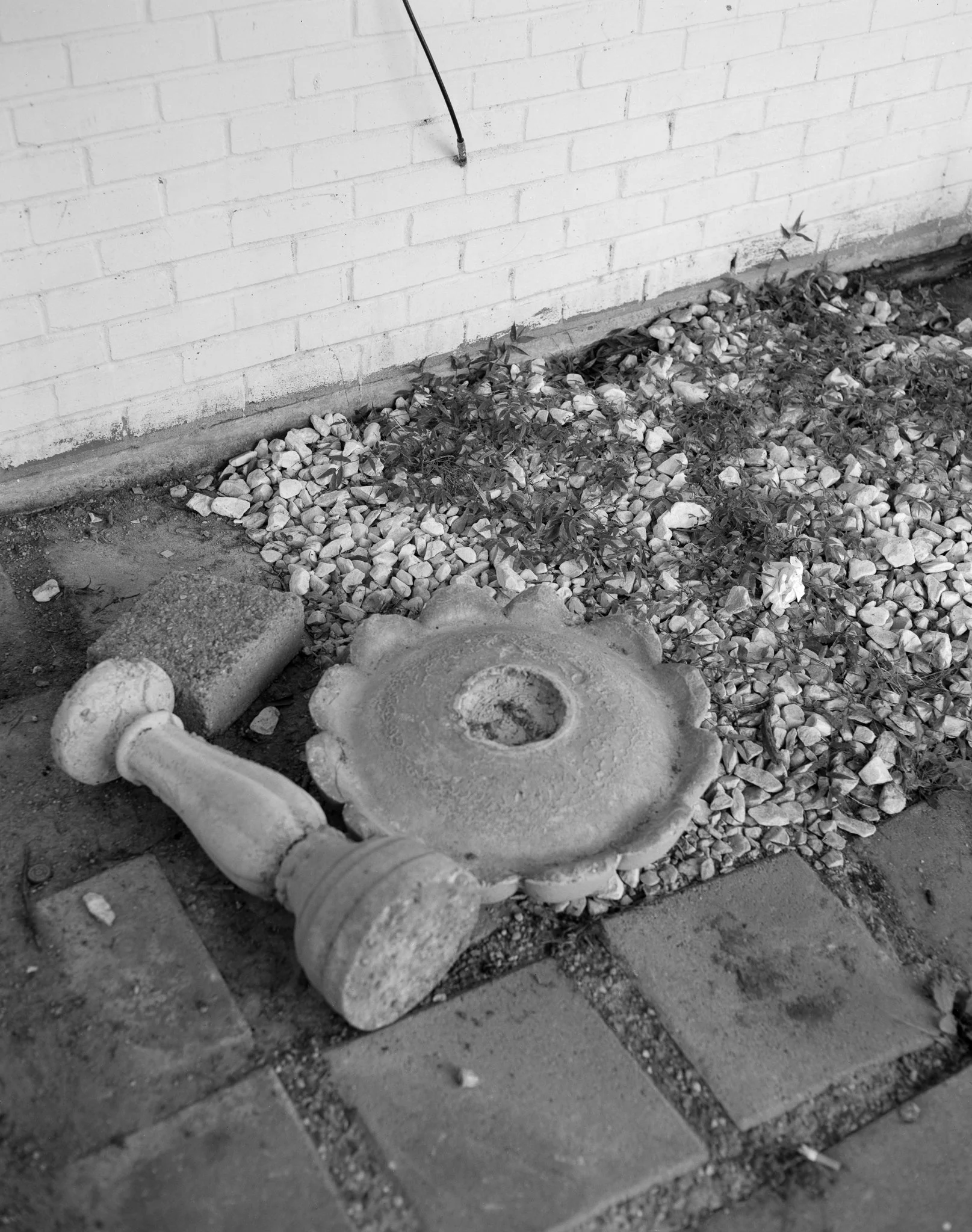
CD:Center of the Wind is a direct response to Hurricane Laura. Where those photographs were made is still my home, so the parameters are still the same with that project. It's just that the landscape and everything looks so different because of the hurricane. The FEMA trailer is where my family was living after the hurricane for a few years, the yard, everything else around it, everything surrounding and how the images look is completely different than the first project, but it's literally the exact same location, and, I guess, in color. I wanted everything to be wet and look wet and have that kind of sticky saturation to it.
JF: Do you ever show that? Two bodies of work together?
CD: No, I haven't. Not yet, at least and would be interested in doing so.
JF: What's next for you?
CD: I just got a fellowship and grant for the next two years through the Sarah Isom Center at the University of Mississippi to work on a project that is related to women and gender studies, and so my next step is figuring out what I'm going to produce with that. I'm not sure, but I know something's coming, and that it is exciting to be in a place where I'm just sorting through ideas in my photographs and work.
I'm making and finishing a different project as well, about photography as the Catholic act of Transubstantiation, which is turning the body of Christ into the Eucharist. I'm equating the act of photographing as taking a soul and putting it into a material.
JF: Woah, please tell me more about your transubstantiation work.
CD: Transubstantiation in the Catholic tradition is, taking the body and blood of Christ and putting it into a substrate or a material. So that is the wine and the eucharist that we consume during Catholic mass. It is the literal Body and Blood of Christ that we are consuming and drinking as a ritual.
In photography, what we're doing at least specifically with film, is that we are taking the soul of a person in a moment, the presence of a live thing, and we are transubstantiating that into a substrate, which is film, through light. Then we are then consuming that image. While we are not physically eating it, we are consuming it. We are looking at it, and then we have an idea of that one moment now in our body, and that is the consumption. I'm tying together that ritual of transubstantiation with the ritual of photographing, and how we think about media consumption in general, and the sort of reverence that artists especially put into it. I’m most excited about this project right now and almost ready to put it into the world.