Jaclyn Wright
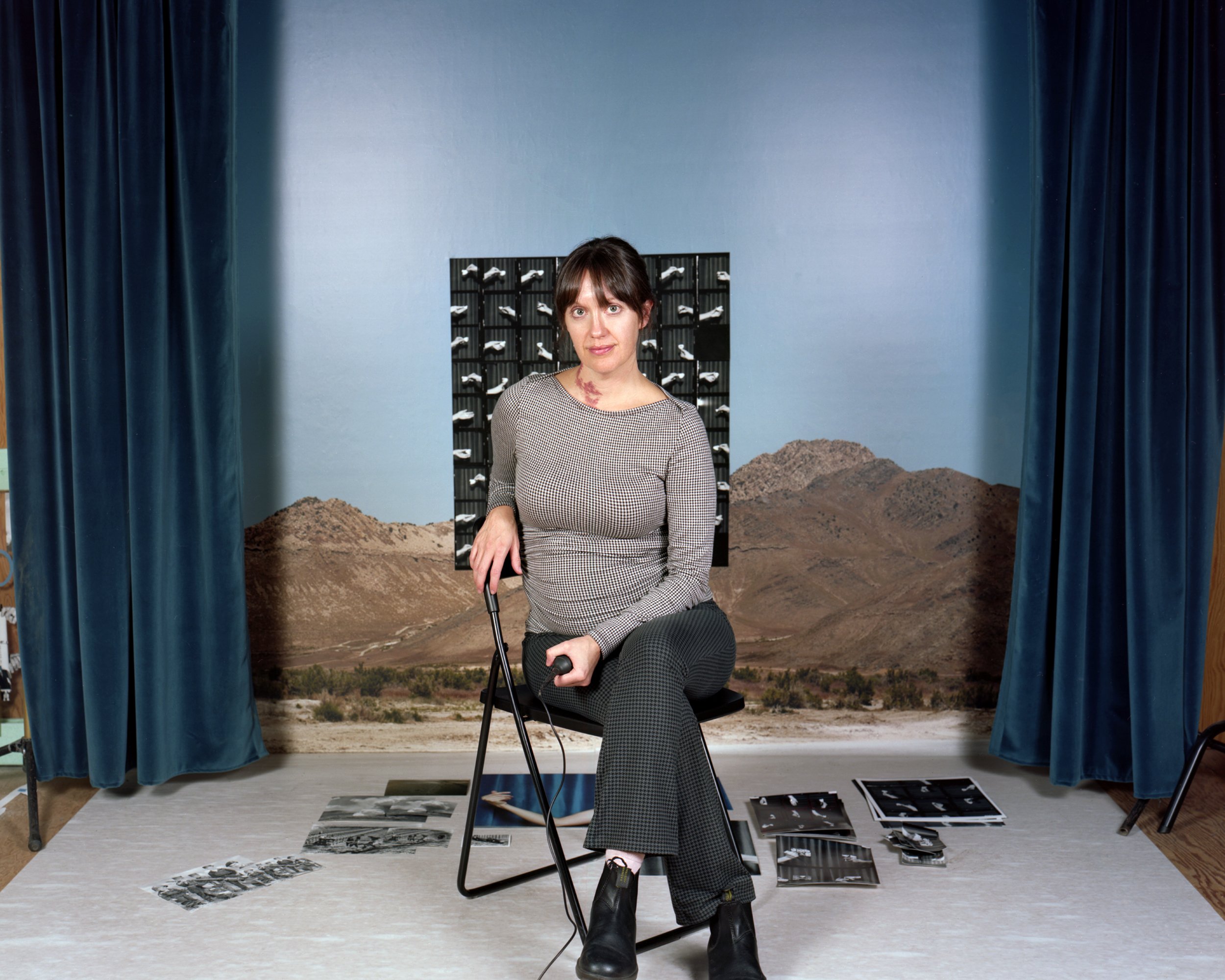
Photographer Jaclyn Wright won the Film Photo Award in 2024. Jack Fox catches up with Jaclyn on her work.

© Jaclyn Wright
Jack Fox: What initially interested you about photography and what keeps you working in this medium? Why film?
Jaclyn Wright: I took some intro photo classes in undergrad, but I wasn't really hooked until I took a color photography class. This was during the time when a lot of universities were transitioning from C41 and RA4 processors to digital, but my university was still using the color equipment. I almost didn't pursue the photo major and then I took the color photo class and that was it. I still shoot color film because I’m drawn to the oversaturation you can get without heavy manipulation, I choose films based on the visual outcome I want. Obviously, the selection of film these days is less than it used to be though. In terms of large format, I'm a really slow photographer. Any street photography assignment or anything like that, I really struggled with. As a result, part of using large format was finding an alternative that was better suited to how I see and photograph. When I photograph, I try several iterations to resolve an idea, but I only need so many photographs to do that. So, shooting 35mm would take me a long time to finish or have a lot of repetition. I’m also drawn to the unique visuals that I can achieve with a 4x5 and the way that I'm collaging things in-camera now only feels possible through a large format camera.
JF: Are you still working with color analog processing or printing to achieve these effects?
JW: No, but I would like to. If I had the financial means to have somebody print for me that way, I would. I just finished a residency at Light Work, and I was hopeful that I would be able to do some color printing, but not many facilities have the equipment needed for that anymore. So, I haven't printed that way in a long time, but I’ve continued photographing with color film because of that initial experience in the color darkroom.
JF: What was your Light Work experience like?
JW: It was great, I hadn't done a residency in really a long time. I've been working on a new project (with the Film Photo Award film), but it still feels early in that process. Light Work gave me the opportunity to try a lot of different things: I could be printing in the darkroom for two days non-stop, then scan film, edit, dust, and print, and then make a book all in a few weeks. The residency gave me time to process the early stages of this project, and it gave me time to think. I have a three-year old so being elsewhere and having that time to focus was invaluable. Plus, everyone at Light Work was great.
JF: One thing that's really vital about residencies is that it takes you out of wherever you're working on your practice and changes your perspective on the work.
JW: Yeah, definitely. I had been photographing a lot leading up to the residency with anticipation of having the new images to work on. Aside from that, I didn't really go into the experience with specific expectations of what I would focus on, in terms of producing work. In hindsight, that was a somewhat overwhelming tactic on my part. I had a few panic moments thinking, “oh my god I need to be really productive during this time” but in the end the openness and more experimental approach forced me to work through a lot of ideas I hadn’t flushed out. It also allowed me to focus on the ideas I did have, plus gave me time to write and think about my goals for the work. I still don't feel like the project is ready to be out in the world, but I feel like I'm able to better articulate what the work is. Of course that will evolve, but for now it feels more solidified.
JF: Is this work completely separate from the High Visibility work?
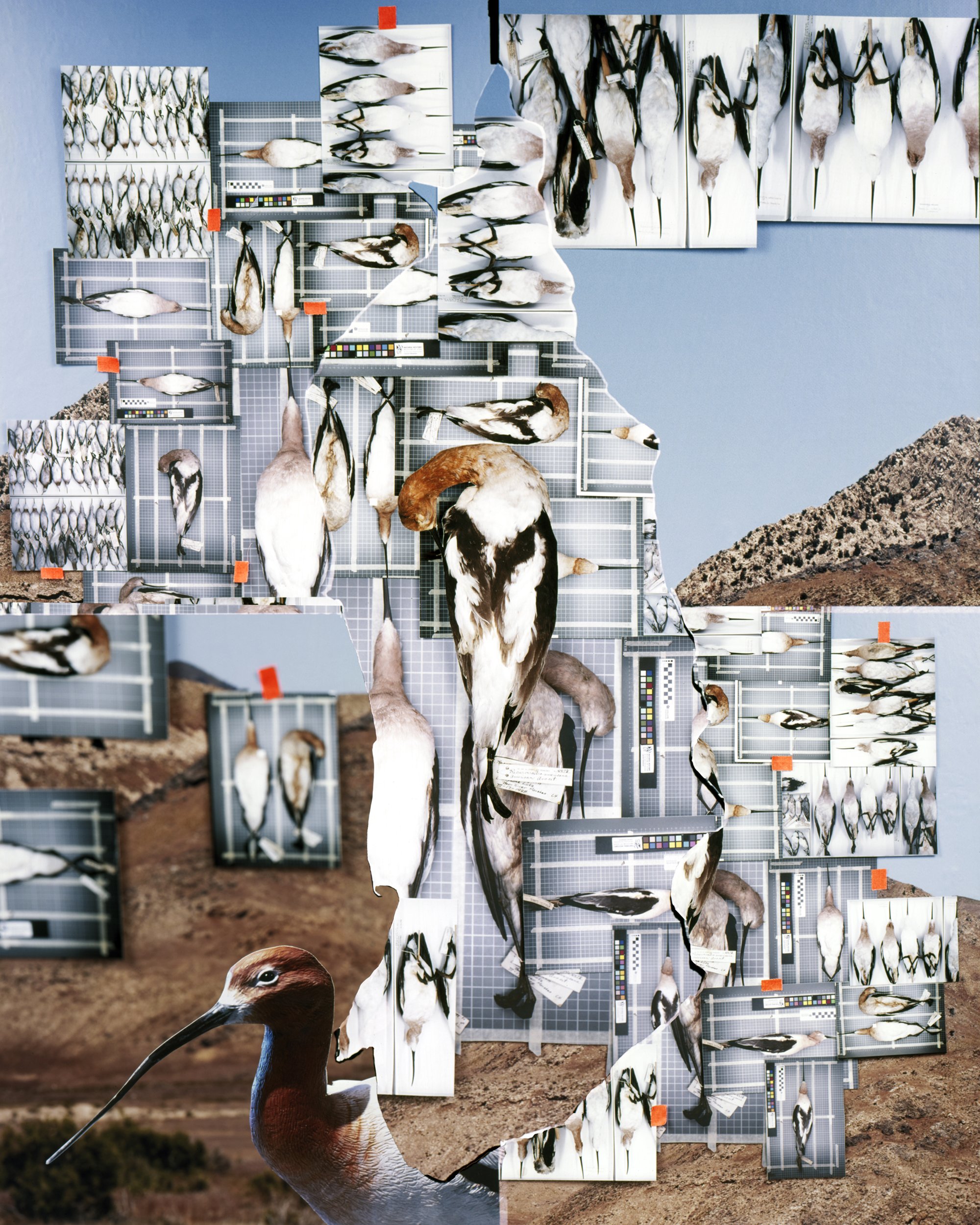
JW: That’s a tough question. I would say it's separate but adjacent. There's some overlap in terms of site specificity. The new work is still focused, for now anyway, on land use in Utah but I’m researching sites where military and ecology (or conservation) intersect. My long-term goal is that after I focus on this specific site in Utah, I’ll expand to other locations that have the same designation across the country (there’s 19 in total). We'll see what happens.
JF: In High Visibility (Blaze Orange), your visual language includes guns, clay pigeons, orange cones, targets, and other discarded objects. I'm wondering where that language developed from and where you envision it going from here?
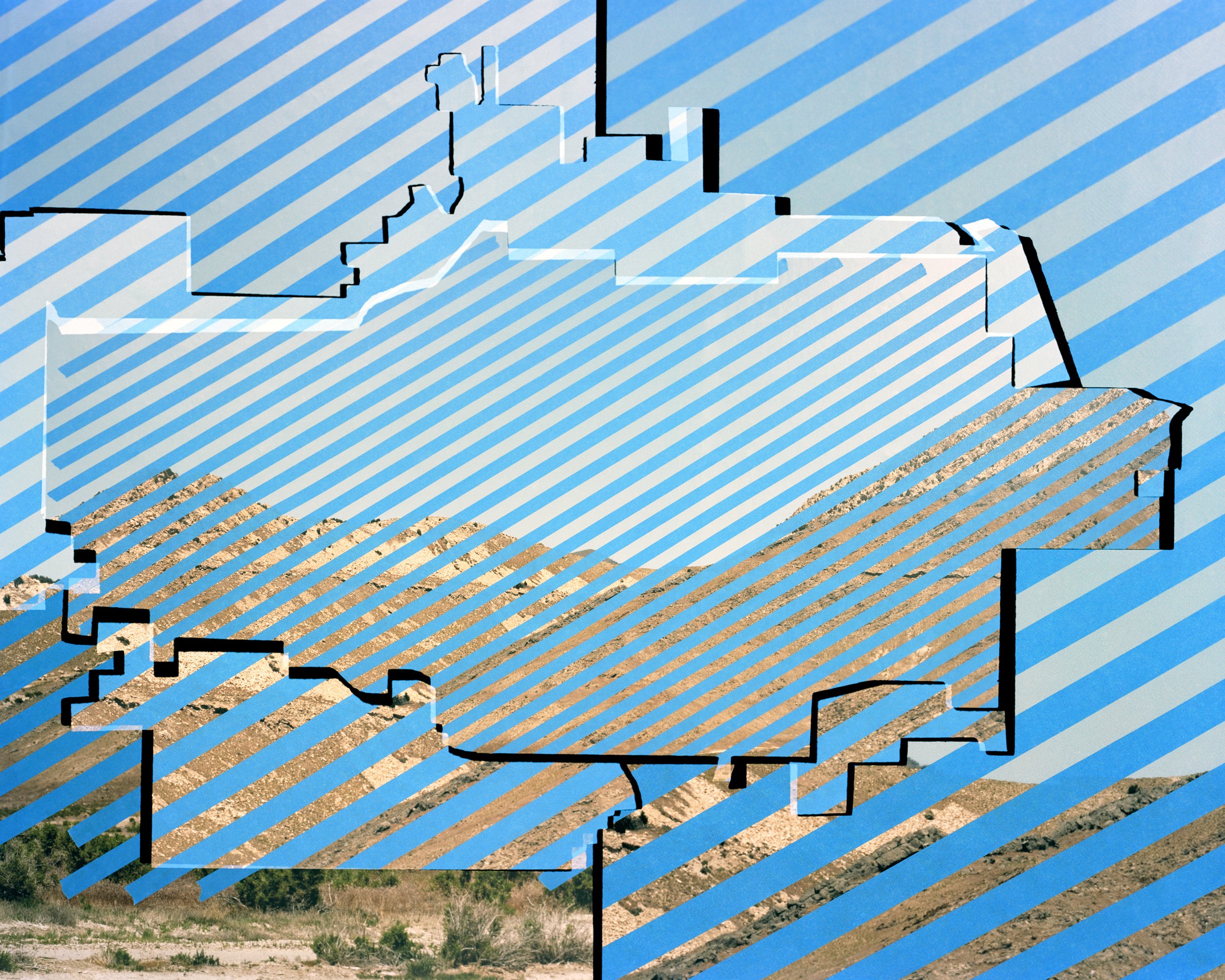
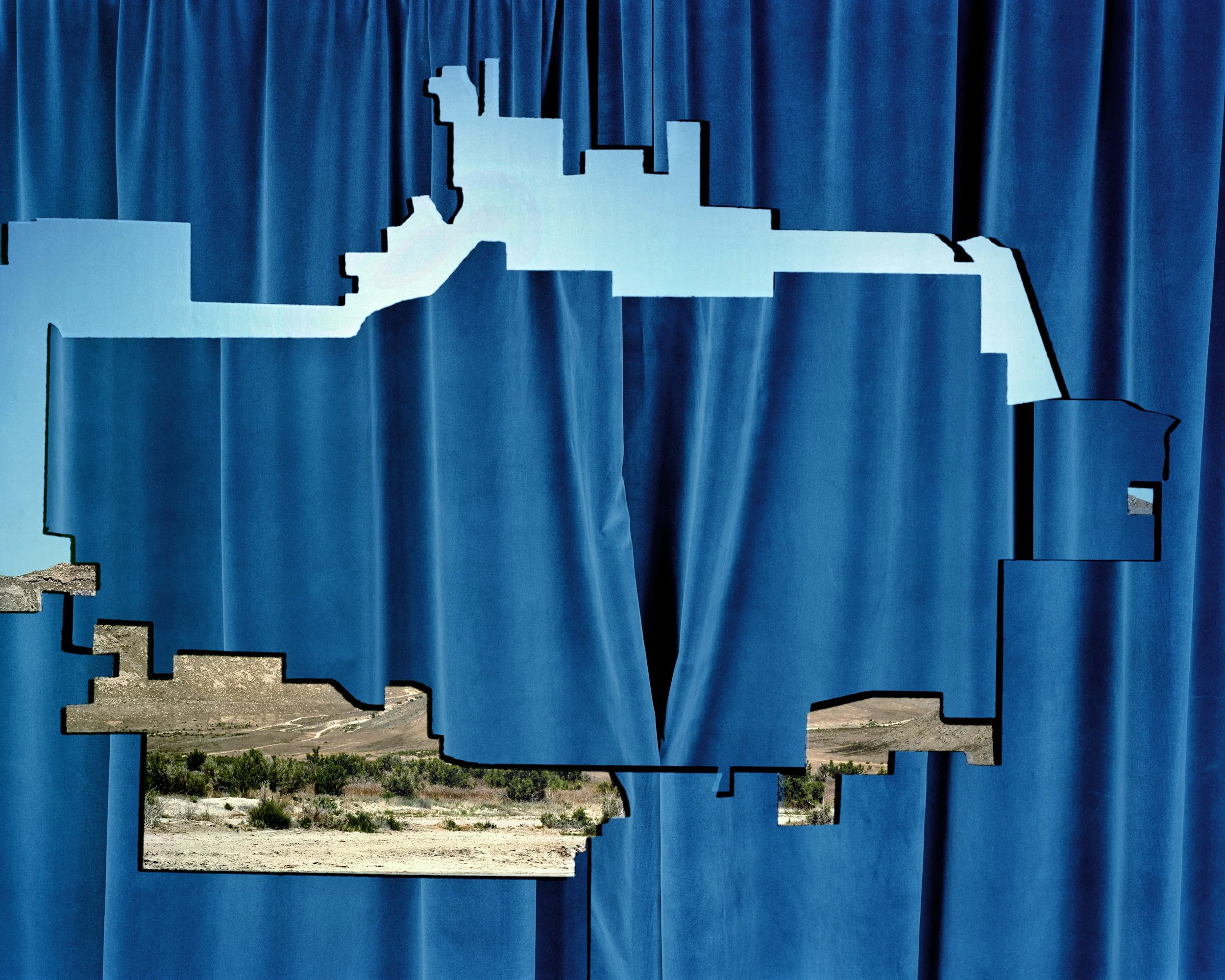
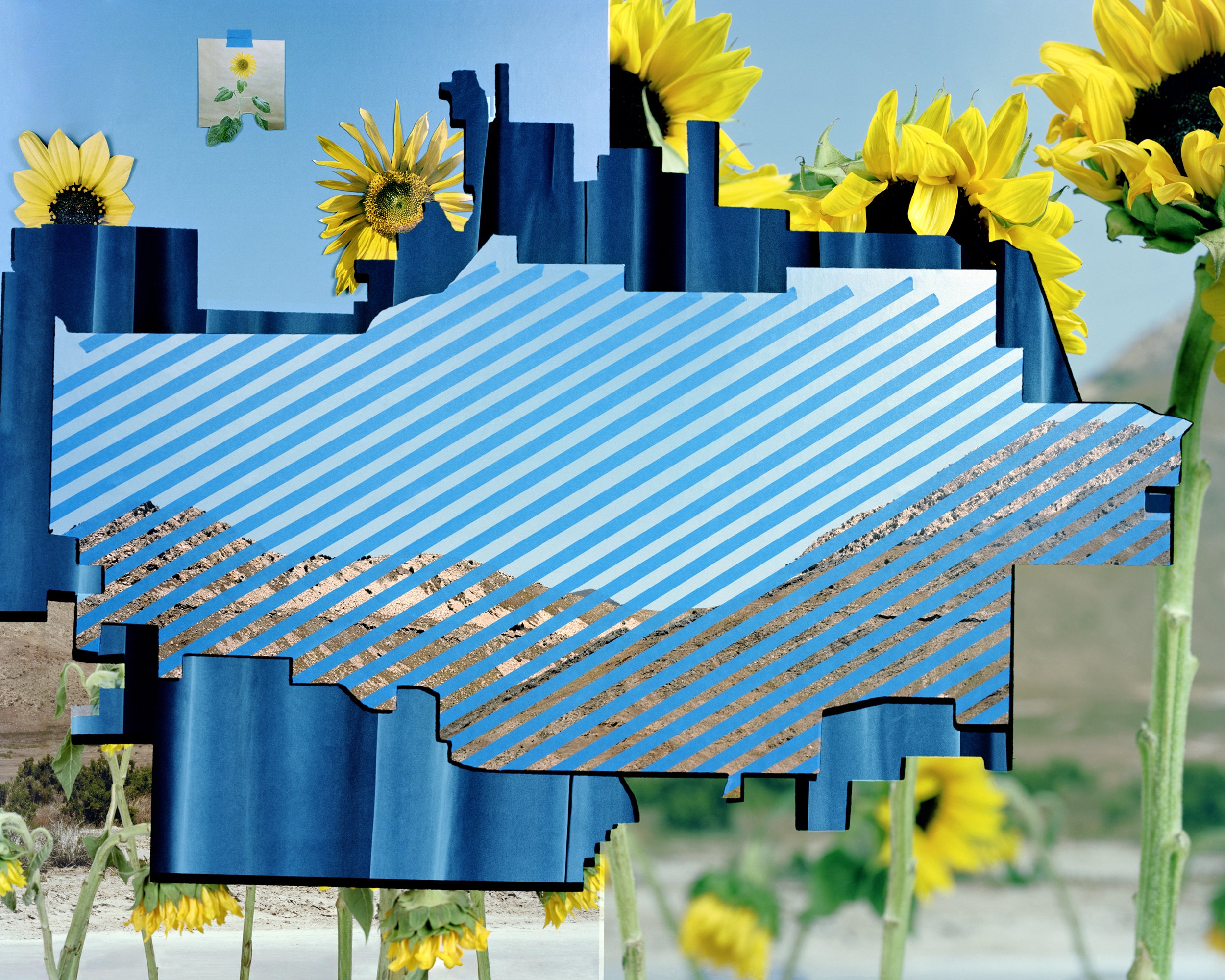
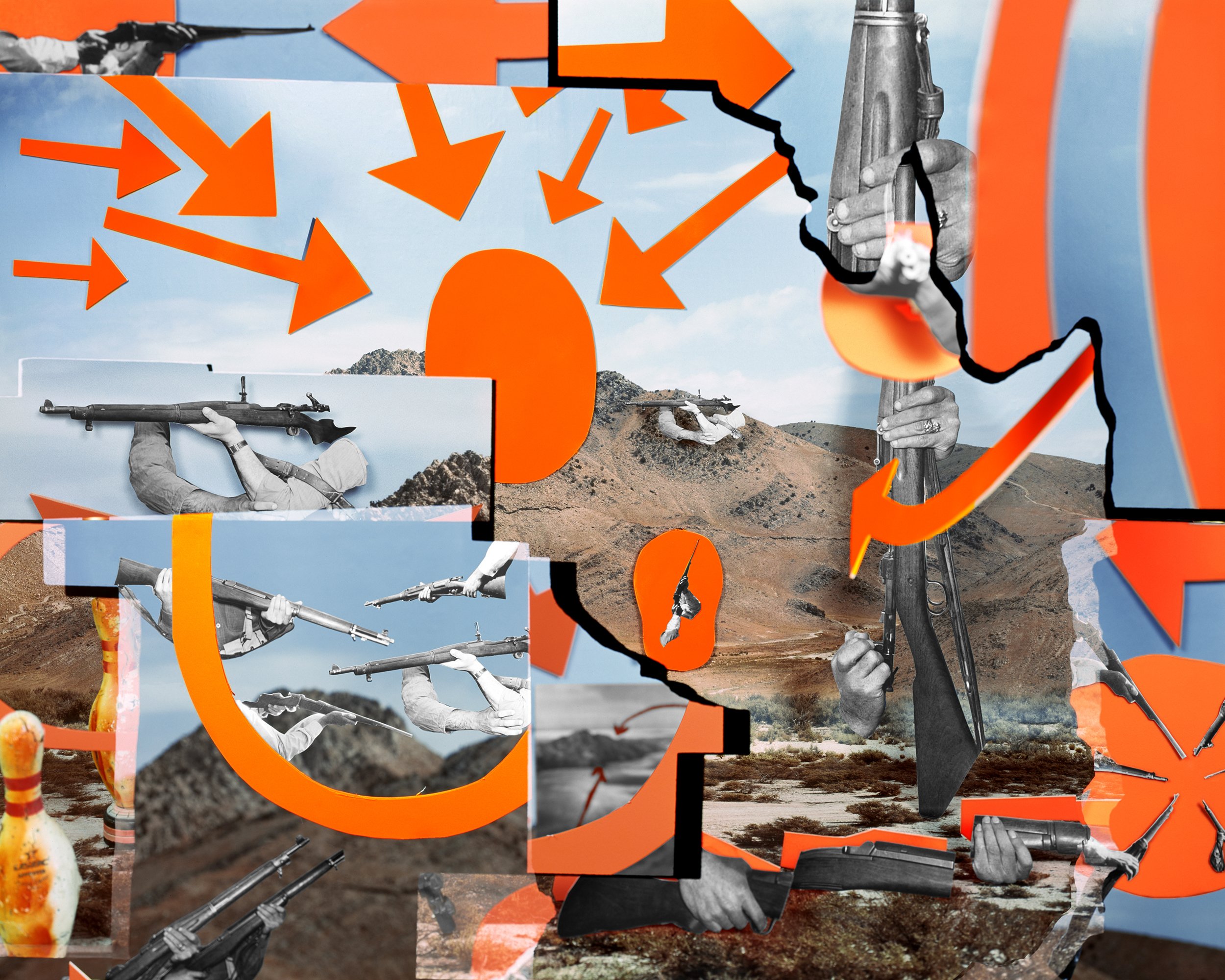
JW: The targets were the starting point for the High Visibility work. I moved to Utah from the Midwest and I had no experience with Bureau of Land Management (BLM) land. It was very new to me. I thought it was so strange that you could drive wherever on this land, drop a tent, and no one would bother you. It made me want to explore the landscape because it felt so different from where I was coming from. The desert is a very strange and intense place for a lot of reasons. I had stumbled upon one of the improvised gun ranges which compounded my curiosity about what was going on out in the desert. I started collecting the targets and experimenting with them in my studio. Over the years, as I was researching and trying to figure out the direction of the project, I would come across Bureau of Land Management visual language, like arrows pointing out the trajectory of a projectile for target shooting. I started incorporating that language into the work. There is also appropriated visual language that came from images from US Geological Survey archives. The work is really an amalgamation of different visual language pulled from surveying, indexing, cartography, and so on. It took several years to develop and organize the language for the work. In terms of the High Visibility color palette, blaze orange is the most used color for clay pigeons. When you're out in the desert, and everything sort of sinks into the earth, it takes a few minutes to see the objects that have been left there, unless they're brightly colored. Blaze orange was this color I would see glowing from the earth. I started using that (color) as a connecting thread for the project.
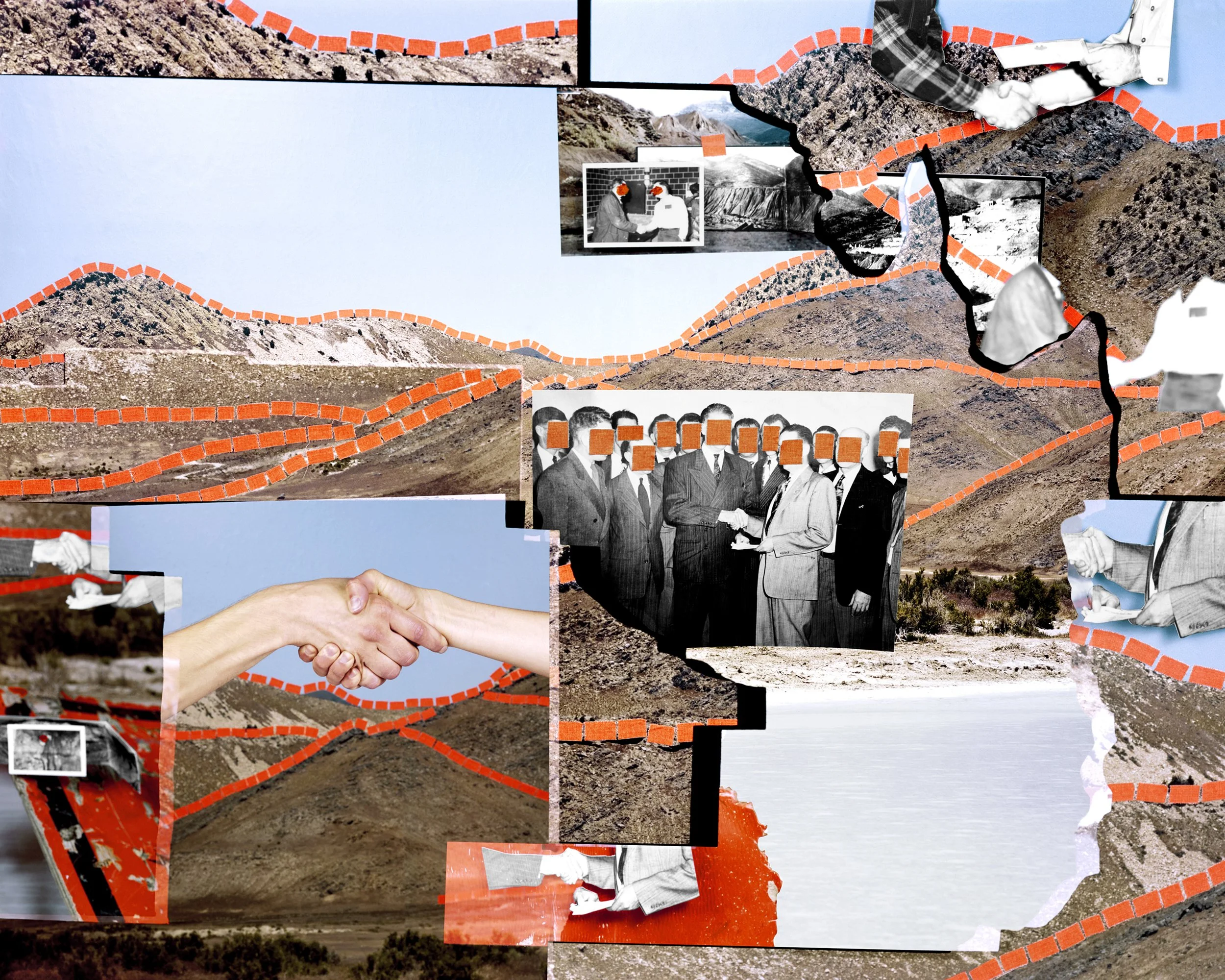
JF: Where are you accessing these archives from?
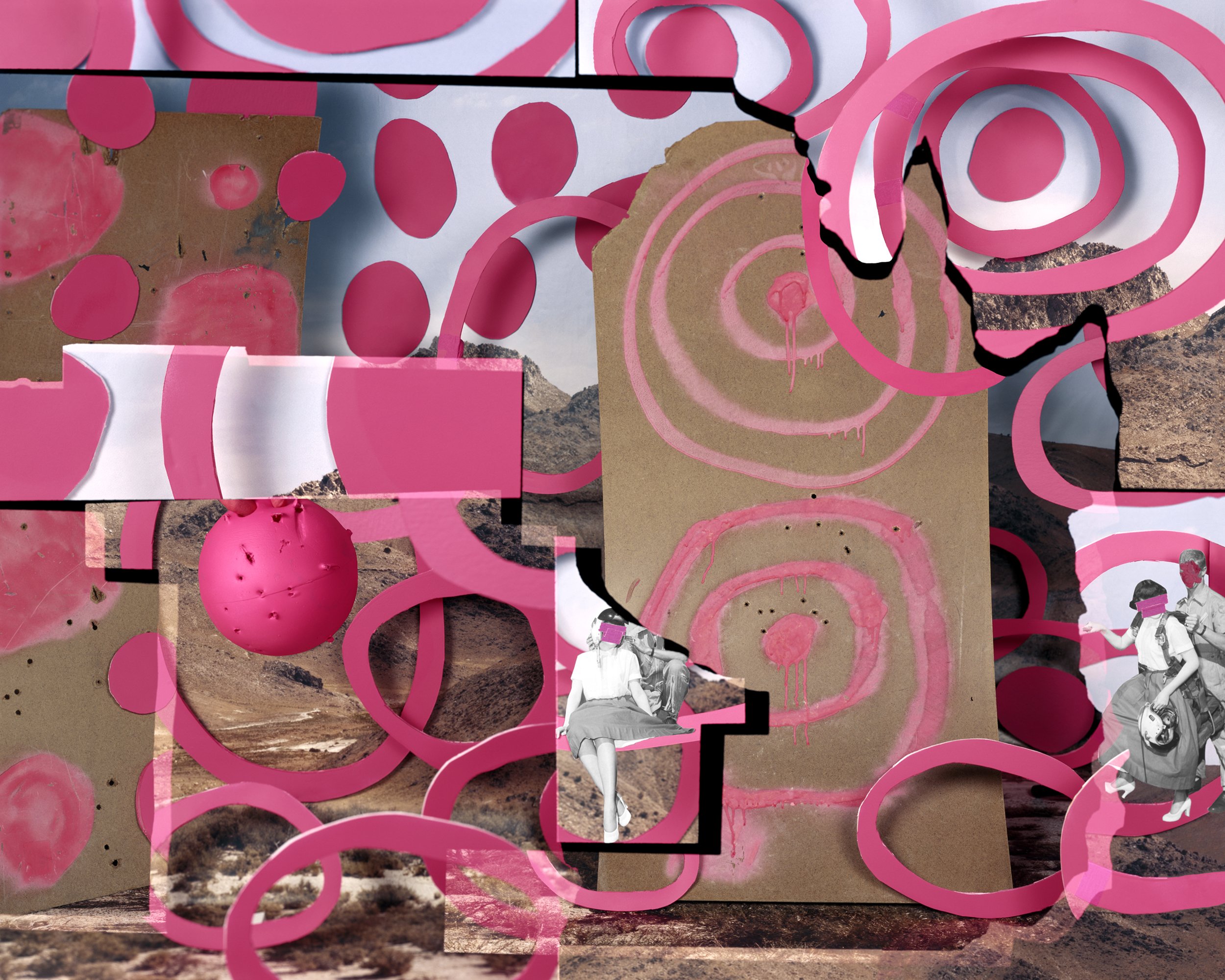
JW: I received funding from the Utah Museum of Fine Arts and the J Williard Marriott Library at the University of Utah. I was able to access both of their collections, but I really focused on the Marriott Library's photographic collection. A lot of the images come from a repository called Archives West which is in the West, Southwest, and the Pacific Northwest. Accessing the archive was a productive experience in trying to make sense of the landscape and the local history through images.
JF: The work in High Visibility (Blaze Orange) confronts the violent use of land in Utah's West Desert. Can you introduce this project more specifically and tell me what it's like to be a photographer working up against such overarching and harmful systems of power?
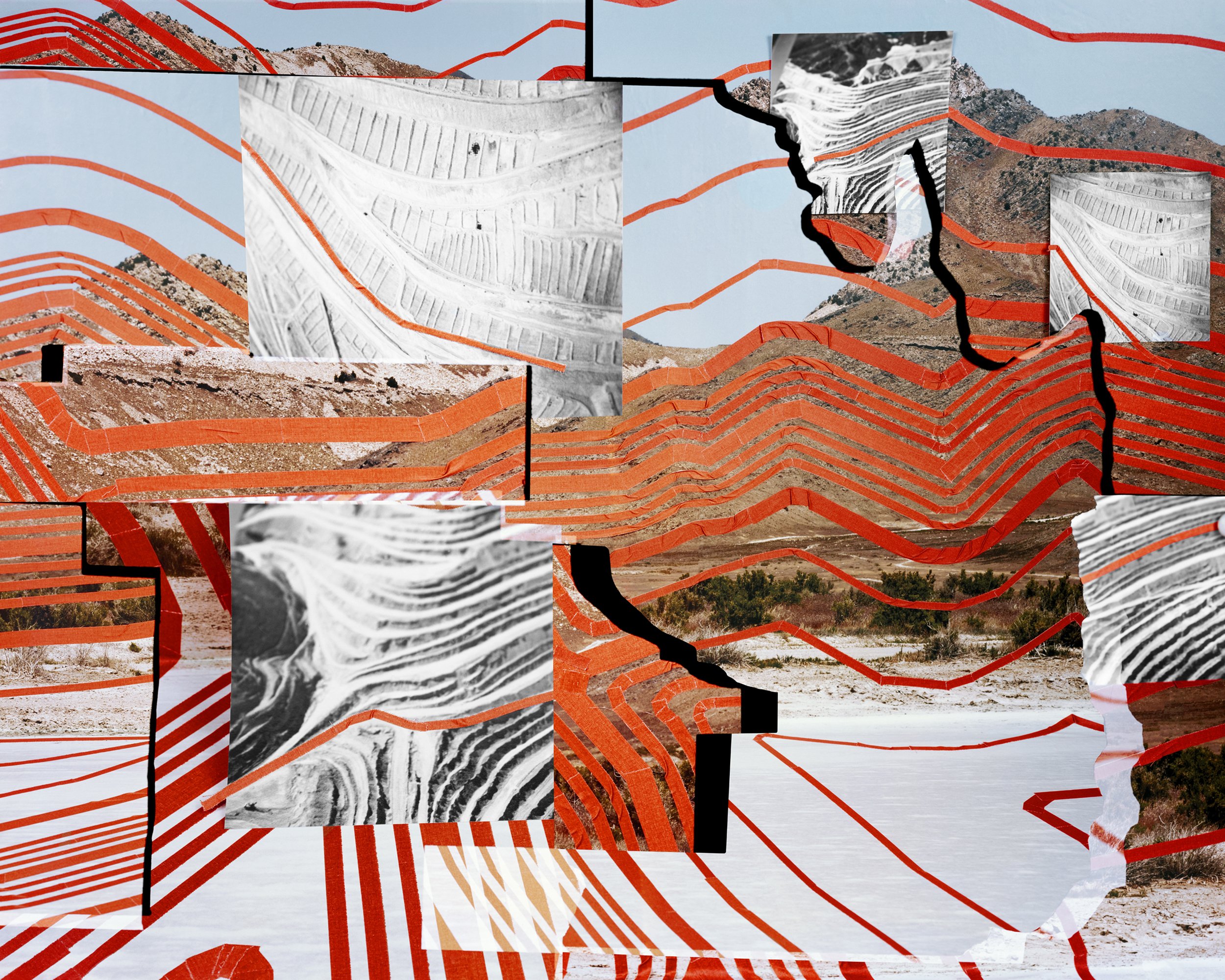
JW:High Visibility (Blaze Orange) uses photography, archives, maps, and performances to speak to the violent extraction and exploitation of the landscape in the American West and its connection to late-stage capitalism. As a photographer and an individual, it’s hard not to think, what can one person r e a l l y do within these systems of power? But I don’t accept that I can’t do anything about these systemic problems that I'm seeing in the place where I live. If I just wrote them off as, well, you can't do anything against big corporations and late-stage capitalism, I would have no hope for the future. I have a three-year-old, that’s not really an option for me. So, making the work feels like a way of dealing with all the emotionally difficult things that are happening and the fear and uncertainty of the future. For example, the Great Salt Lake is drying up. There's a lot of conversation around what happens if it dries up. If that happens, the Salt Lake valley could become uninhabitable. As the lake dries, harmful heavy metals are exposed creating toxic dust storms. So, I try to bring a critical perspective to the complexity of what’s going on and bring awareness to how this land is being managed. When I'm talking about the work in the West, a lot of people will be nodding their heads emphatically because they understand but when I talk elsewhere it feels like I’m sharing something new or informative. It's a matter of trying to maintain some hope for the future and not just accepting what's going on lying down.
JF: You've been working in the west for a number of years at this point. How have you seen the west change as late stage capitalism has exponentially accelerated since you’ve been there?
JW: I’ve seen it change both negatively and positively. One thing that comes to mind is the US Magnesium facility, it’s been non-operational since 2022 but recently filed for bankruptcy, primarily due to environmental and financial liabilities. This feels like a big deal because there is an environmental study that says the company was responsible for 25% of northern Utah’s pollution. As I mentioned, the drying of the Great Salt Lake has been an important focal point. I do feel a sense of mobilization around it and the concerns in the community. As a result, the legislature has had to address it, but whatever progress is made seems so minimal, it's never enough. Another part of this is how water is used in the state of Utah, something like 70% of water is being diverted for agriculture, which is primarily for growing alfalfa to feed cows, and instead could be going back to the lake. Just this year, I’ve been following the development of a lithium extraction pilot program on the northern arm of the Great Salt Lake. The whole idea is that it’s fast, cheap, and clean – meaning, they aren’t using an evaporative process to extract the lithium. But why do we need to extract it in the first place? To make more EV’s to put on the road or make more smart phones – to what end? It brings to mind the Mark Fisher quote, "it is easier to imagine an end to the world than an end to capitalism".
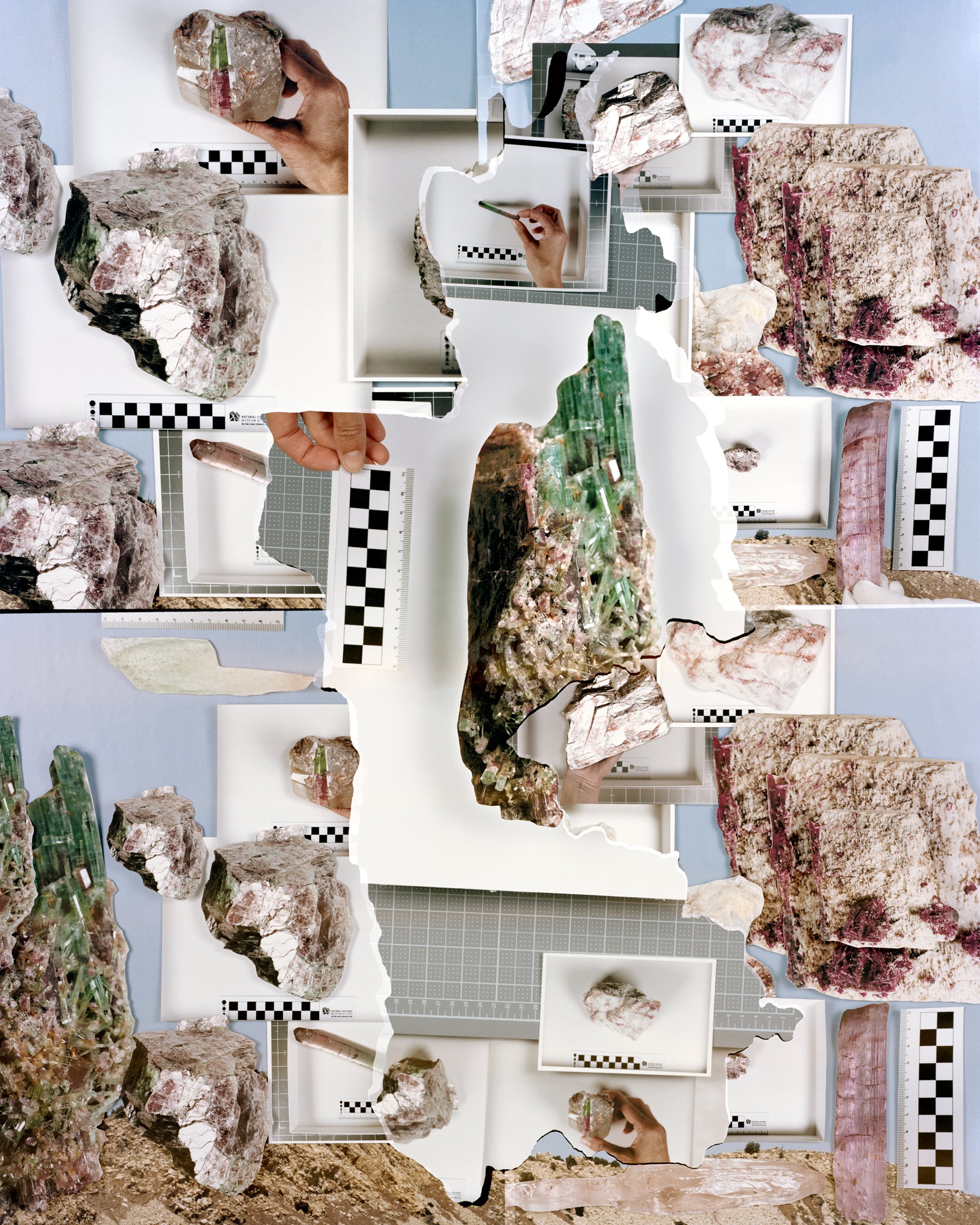
JF: The new work you’re making (currently titled Buffer Zone) specifically focuses on the Department of Interior and the Department of Defense and how they work in tandem to achieve their fraught agendas in the Great Salt Lake (GSL) Sentinel landscape. Given all of the seismic shifts these agencies have taken in the last year in the new administration, do you need to think about these systems in any different ways, or do you see it as a continuation of what was already?
JW: It's been a strange experience to try to keep up because it changes quickly. I met with the coordinator of the GSL Sentinel landscape earlier this year. Initially, the language on their website about the sentinel landscape designation was very much focused on the climate crisis and the intersection of ecology and the military. How the aims and objectives of the designation were military resilience, community building, and protecting the environment. As things have changed over the last year, some of the more climate or ecology focused language has been limited. I screenshot the various maps and languages that get updated on their website to try and keep track. I have a few different versions of the map of the GSL Sentinel landscape. The most recent one is really focused on the military, how they're using the land, and the extension of their buffer zone. It seems to have less to do with the initial reason that they got this designation as a sentinel landscape. Still, the core of the project for me is the intersection of soft power (conservation) and hard power (military). I’m interested in how conservation is being used as a tactic to subdue the public into agreeing that the military needs this and that they’re helping to sustain and conserve resources for a long time. Which for me, begs the question, for who and for what purpose? I’m trying to stick with my gut instinct about how to continue with the work, without calling too much attention to all the changes made by the current administration, much of which is just noise (like, the DoD becoming the DoW).
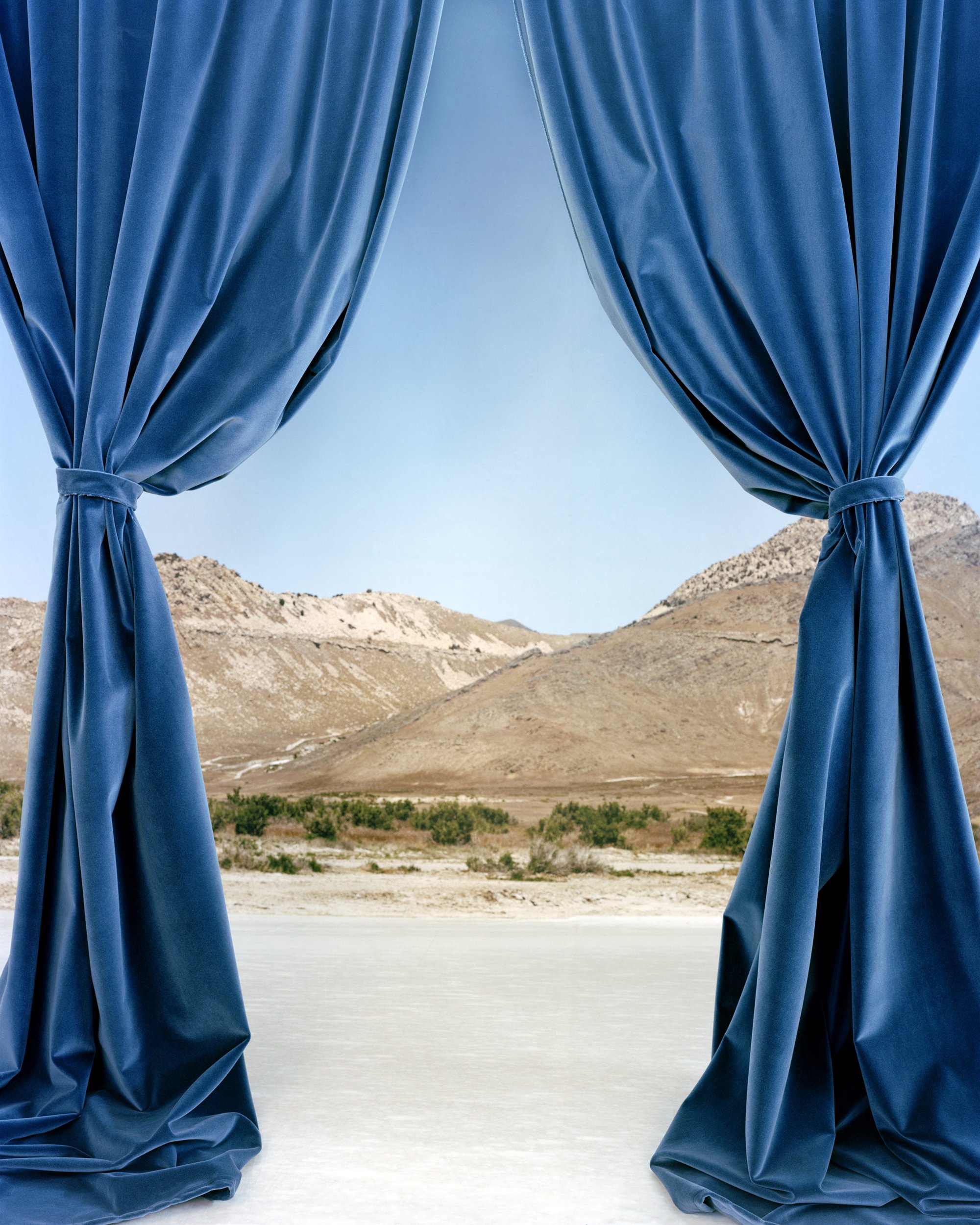
JF: What exactly is the Sentinel landscape defined as?
JW: It's a mix of partnerships: federal, state, local, and private. The Department of the Interior and the Department of Defense are the two big ones. The Department of the Interior houses the U.S. Geological Survey, the Bureau of Land Management, National Park Service, and a lot of other federal offices. There are many sentinel landscapes throughout the country. The thing that ties them is that they all have military installations and are ecologically significant. The one in Utah is especially interesting. It is 2.7 million acres and includes four military installations: Little Mountain Test Facility, the Tooele Army Depot (which has a north and south location), Camp Williams, and the Hill Air Force Base. The sentinel landscape designation extends all their buffer zones. It’s interesting because they’re supposed to be environmentally conscious, but of course, they're also storing all this old infrastructure, bombs, weapons, and military technology. The designation is meant to support military readiness and preparation and support various training and testing that the military conducts while also protecting and preserving the environment. It's totally absurd, especially when you consider that the U.S. military is very likely one of the world’s biggest polluters.
JF: I had the chance to see your show at Filter Photo space in 2022. Something that stuck with me is the way you're using sculptural elements to almost recreate your photographs in the gallery in a very similar way to the way you're creating the photographs in camera. I'd love to hear more about your motivations for that— taking things off the wall and putting it on the gallery floor.
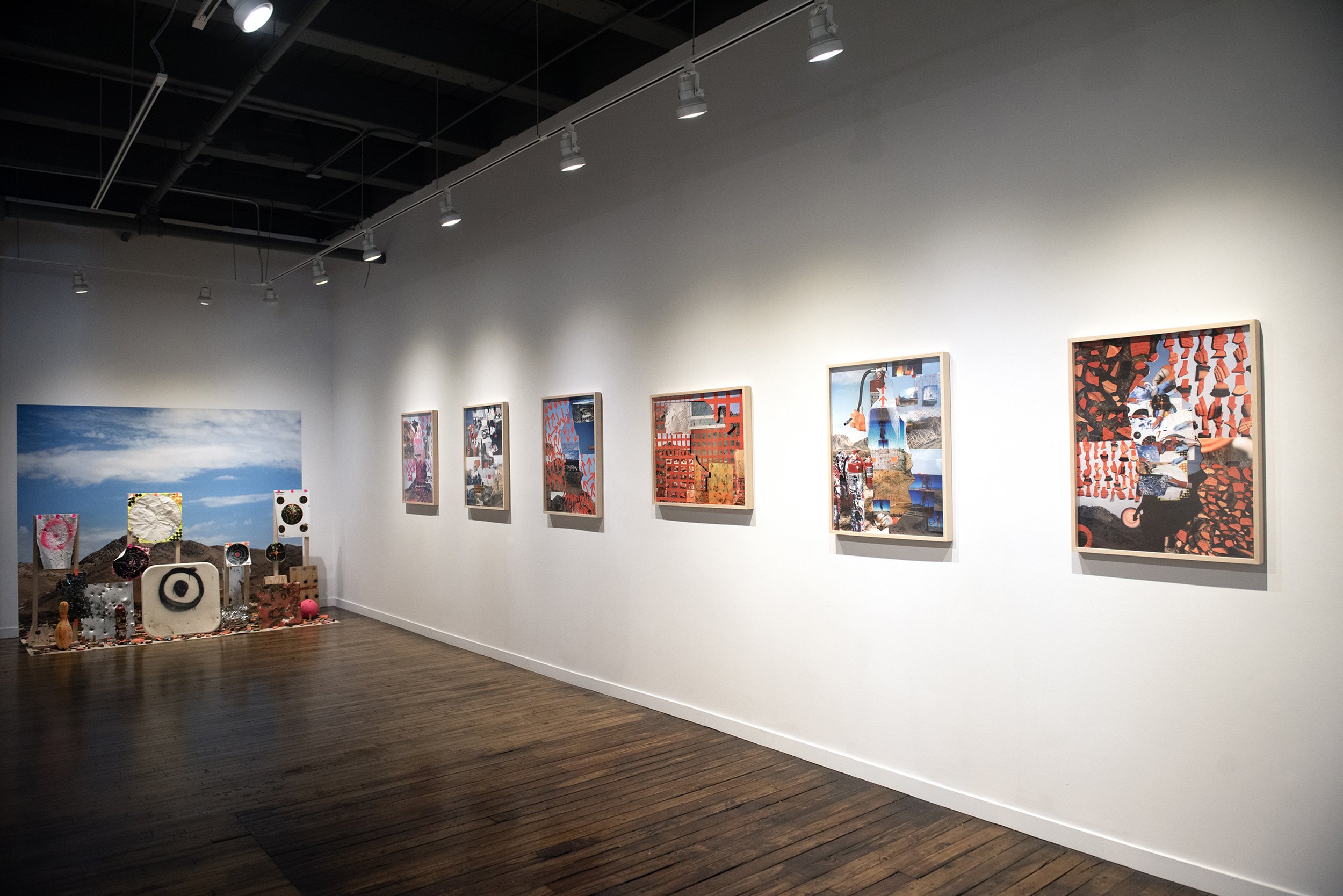
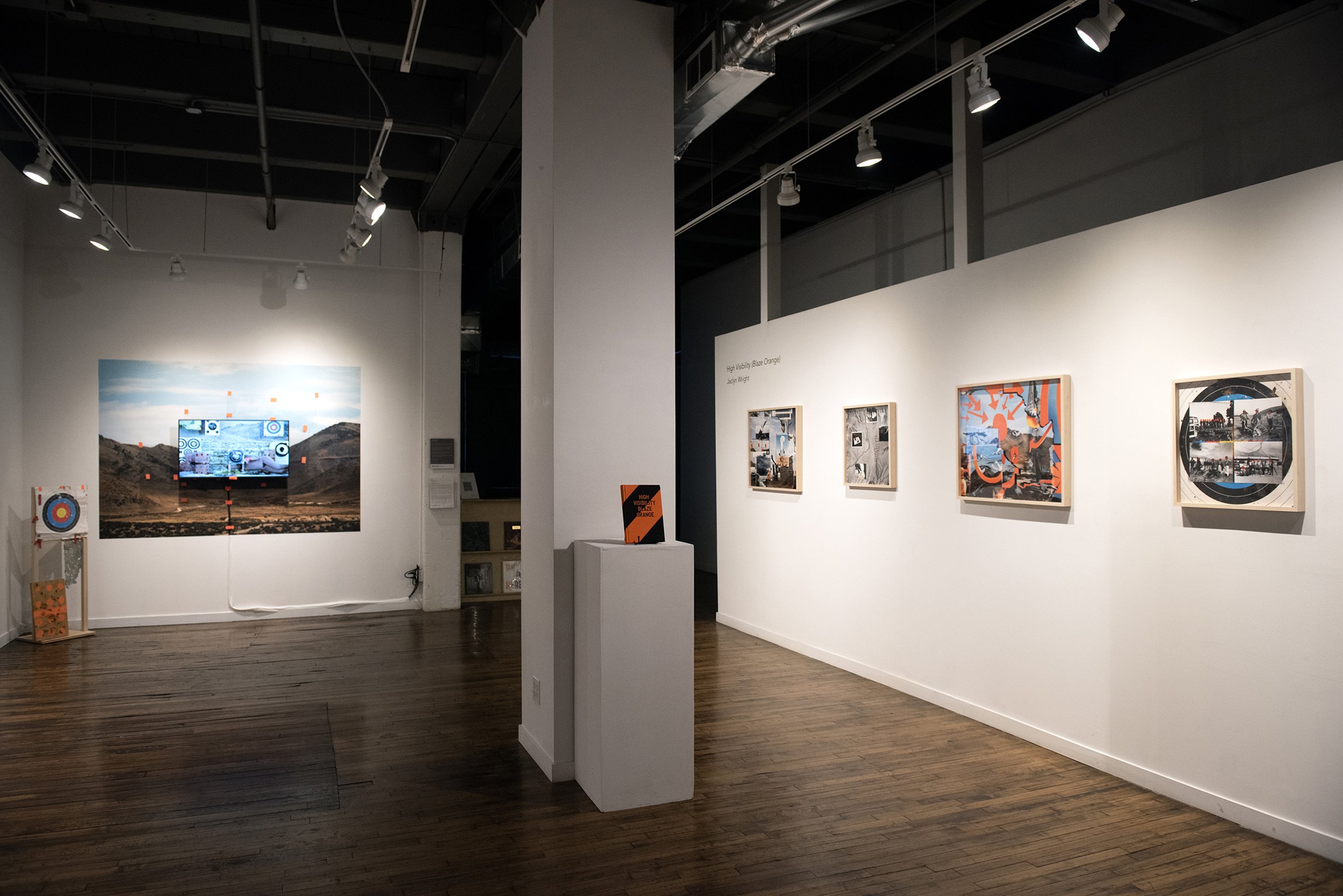
JW: I think that process has been an important part of my practice for a long time. But previously it was invisible to the public anyway. I wasn’t hiding it because of some top-secret thing that I was doing, but I didn't feel like it needed to be shown. I was interested in this idea of making something for the camera and it existing only as a photograph and not existing as an object. At some point, someone asked me why I wasn’t making that (physical) part of my practice visible. I had a show early in the making of High Visibility where I felt I could experiment and try something different and this was the first time I included one of the sculptural works. Because I was collecting these objects directly from the desert, I knew that I didn't need them to be refined. I wanted to call attention to what they looked like as they were collected. The other thing that led me to revealing more of the process or including some of the sculptural work was working on the High Visibility book. When I was speaking with the publisher early on, they were like okay, we're seeing these final images, but you're talking about all this other stuff— what is the other stuff? The book is 192 pages, and the last 15-20 pages are the final works. The rest of it is all the objects and images collected and the process.
JF: In the book's inception did you know that's how you wanted it to function?
JW: I had no idea. And when I received the award, I was like, well, there's only so much “final work”. What does this book look like? It took a lot of back and forth with the publisher to develop that. Early on in that process, we were talking and one of their suggestions was, what if we thought about this as a manifesto of sorts, what if we started there? That helped me work through how we might break down the different sections and collections that culminate in the “final” work. That's something I think about all the time now, in my new work and as I was continuing to make the High Visibility work.
JF: What's next for you?
JW: I'm currently on sabbatical, so I have a lot of time to focus on my work, which is great. Right now, I’m continuing to plug away on this new project. I’m trying to figure out what the work looks like and spending time in my studio doing that. Hopefully I'll have something to show for that soon, I'm excited about it.