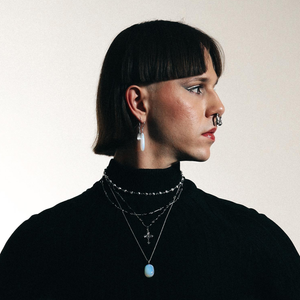
Nika McKagen
Photographer Nika McKagen won the Film Photo Award in 2024. Jack Fox catches up with Nika on her work.

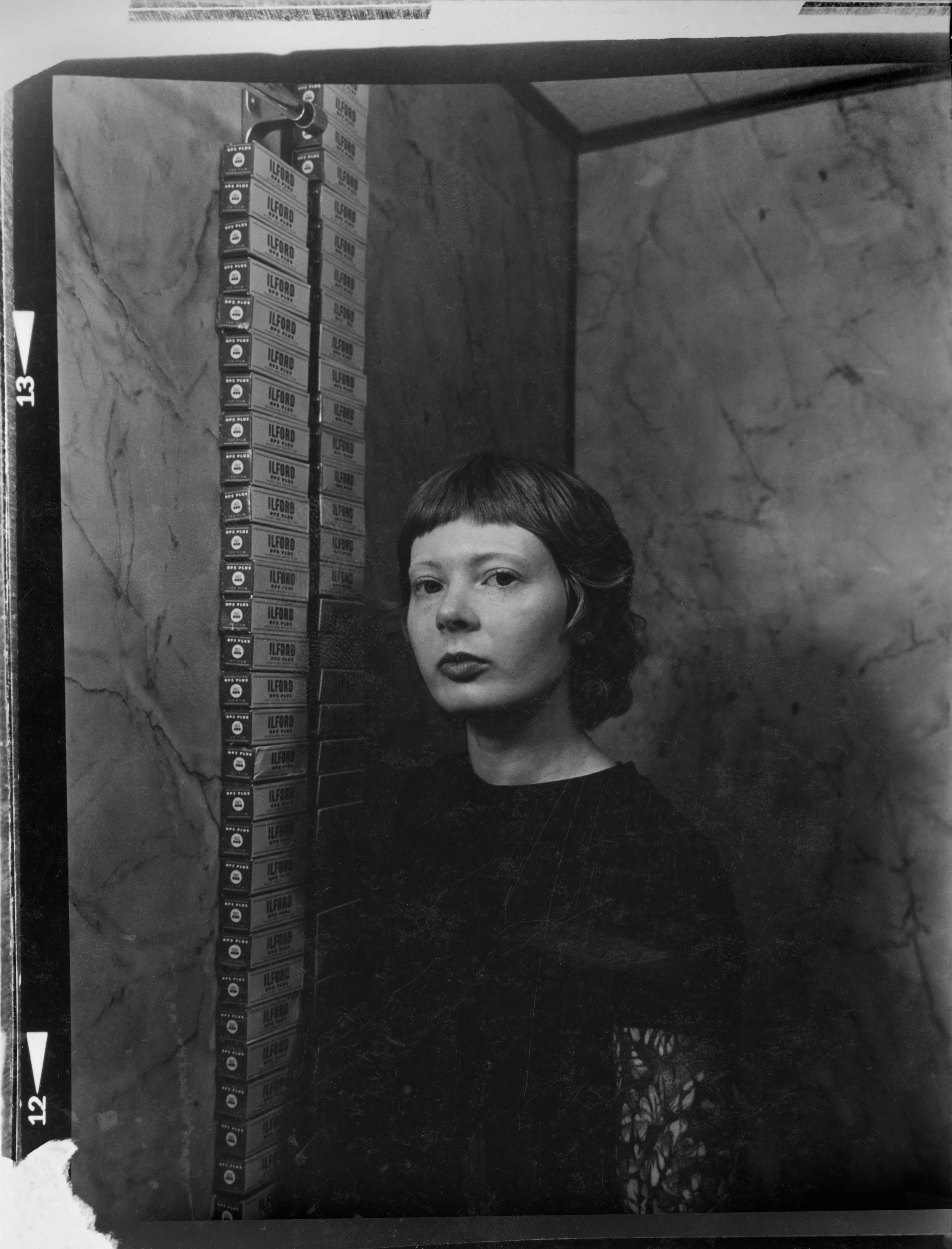
© Nika McKagen
Jack Fox: What initially drew you to photography, and what keeps you working in this medium, and why film?
Nika McKagen: I got my first darkroom setup when I was fifteen. I spent a lot of time clumsily teaching myself how to work in silver and immediately felt so drawn to the intrinsic alchemical nature of the medium. There’s a weird zone of darkroom psychosis that one enters when working in there for too long in where the fumes start getting to you and the light is red and you start seeing things out of the corner of your eye and it’s in this zone that ephemera and chance really reign. I’m pretty uninterested in working digitally; it’s too immediate—here’s something about the analogue process that encourages mystery and a loss of agency in the process. When teaching darkroom to students, especially those who only have a digital frame of reference for image-making, experiencing the moment at which they see their print develop onto the paper in the bath for the first time feels like being witness to some sort of magical recreation.
JF: You're working with a lot of vintage papers, right? Which increases the chance and possibility of the imagery.
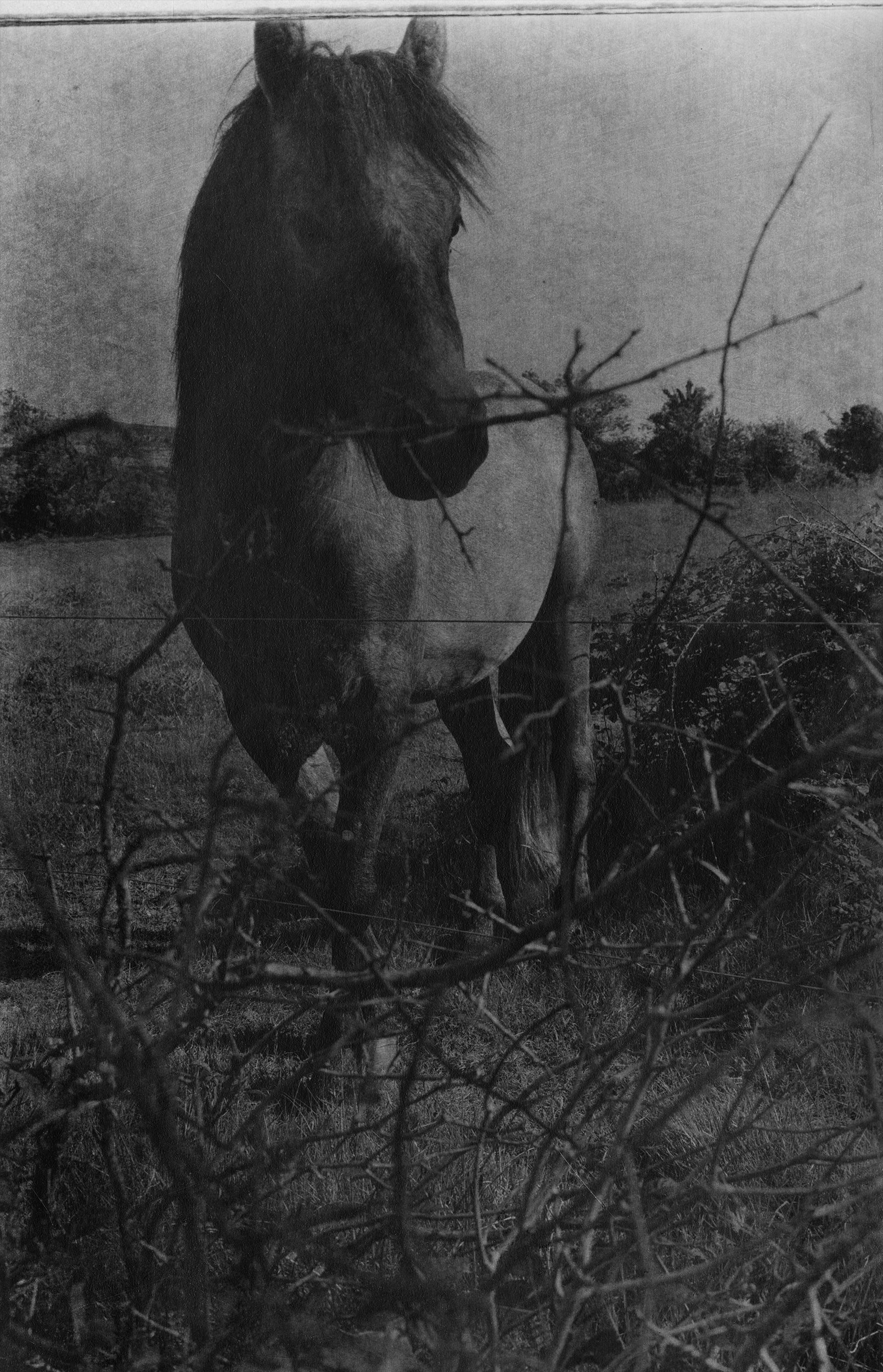
NM: Yea, the expired paper is amazing. I started working with it a couple years ago when one of my professors I met during my MFA, Darcy Padilla, had a bunch of extra stacks laying around and gifted me some of it. All the paper I work with is around 40–100 years old. It’s really thin, and the emulsion is often bitter and tears easily. It sometimes requires slightly different chemical processing and it’s pretty rare for it to be able to form a coherent image. Silver gelatin paper is composed of silver halide crystals that intake and code light and shift to grey or black tones when they’re developed. The expired paper I work with has been sitting around for decades, and so has been exposed to indirect light throughout its lifetime. When I process it, I really have no ability to know if the paper will be able to produce a highlight at all or if it’ll be too fogged. It’s lived this entire life before I even get to touch it and that makes working with it a really special experience. Lately I’ve been working with stock USSR paper that I get from my paper dealer in Ukraine. I send him a couple hundred bucks and he sends me whatever he has in stock and sometimes it works, sometimes it doesn’t, and sometimes it does a third thing. My family is from the USSR—I’m first generation American—and there’s a certain amount of inherited fear from that culture that feels like it gets inscribed into the paper itself. So, working with that paper was a really integral shift in my practice. Every pack of paper feels so charged. It does its thing and I’m just along for the ride.
JF: There is a palpable feeling of a sort of decay running through your work. Perhaps this is tied to a dying world or dying memories. Can you speak to that a bit?
NM: I don’t feel that I’m exploring the dying world specifically, but rather working to uncover an access point into some kind of other world. I’m particularly interested in finding the boundaries and edges that allow us to enter those slippages between different realms, which often reveal themselves around moments of bigness. While I do agree that there’s a certain amount of decay and deterioration naturally occurring as
conversations amongst these realms, there’s also an uncanny atmosphere that almost feels eternal in some way, which feels tied to mythos and storytelling. For example, I’m often thinking about Hades and how certain translations refer to it as the unseen place—how it’s a place where all of these shades (what we might call ghosts now) exist. The underworld is thus inherently a site that is tied to memory, and especially to what happens when time and depth intersect.
JF: When I sit with your work, across all of your series, it feels clear to me that you have a keen sense for world building. The world you are creating, at times, feels like something completely different to our reality, and sometimes it feels like you are peeling back a layer to reveal the way things truly are. Is world building something you often think about with your work?
NM: Yes! Much of my background is based in writing and literature. Since English was my second language, I think a lot about how we meaningfully communicate in moments where we may have to perform some translation, whether literary, visual, or between a body and God, or the Other, or the earth. So, everything comes back to the story for me, especially what the stories that we tell say about us and about the culture in which we live. All of my work is based firstly in reading, and then at some point become translated into visual artifacts. I’ve been really interested in looking at Rong Rong’s and Katherine Hubbard’s photographs lately, who are both creating environments that totally upend our hierarchy of narrative and storytelling. I’m interested in creating tableaus of the spaces between worlds, especially when these cracks become evident in the domestic realm. I work pretty sculpturally when I’m creating these artifacts, doing some life casting and fabrication, and then photographing its intersection with the body. Then, the sculpture lives at the back of my studio, all alone, for a long, long time. I like making these little environments because they have something to do with language to me. Like, if languages are comprised of signs like sounds and words that point to the things that are beyond them, or that exceed them, I think that photographs can act as signs that point to what exceed the visual and point to the mystical.
JF: A piece I particularly love is And In Eyes No Sight (Sappho). I want to know more about how myth-making and reference informs your practice visually. I also see that you're referencing Anne Carson and things like this, which is related to Greek myth, but it does seem that reference tends to be a starting point for you.
NM: Thank you—that piece is part of that live casting series I was just speaking about. All of my work, especially the titling, starts in reference. That particular quote is pulled from an Anne Carson translation of Sappho’s writings, of which we only have fragments. Which already is the most beautiful thing in the world. Carson has this unique way of translating, which is the kind that binds the mythos to the translator in a way that changes the story inherently. The task of a translator is to re-write—it’s to carry signs on their back throughout their process of mutating and shifting into other forms entirely and then laying them down gently at their next destination. Something about the metamorphosis of the word into another language is reminiscent of a katabasis. I’m so interested in committing a similar type of translation but one that happens between the written narrative and the visual photograph.
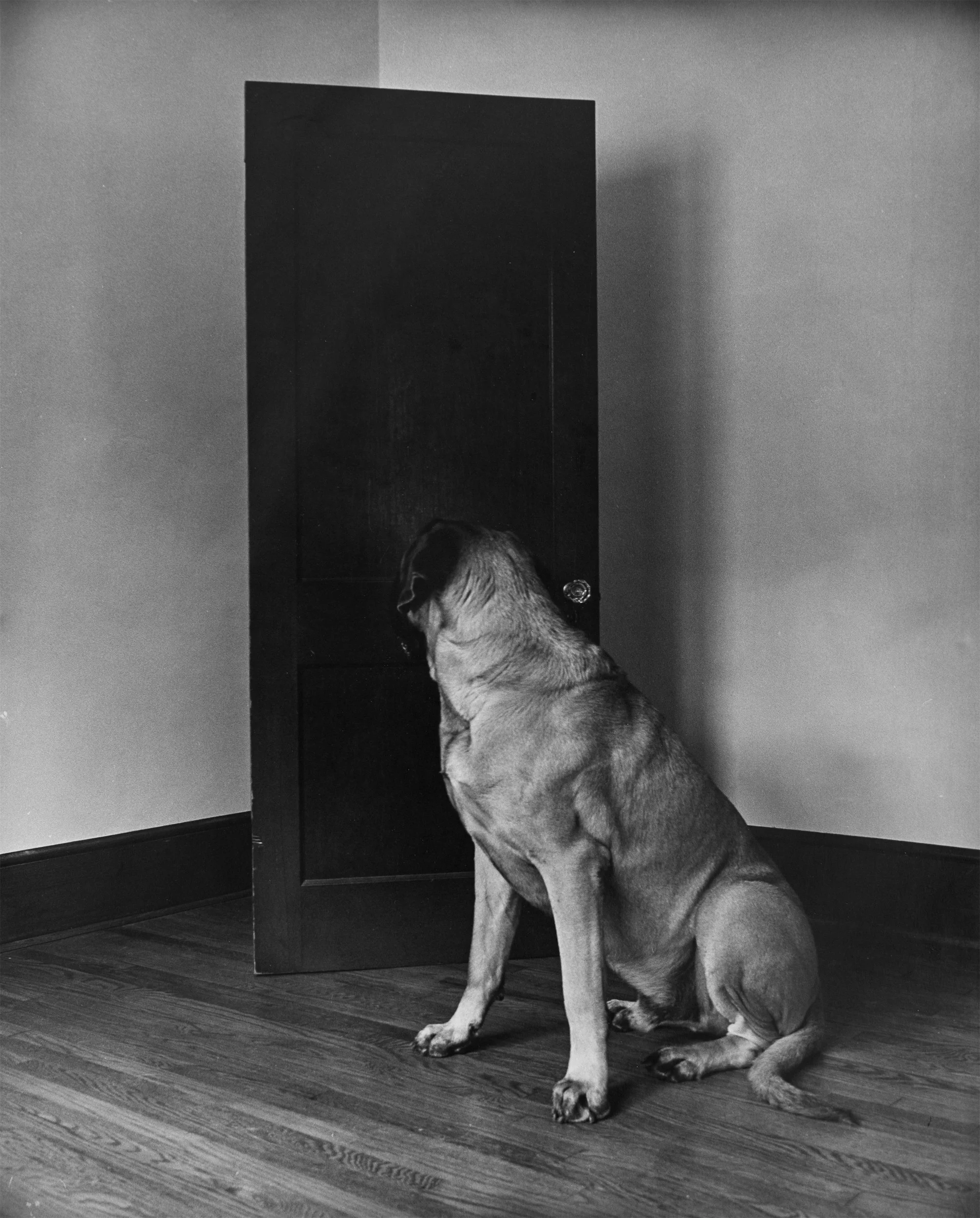
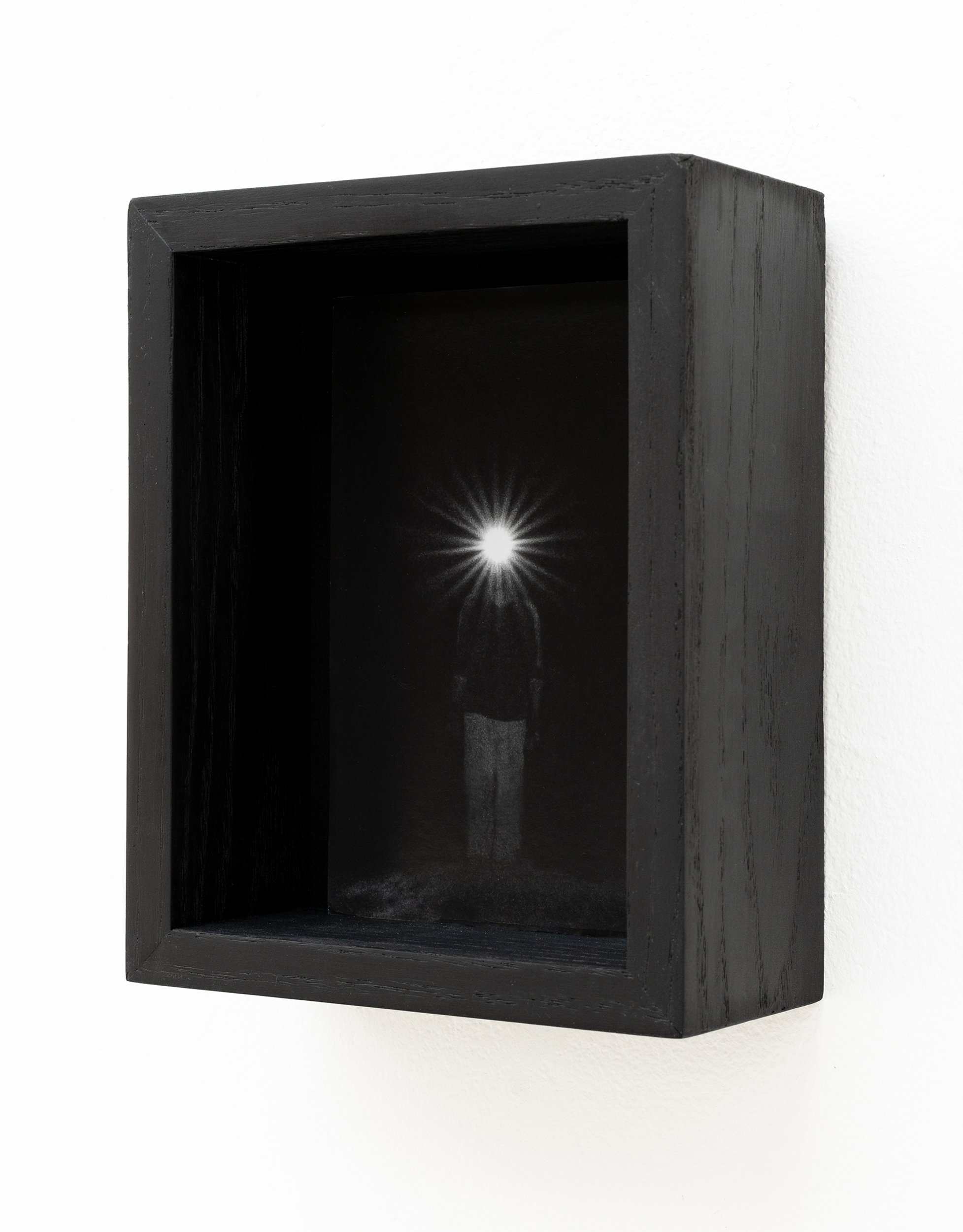
In my project The Grotto, many of the tableaus are based on Greek myths or on the concepts that often frequent myth, like desire, morality, and experiencing God or the void. There’s a piece in this project titled Orpheus + Eurydice (Orpheus’ Alternate Vision). I didn’t realize I was making a version of this myth when I took the photograph, but like happens frequently, the myth bonded itself to the image after it was made. For those unfamiliar, the myth is based around Orpheus descending into Hades to try to retrieve his deceased wife. Through his lyre-playing, he convinced the gods Hades and Persephone to let Eurydice come back upstairs with him, with the caveat that he must not look back at her while they’re still underground. There’re lots of different versions of the myth. Some people say that he turns around, others say that he crosses the threshold and she never does. In some accounts it’s viewed as a cruel joke from the gods who would have never let her actually surface and instilled Orpheus with false hope. Though by most accounts, Eurydice’s personhood is defined only by Orpheus’ desire for her. And the understanding of this myth once placed into the contemporary domestic realm, and when allowing Orpheus to carry her out rather than let her follow, might give us a slightly different understanding of the inherent desire and the identity around being a woman in that world.
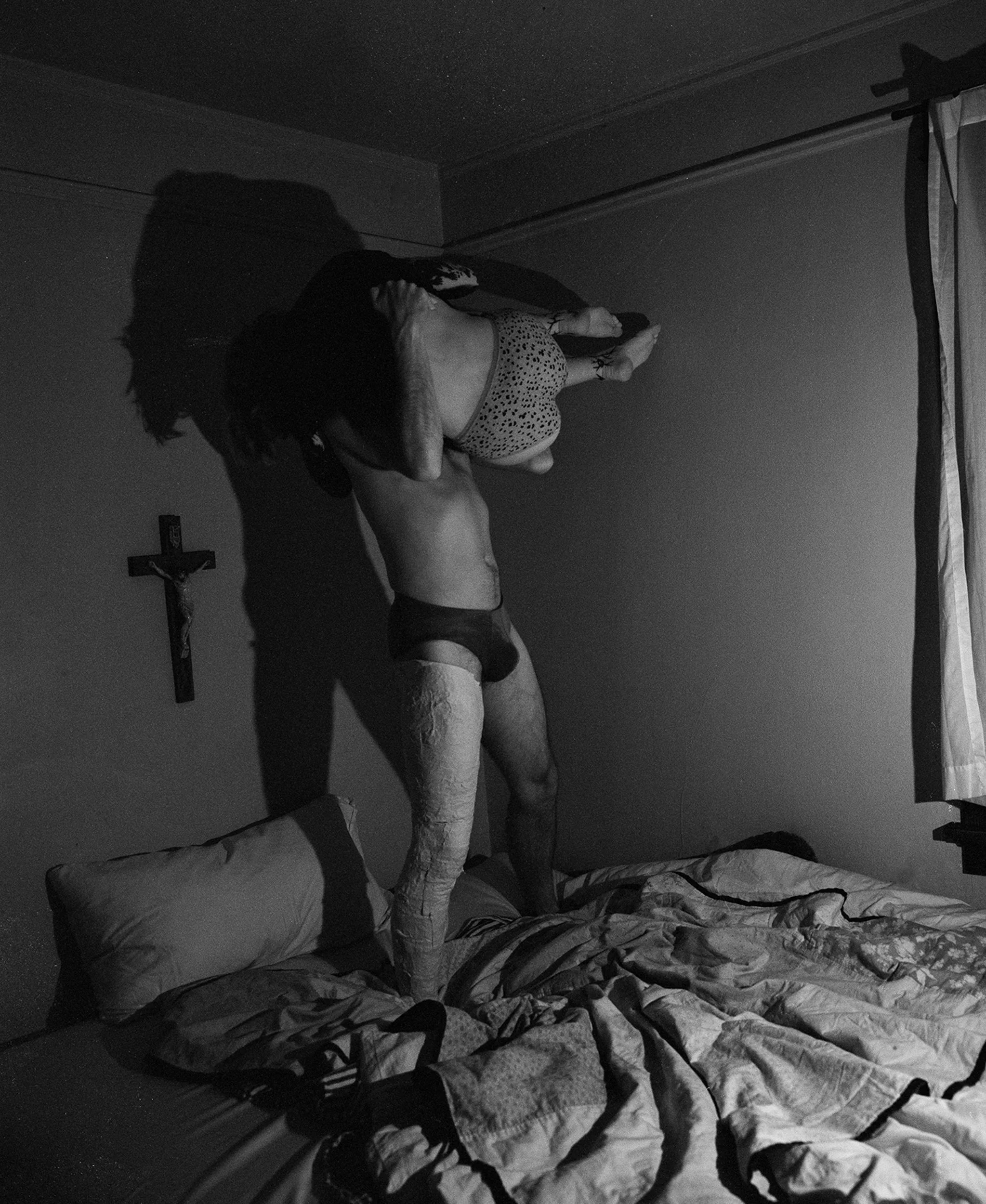
I had no idea why I was pulled into the Greek mythic realm specifically until I earlier this year when I had a studio visit with Nadia Sablin, a really fantastic Russian-American photographer. She mentioned to me that because religion was ostracized in her youth in the USSR, her parents would tell her Greek stories rather than biblical ones. So, the first gods that she ever knew were the Titans and the Olympians. There’s this interesting vein of the Greek world in Russian culture that I had no idea was there prior to starting this project.
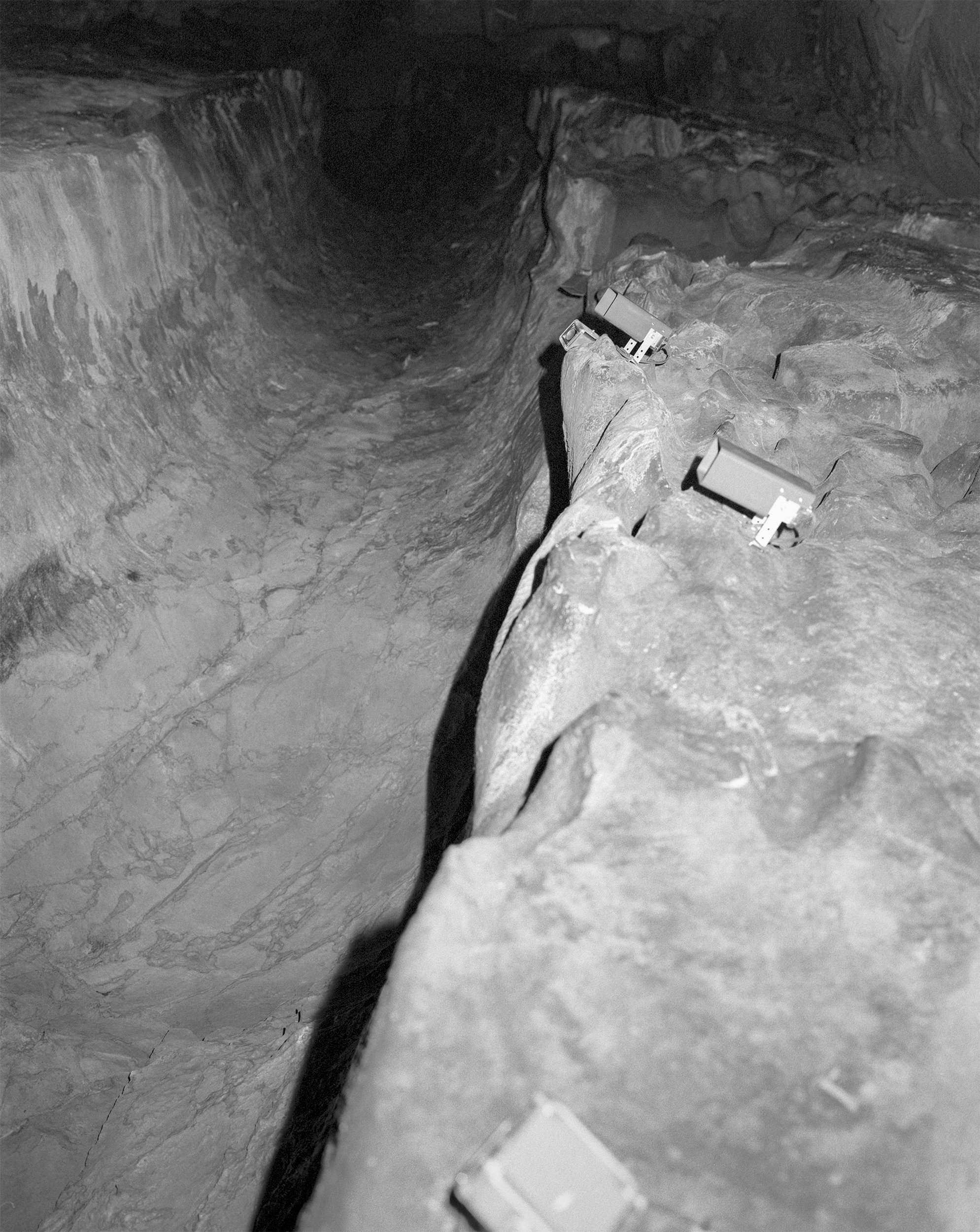
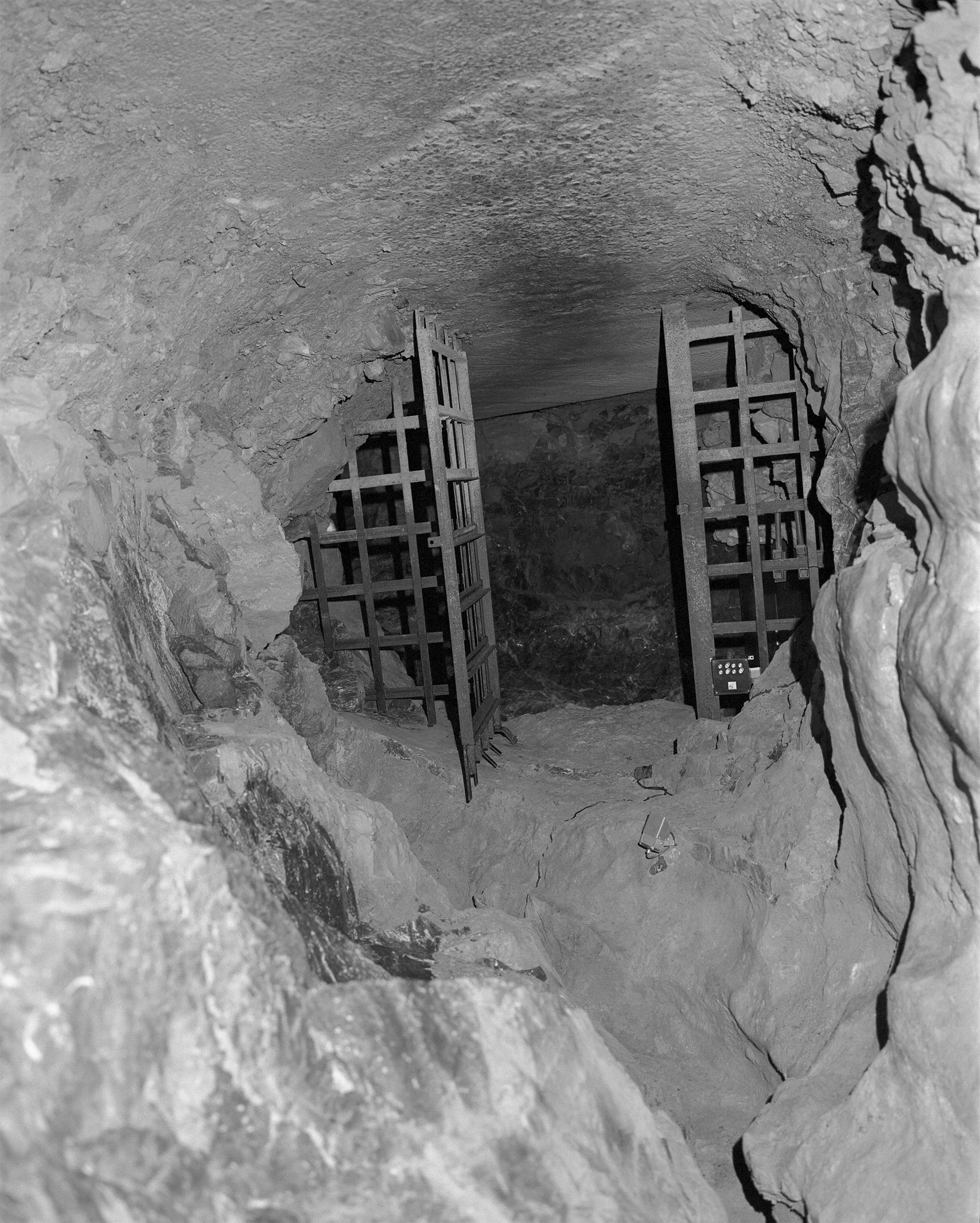
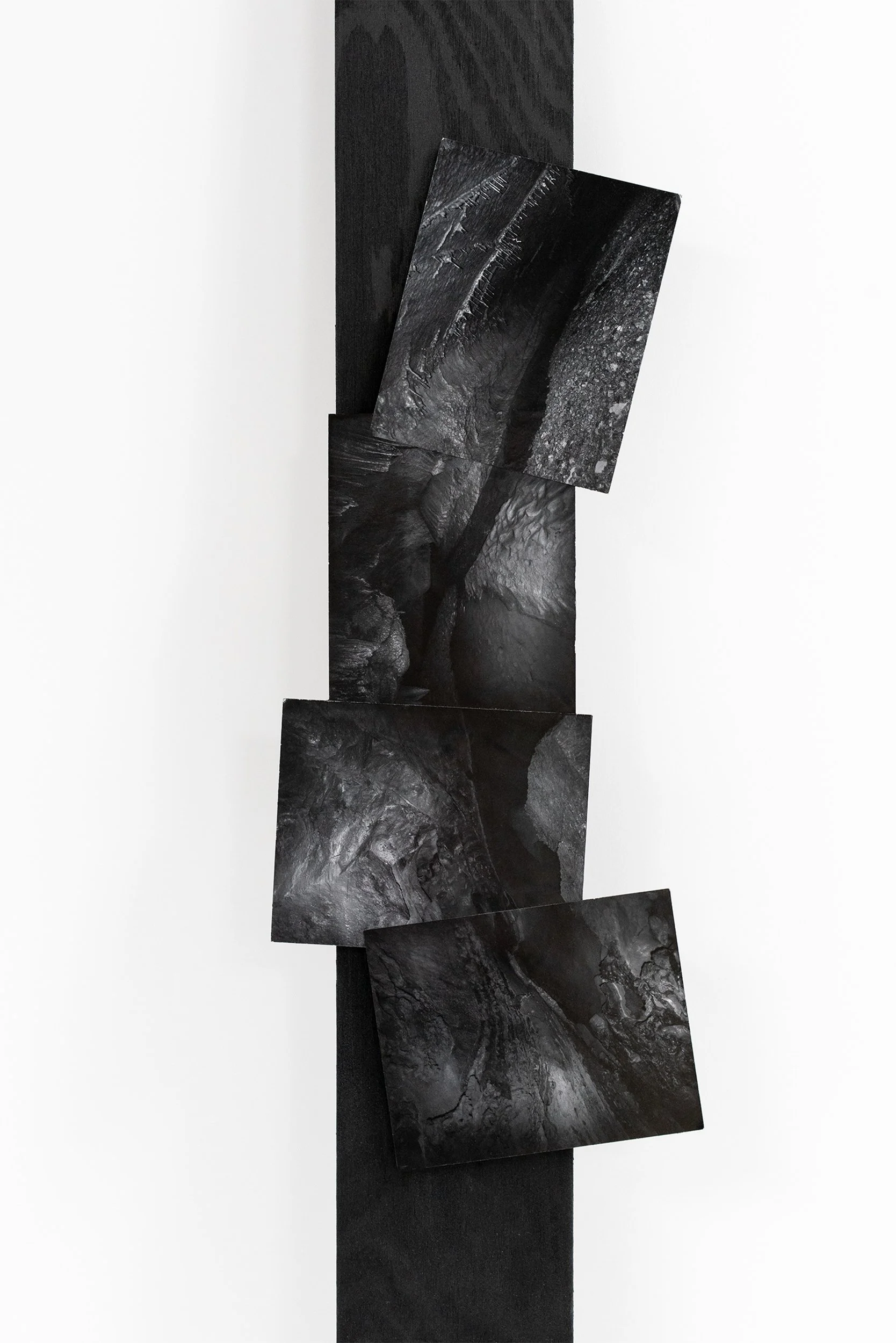
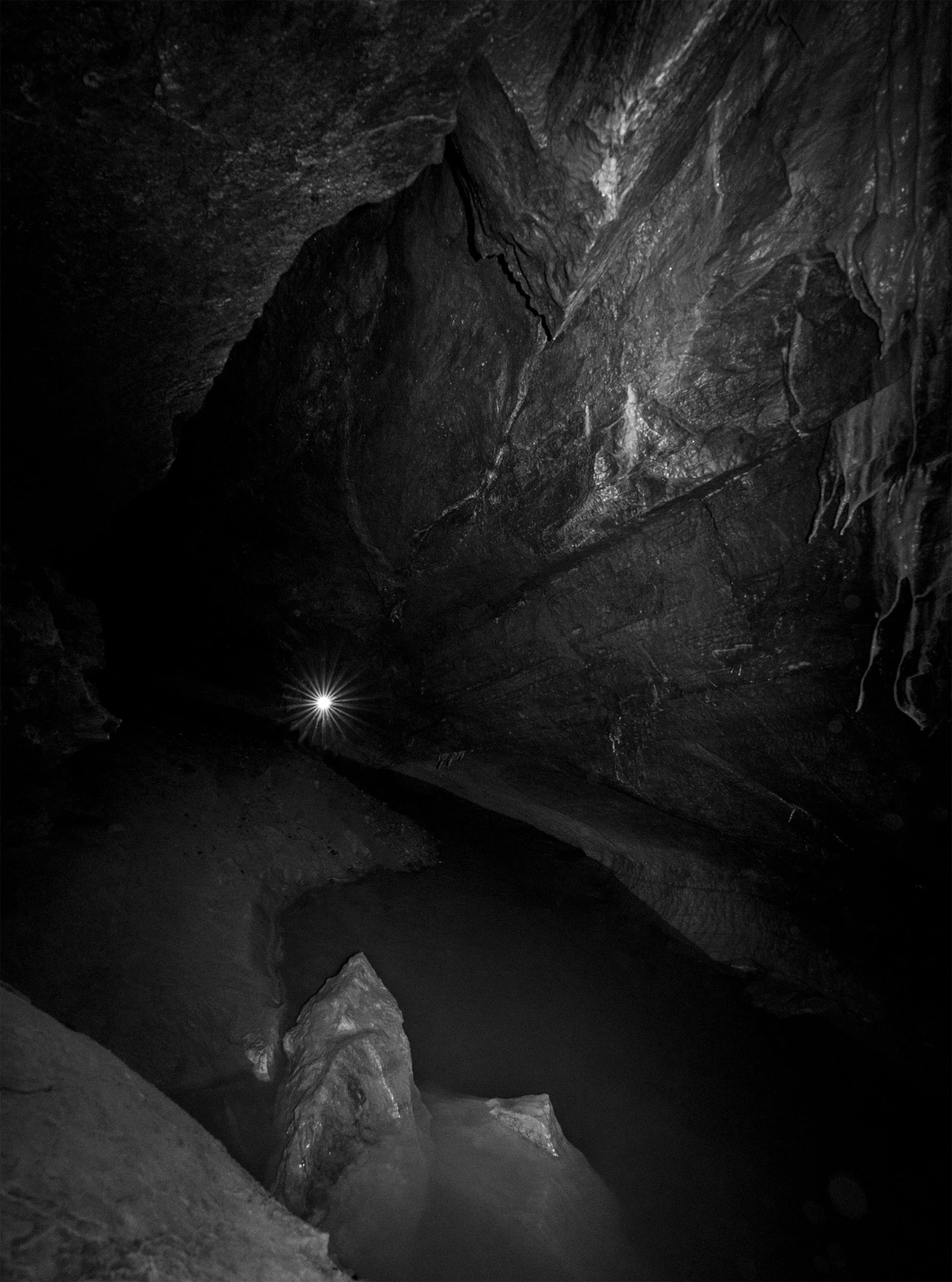
JF: Your series, Karst, is set within the subterranean caves of southwest Virginia that you used to visit with your father as a child. I'd love to hear more about the project and what initially motivated you to begin the work.
NM: My dad mapped out some caves in Southwest Virginia while I was growing up, so we spent some time underground. When I went caving with him, he sometimes tied a rope around me and sent me through a tiny hole that the big men weren’t able to fit through, and I would tell him what was on the other side, and then he would give me a can of Bernie Weenies as my reward. He died when I was eight, and so I started to spend all my time aboveground. I didn’t go back into those cave systems until a few years ago, about twenty years after he died, thanks to the VPI Grotto and Henry Prideaux acting as my intermediary. On that first trip underground, we ran into another group of cavers, which is a relative rarity, but what was rarer still was that they remembered caving with me and my dad and brother twenty something odd years ago. It felt like a literal confrontation with memory happening in this totally alien environment. When I was later parsing through the photographs I took down there, I started thinking about how descending into the subterranean realm can act as an allegory for descending into a subconscious or imaginary realm.
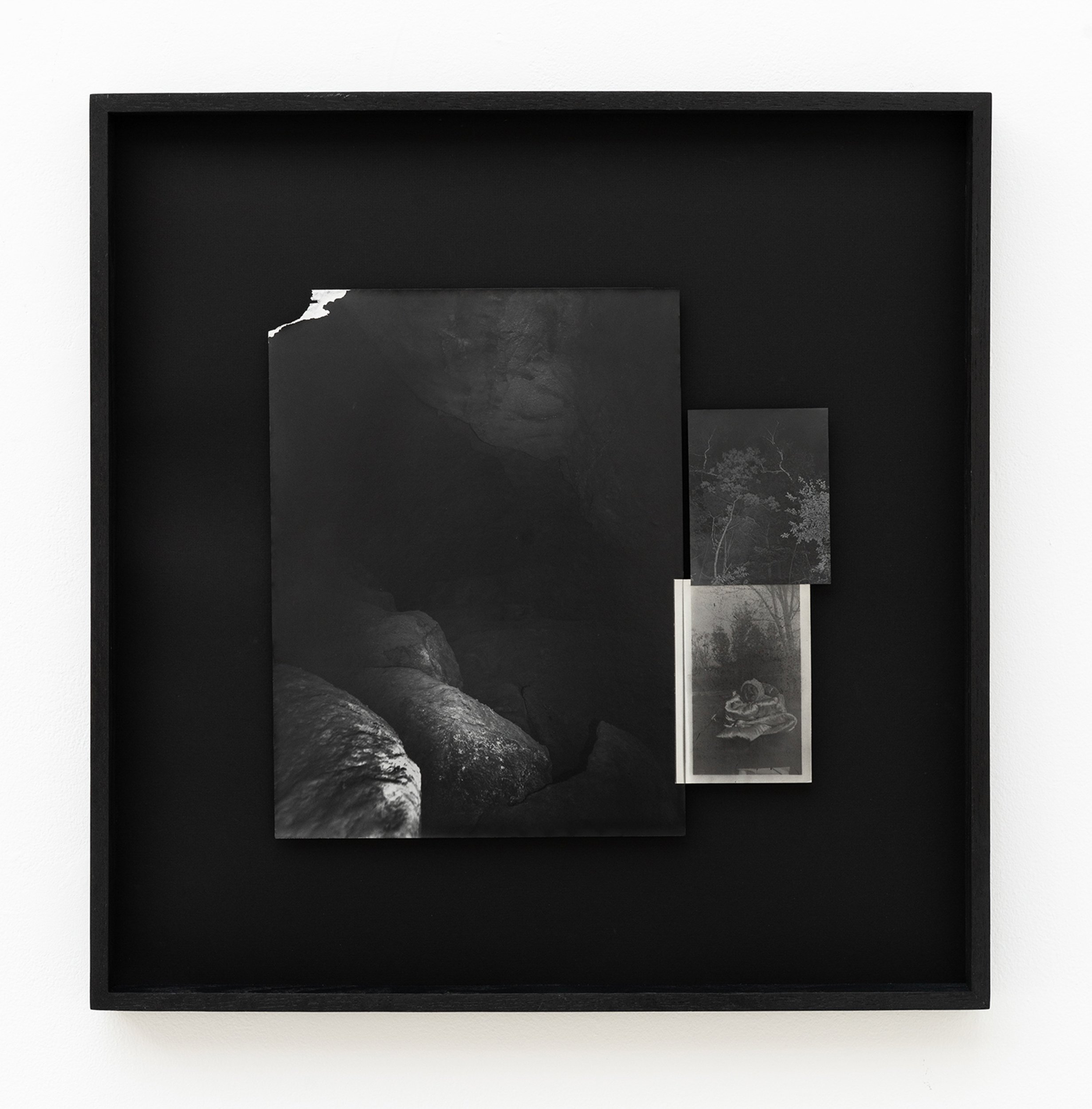
It took about a year to get all these photographs processed and made into their various collages and other structural silver pieces. I was reading a lot of Greek mythos at the time, and latched onto this concept of a katabasis, which is a mythic journey into an underground realm, normally committed by a hero who’s looking to gain something, whether a deceased relative, advice from the shades, or treasure. They're almost always helped by an intermediary, who is often a woman, and these intermediaries can go between realms at will rather than just the one time that most heroes are allowed. I think people approach the void for many reasons. Other than for sport, which seems to be the most frequent nowadays, and which I don’t do because it feels unnatural for me personally to make that transgression without a bigness pulsing behind it, I think that people enter into the void (or the cave) for shelter from weariness, to grieve, to submit to desire, or to approach sublimity. These are holy spaces, in a sense.
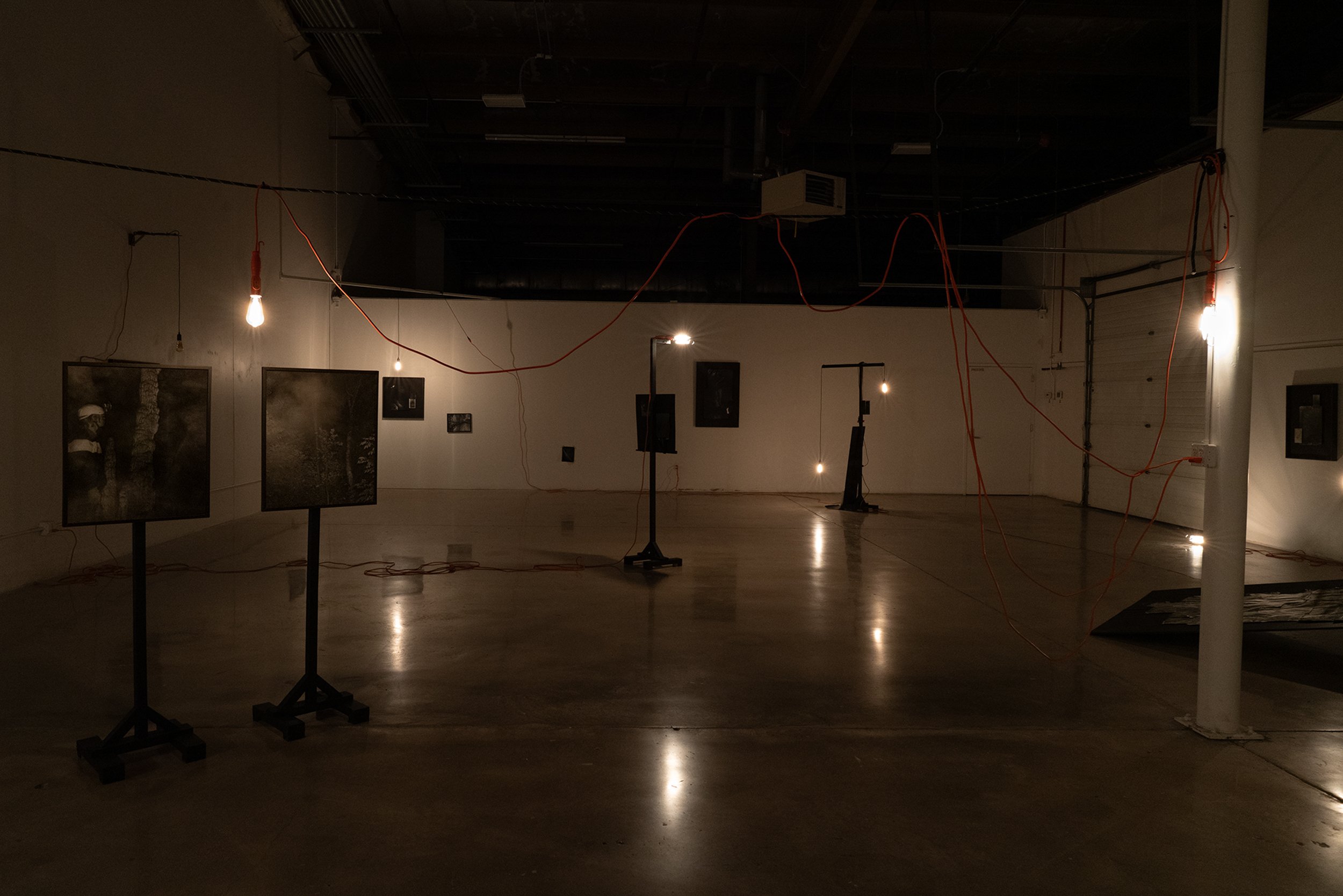
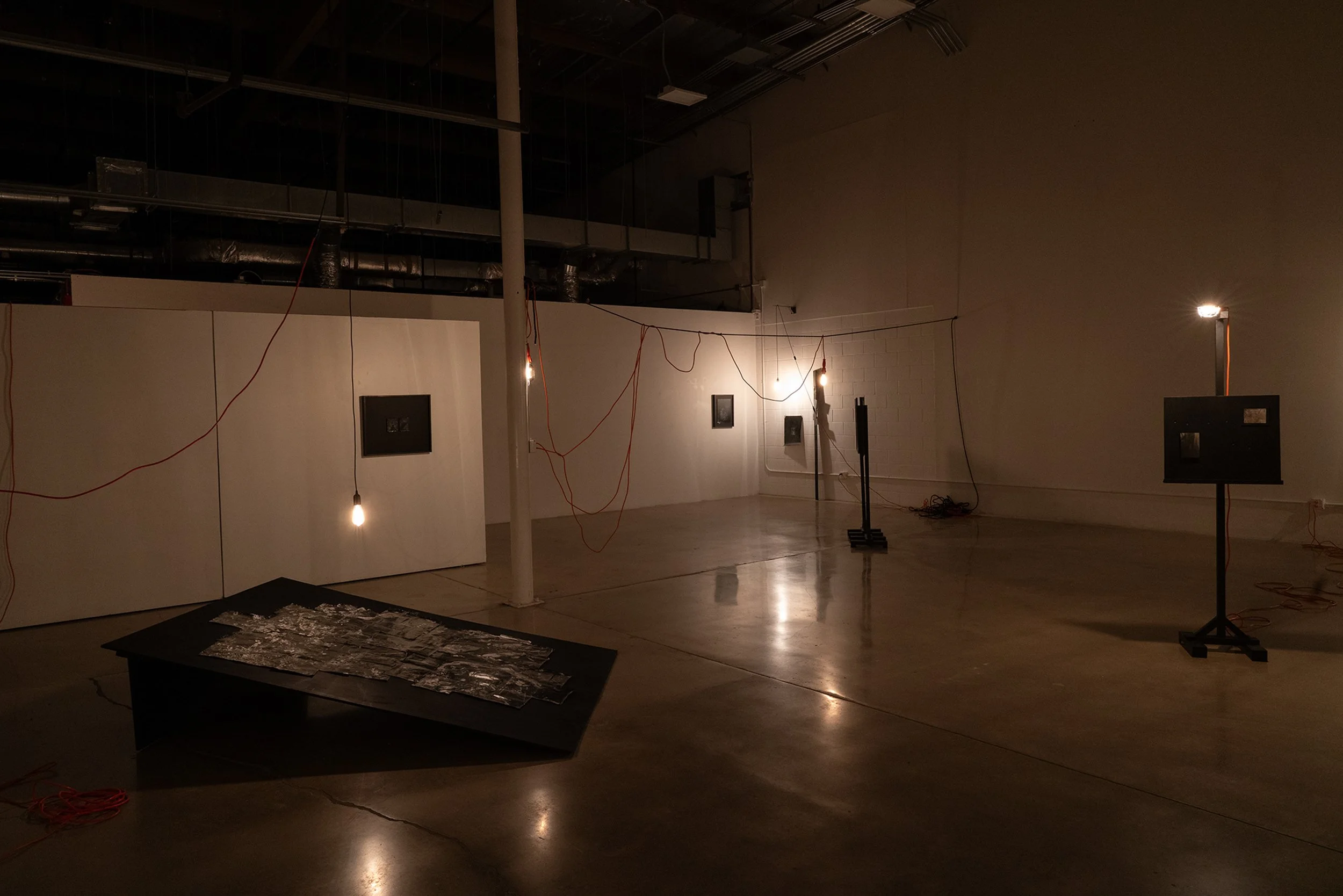
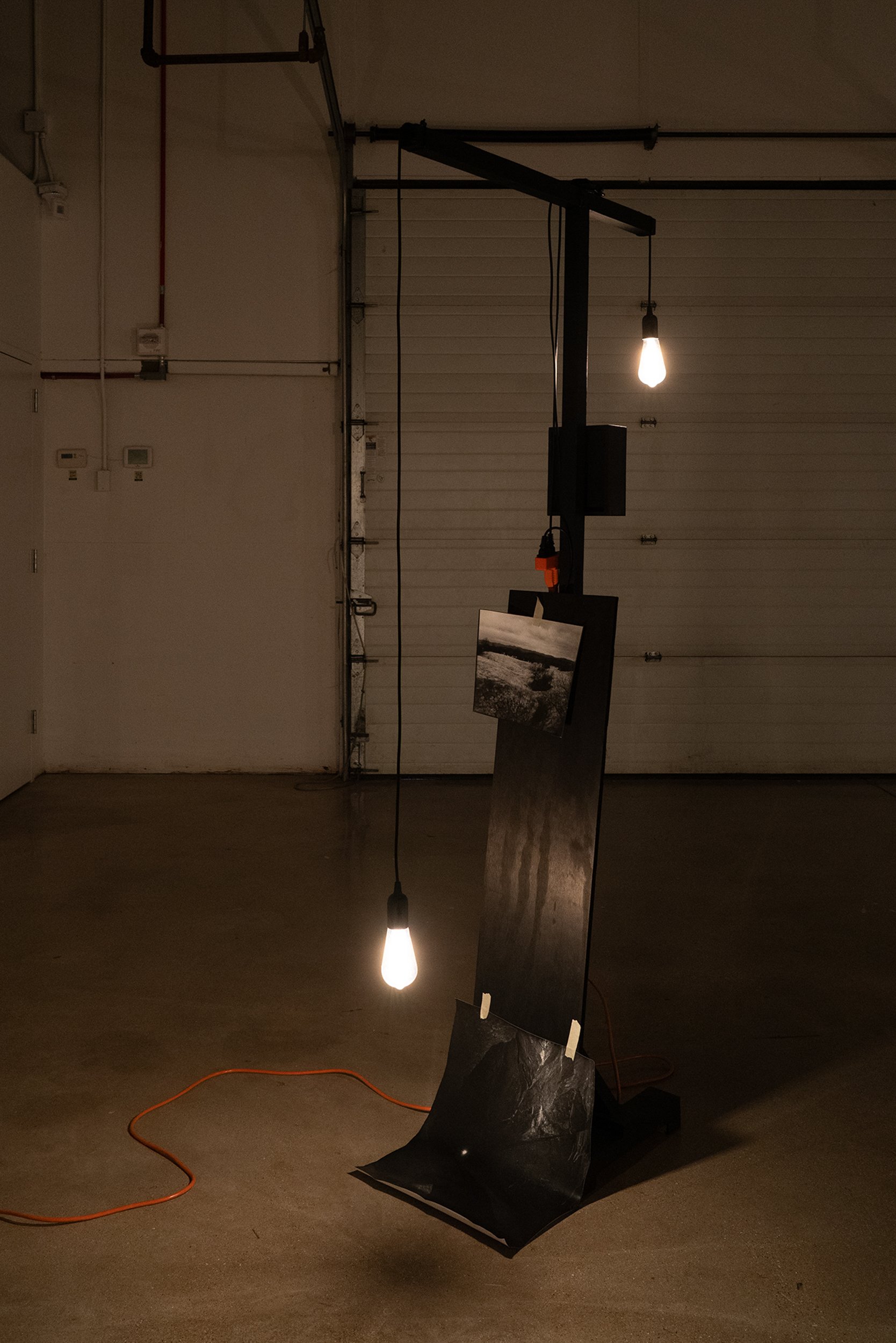
JF: Your installations in gallery spaces are quite varied in terms of strategy, often very sculptural, but all feel cohesive. Can you provide some insight into your decision-making in the install process?
NM: Quite simply, I want to make a thing and I want the thing to gather dust. The thing should gather dust, the photograph should be removed from a frame, and it feels like my job to bring it into the material realm so it can make contact with the elements.
JF: And more specifically with Karst ?
NM: Returning to semiotics, I was thinking a lot about signs, like, literal signs that you might see in the woods of the Appalachian mountains or picketed outside caves or other areas of intrigue. I think we’re constantly recognizing fragments of the photograph as being tied to some kind of experiential reality—in a similar way to the feeling of walking up to a sign and expecting it to cogently refer to something outside of the sign. I think it’s cool to start thinking about signs that refer along a more scattered, schizoid logic, perhaps referring to something just outside of the zone of actuality rather than directly referring to something in the “real world.” So for the installation of Karst I aimed to follow the path of obscure signs, and ended up fabricating some of the photographs into literal signposts. The photographs felt like they could refer to those other realms much more successfully when they were taken out of the frame and made into these recognizable sculptural objects.
JF: Where does the title Karst come from?
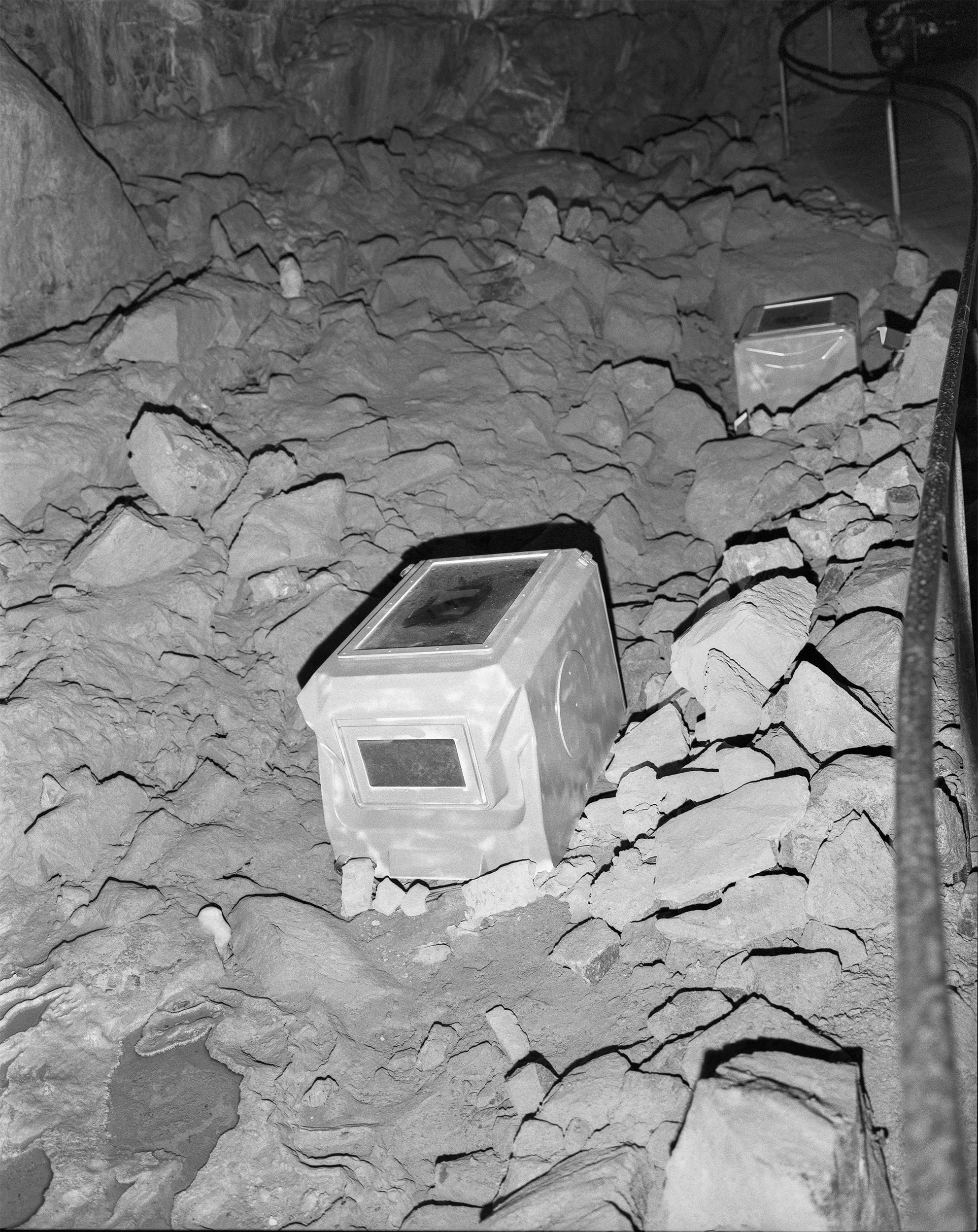
NM: Karst is a geological term that refers to a certain type of landscape defined by having underground rivers and streams and soluble rocks like limestone. Karst is everywhere—there is karst in China, there is karst in Europe, and there is karst under our feet in Southwestern Virginia.
JF: What's next for you?
NM: I feel drawn to moving away from examining the natural and mythic formations of the underground and moving toward examining the forceful extraction that comes with creating our own holes via mining. And the environmental impact of it—but also the specific feeling of standing in front of a void that we’ve created after our history of removing trillions of tons of material from the earth. I was lucky enough to receive a few grants to document some abandoned mineral mine sites in Ireland, which contains remnants of the same mountain chain from which the Appalachians was formed back in the time of supercontinents. What I’ve been honing in on for this new work is the material and quasi-perverse artifacts of human intervention with the underground realm—I’ve been documenting instances of underground machinery, electrical boxes, cables, and other uncanny fabrications hammered into the rocks. I’ve been thinking a lot about how cave paintings are emblematic of a certain period of human culture, and how all of those weird objects in the underground realm are contemporary equivalents of cave paintings in their own sense. They’re representative of the human colonization of that space in the era of the capitalocene. It all makes me sort of sad but I’m excited to see what comes out of that project. Also, I’m making a play out of Karst with composer and choral director Alec Galambos, which should be relatively wacky if it ever makes it to stage.
JF: Yeah, I'm excited to see what you make with that.