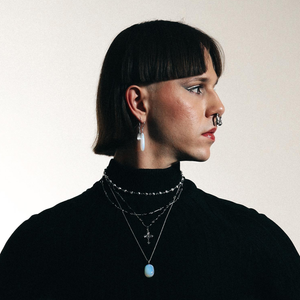
Odette England
Photographer Odette England won the Film Photo Award in 2021. Linda Moses and Odette catch up on her work.




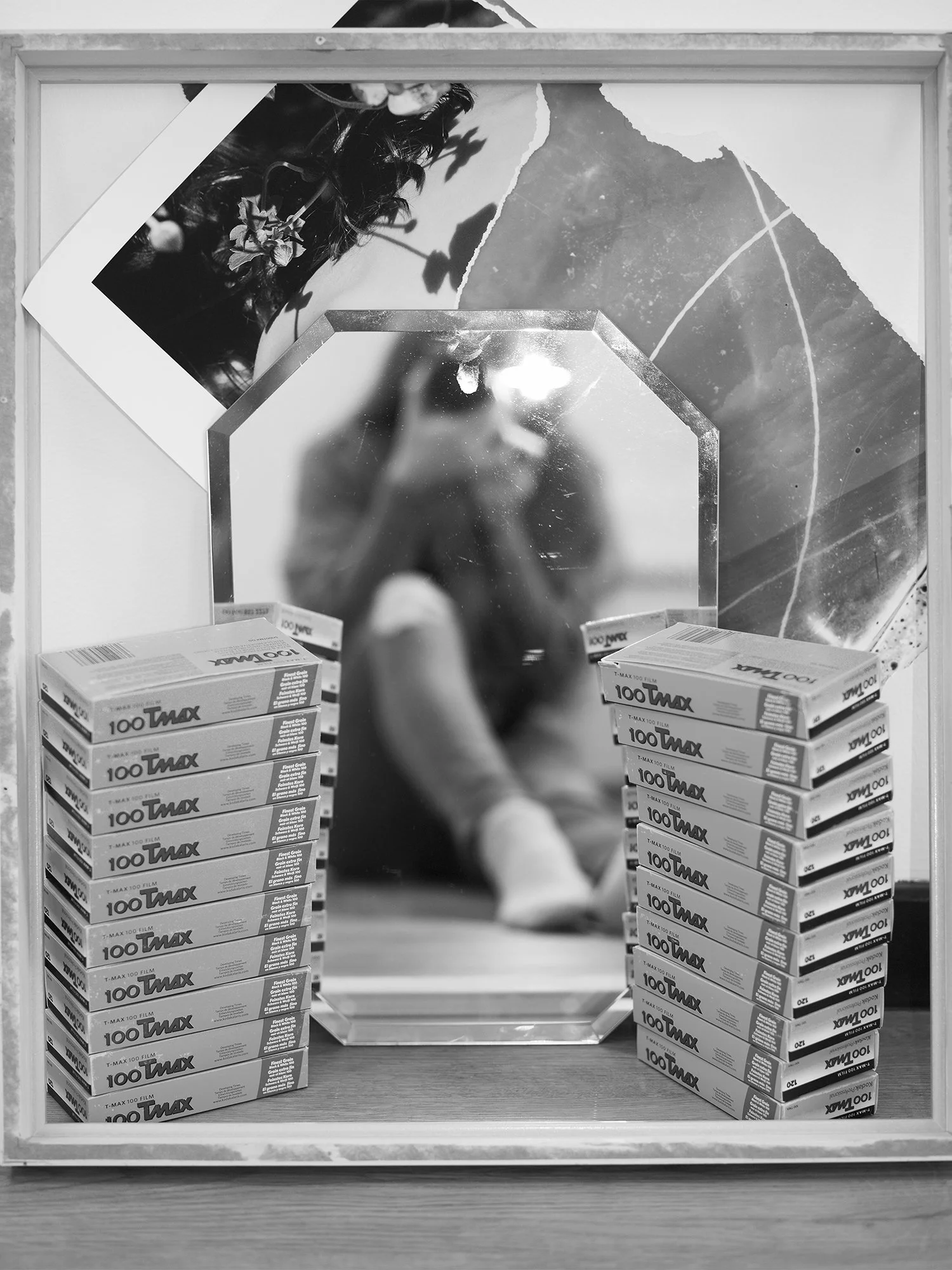
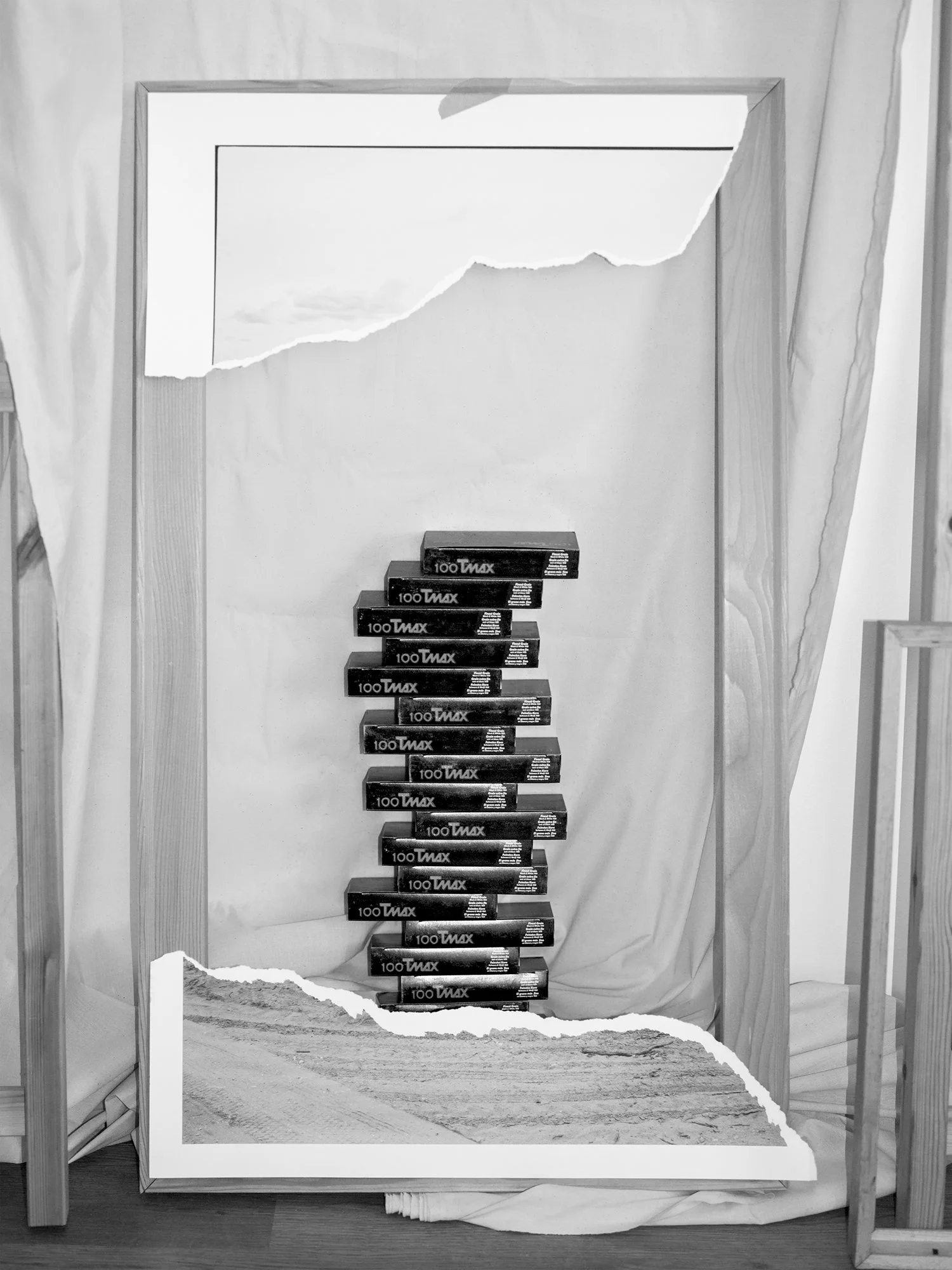
© Odette England
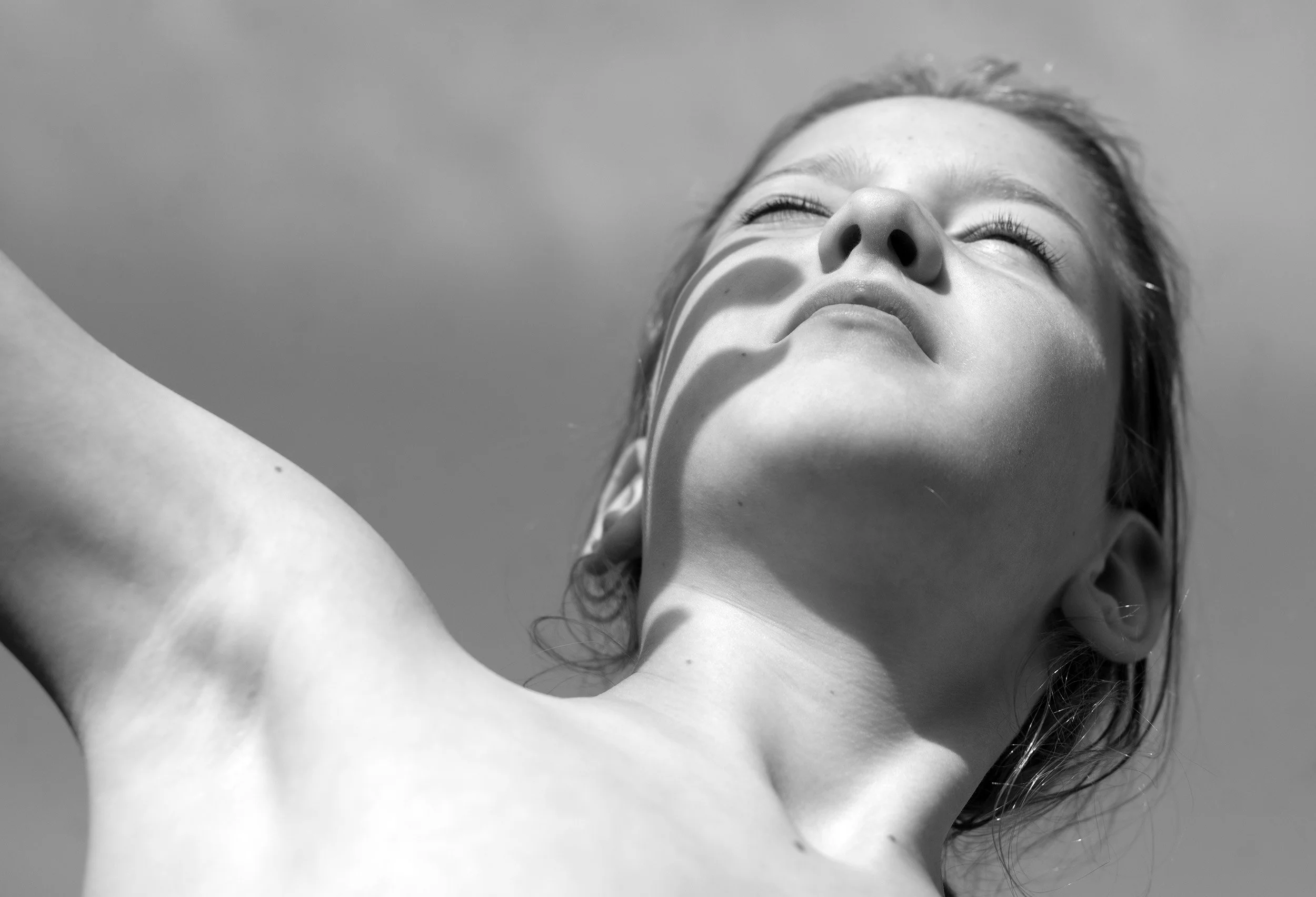
from the series Dairy Character
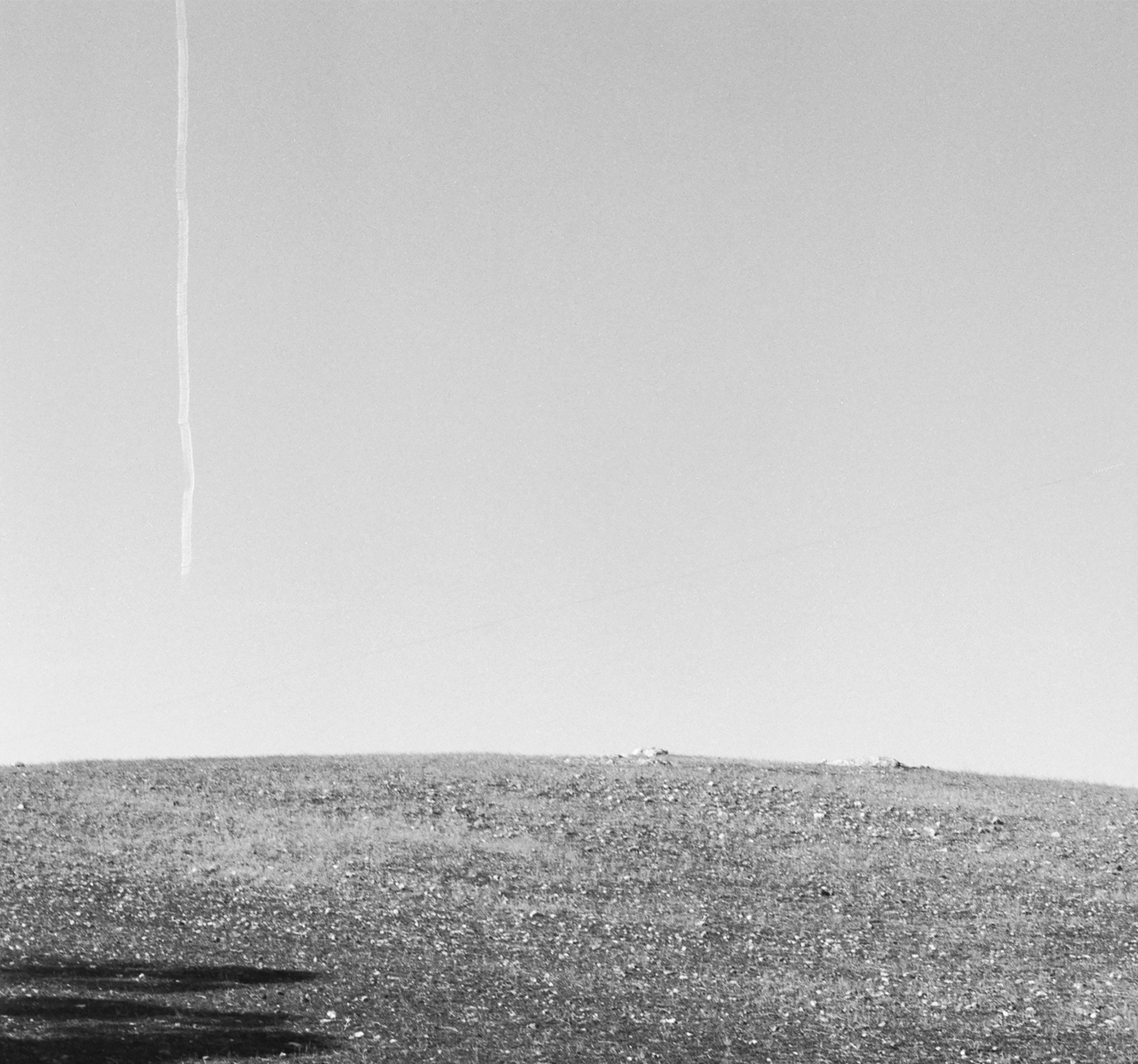
from the series Dairy Character
Linda Moses: It has been a few years since you received the grant in 2021, and I know you have worked on a few projects since then. How did the grant shape your work? And as a related question, why is film important to your practice?
Odette England: It's great that the Film Photo Award is available. I primarily use film, and I had a specific project in mind when I applied: to uncover the untold story of Marion Post Wolcott after she left the Farm Security Administration in the early 1940s, having taken more than 9,000 photographs on film in three and a half years.
I like the hands-on trial-and-error aspect of film. No matter how many times you process a roll, things can go wrong, sometimes intentionally. When you mess with melancholy, you're messing with intent.
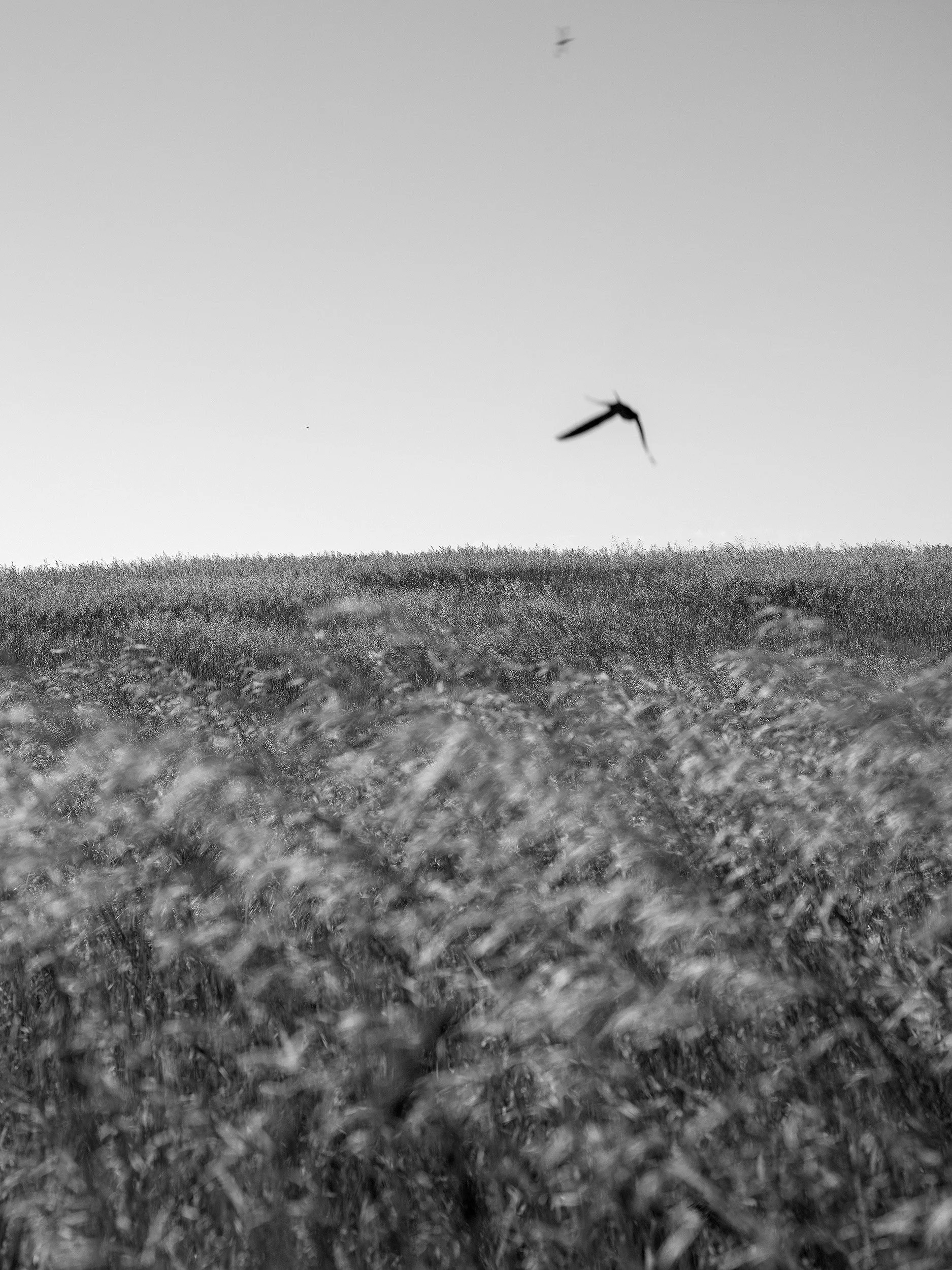
Image from The Long Shadow
LM: I want to talk about your book The Long Shadow. How did you get the spark for the project?
OE: I had a commission from the Archives of American Art to create a ten-page feature for their journal. While exploring their extensive archive, I found a quote by Marion from an oral interview she gave in 1965, discussing how men were accepted in photography—if you were a man, it was assumed you would be better at it and take better pictures. I knew about Marion’s work, but not her backstory. And it was her backstory that really caught my attention—learning that she had received conflicting ultimatums from her boss, Roy Stryker at the FSA, and her husband, Lee Wolcott, to choose between family and photography. Marion, feeling she didn’t really have a choice, opted for her family and left the FSA. It was believed she never took pictures again. She moved to rural Virginia, raised four children, learned how to operate farm machinery, renovated houses, and milked cows—she was the farmer, the farmer’s wife, and the mother. But she never stopped photographing. She captured her children and the landscape around Loudoun County. However, those pictures weren't exhibited or published, except for a few that appeared in her biographies. Further research and conversations with Marion’s surviving family revealed there were many more photographs she had made. Sadly, it seems they were tucked away into a narrow category—‘just’ family pictures—not by her family but by others who didn’t recognize or appreciate how extraordinary they are.
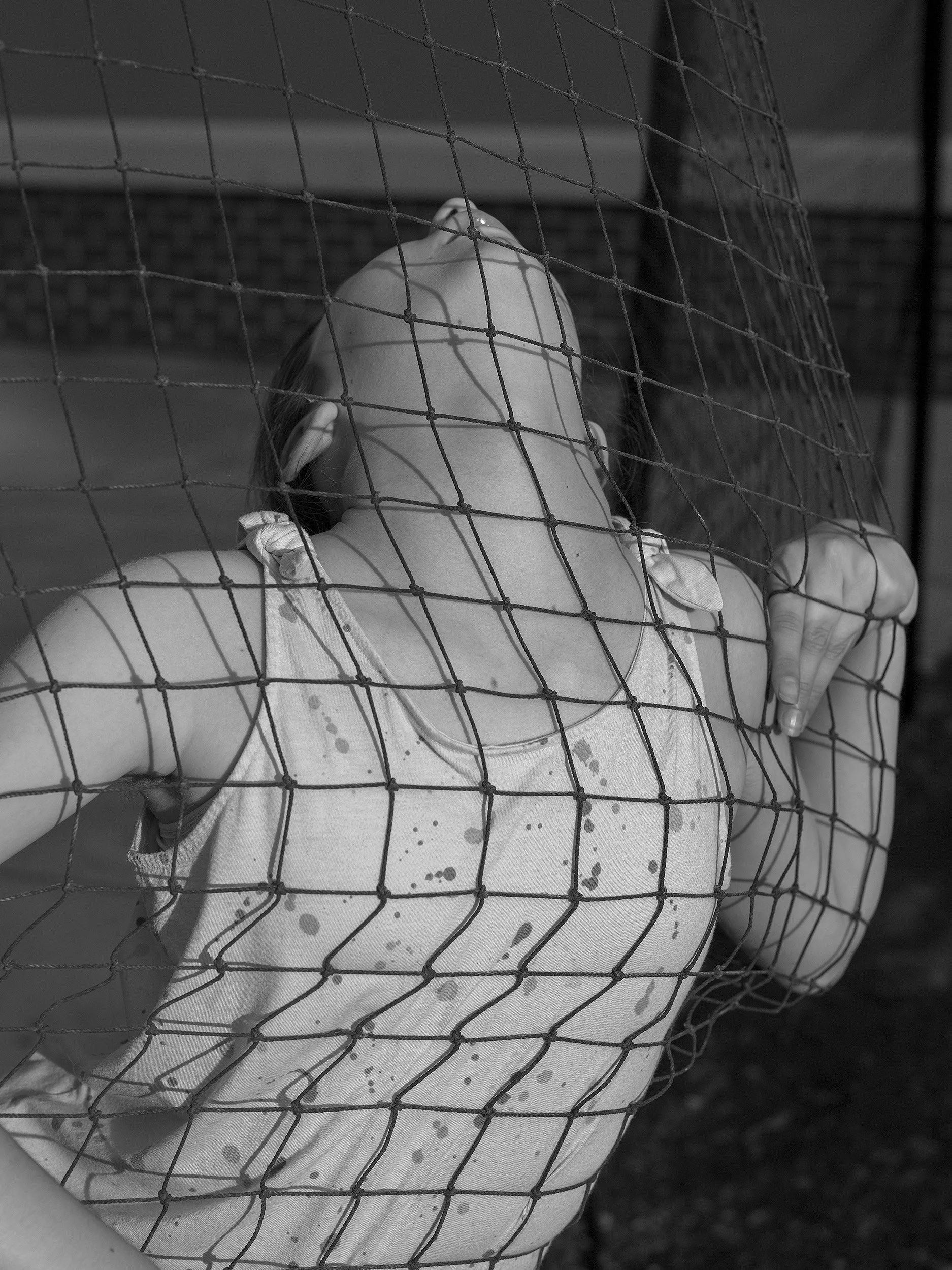
Image from The Long Shadow
LM: There seems to be an emotional thread that moves between Dairy Character and The Long Shadow. Were you thinking about similar themes while working on these projects? Or were they distinct?
OE: There are common themes I’m drawn to; it feels like picking up a marionette of interests and whims— the strings are similar, though at the time, they seem different. There’s almost always something about gender dynamics, what it means to hold power, or where power resides in one's body or environment. There's almost always a link to my autobiography. I really like photographs that allow me to detach stories from myself and attach them to others, even if only briefly. Every project I do is a warm-up for the next one. I rarely know what the next one is.
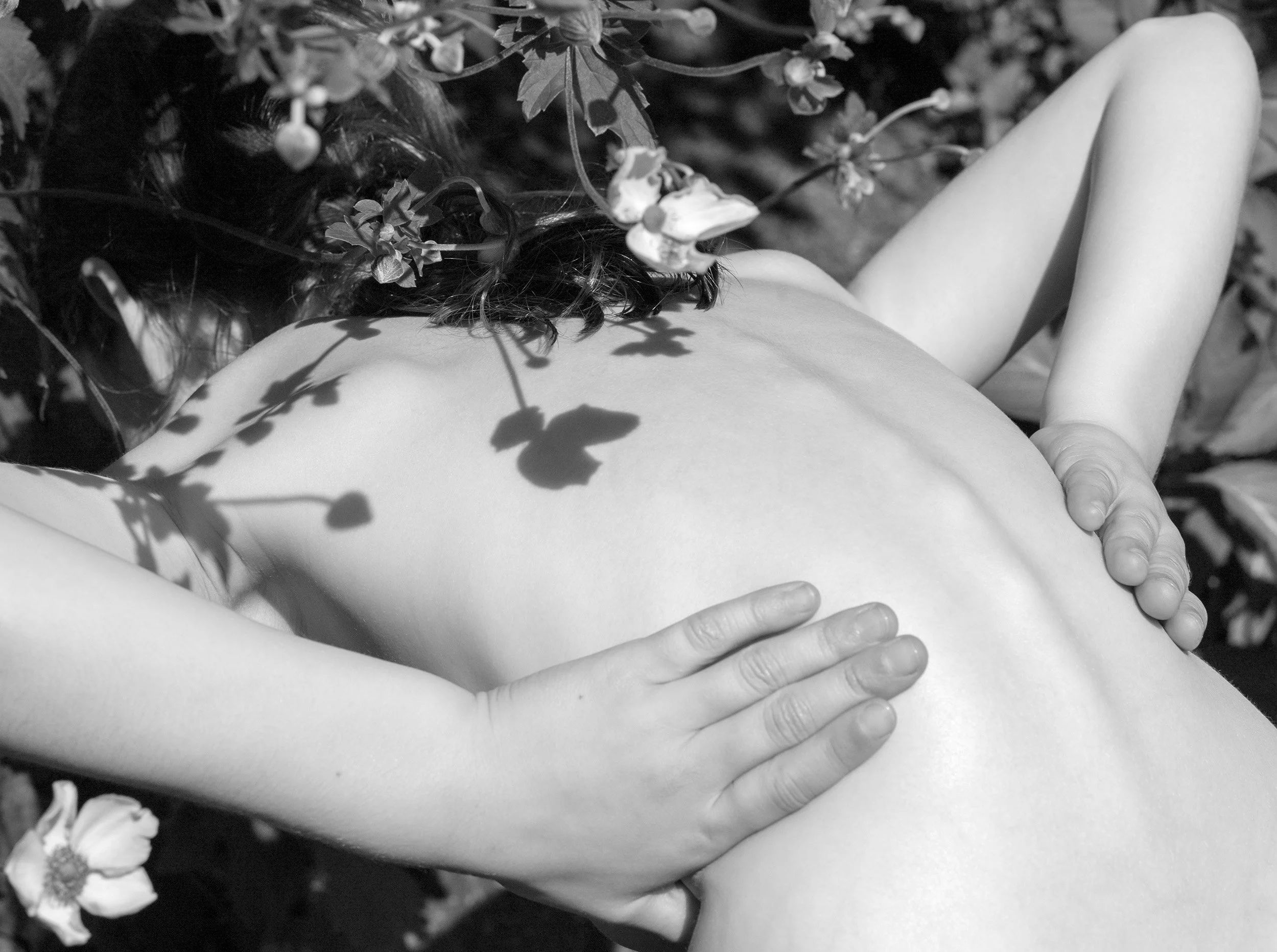
Image from Dairy Character
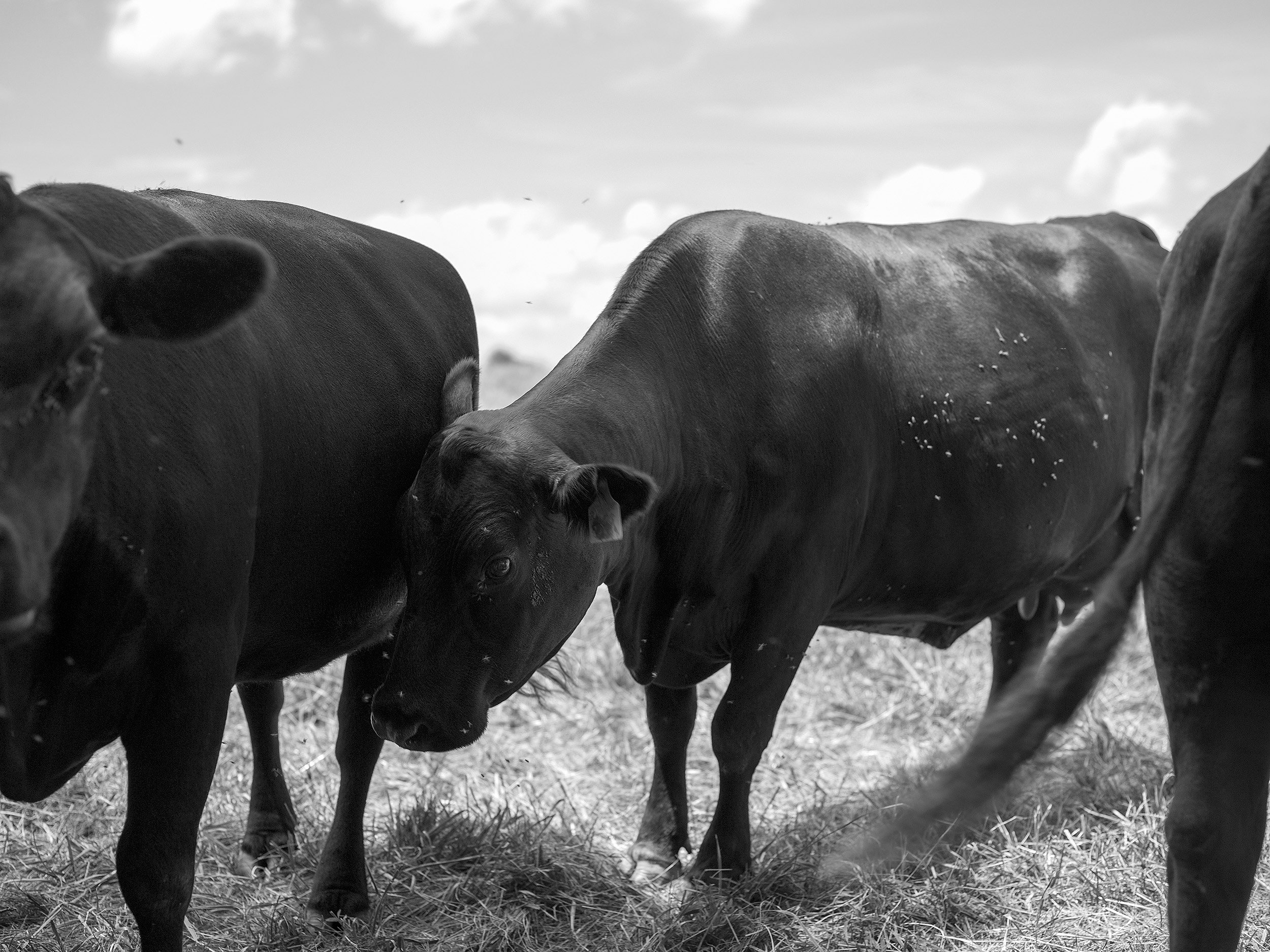
Image from The Long Shadow
LM: That feels like an honest way to create instead of deciding what something is before you make it. You're learning from the work. When I look at your images, I often get the impression that you are not only looking at the world, but also letting it imprint on you. You are receiving as much as you are documenting. But documentary is a tricky word. Do you think of what you do as a form of documentary, or how do you think about your process?
OE: My process is intuitive and immediate. When I go out to take pictures, I try to cooperate with reality while also side-stepping it. I’m trying to figure out how to turn my eyes on and my heart off, or my heart on and my eyes off.
LM: Are you driven by emotion? Or is it even more intuitive than that?
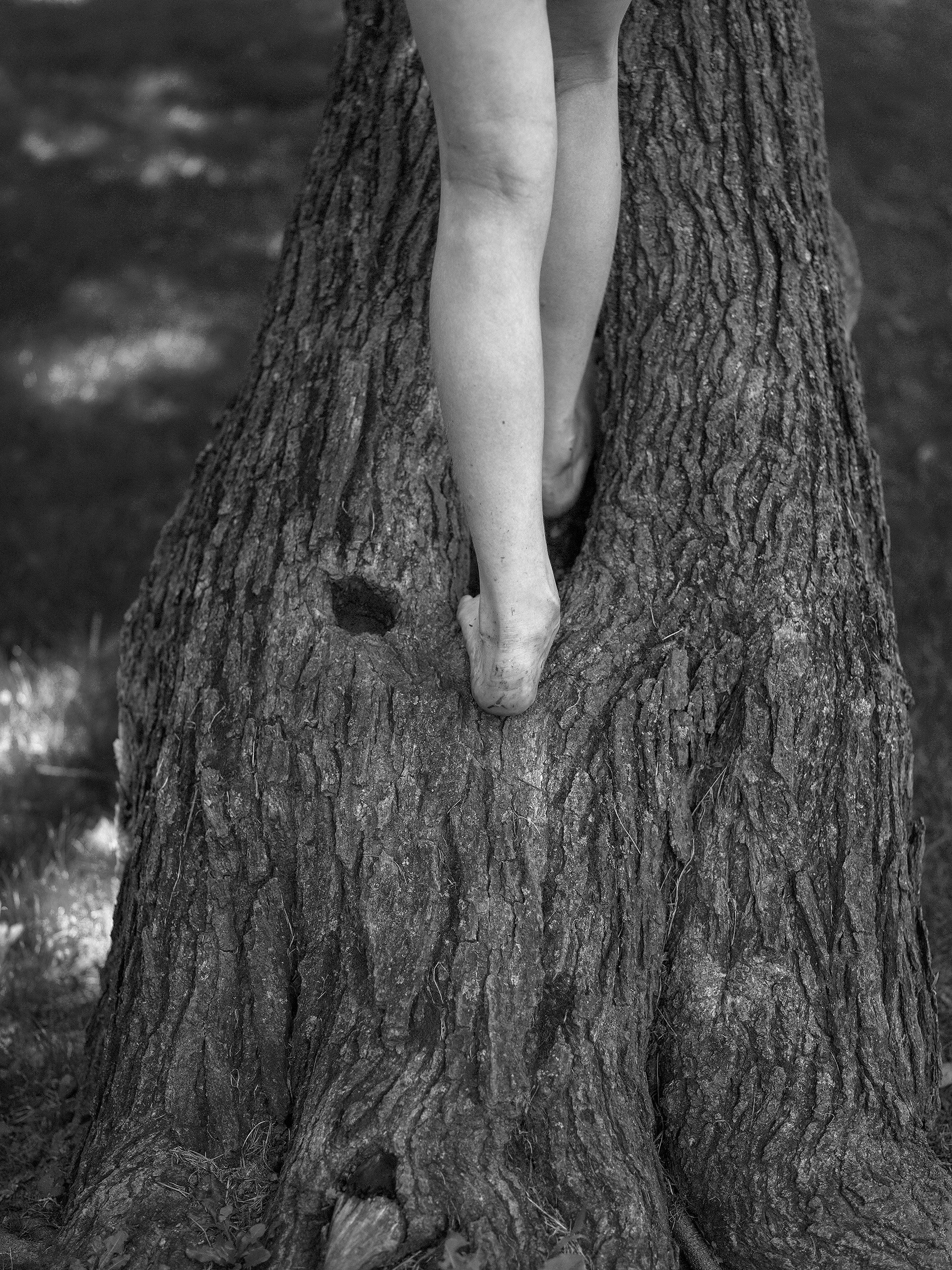
Image from The Long Shadow
OE: Many things influence how I create pictures. Whether they influence the way I view the world or hold the camera, or if I feel a kind of joy that can only come from using my hands and eyes to express something, I don’t know. It’s special when it happens. And when it does, I usually only take one picture, and that one picture is everything and nothing because it reveals to me how I think and feel when I'm photographing.
LM: Photography is so fascinating as a concept. I just think I'll never get over it.
OE: Photography is one of the most beautiful, tender vandalisms. You're constantly marking, removing, and creating something new that no one else has seen quite like you. There's always an active interaction with a surface.
LM: You worded that so beautifully. “Tender Vandalism” could be a book title.
OE: I probably stole that from someone else! [laughs]
LM: To go back briefly to Dairy Character: I keep sensing a tension between beauty and the darker sides of the rural community you grew up in, and at the same time, a real tenderness. Did making this work feel empowering for you?
OE: Dairy Character was unique because it was the first time I explored my past not only through the photographs I was creating but also through those I found, photographs I had directed my parents to take, and images I was altering in various ways, such as through collage. Whenever you crop, cut, burn, sew, or even place a picture next to another, it's an intervention. I was trying to find a rhythm in my practice and understand who I thought I was—or who I assumed I was based on family pictures telling me: this is who you were, or are. I also wanted to have a say in how my past influences the future, in a way that other girls and women could relate to experiencing feeling overpowered rather than empowered.
It was almost two years before the book had its name, before I was brave enough to call the project a project. One of the few things I knew from the beginning was that this story should enter the lives of others cautiously but generously, which meant I had to be vulnerable. There's a beautiful line from an Eric Clapton song, Feelings will show. I had it on a Post-it in my studio, among many other Post-its. I needed every image to earn its place by being able to say without question: feelings will show.
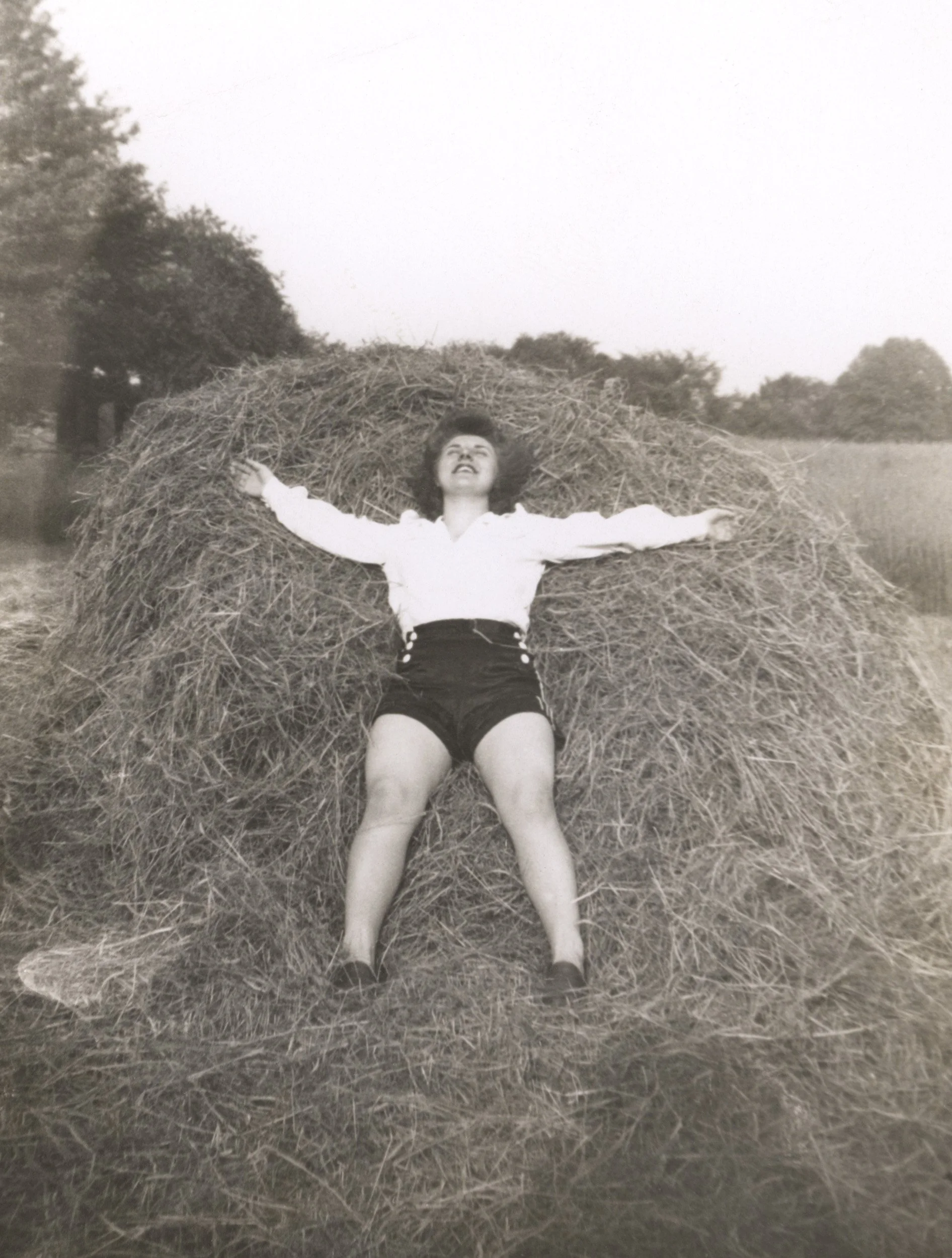
Image from Dairy Character
LM: That's really beautiful. I find myself having to fight the impatient part of me that wants to decide what work is, and that it will look like this. And I find your work inspiring because I can tell that resigning a certain amount of control is necessary for your process. You have to trust the process if you want that to happen.
OE: Trust it while remaining skeptical. There's what’s inside a photograph and then there’s what we impose and load onto it. By paying attention to the undertow of skepticism, we accept that what's obvious in one moment can easily change shape or vanish in the next. And if we approach our work with a question rather than a response—asking it out loud, throwing it onto the surface of our work—it will teach us, at the very least, something about the differences between looking, noticing, and resisting.
LM: How do you decide when a work is done? Or rather, when to stop?
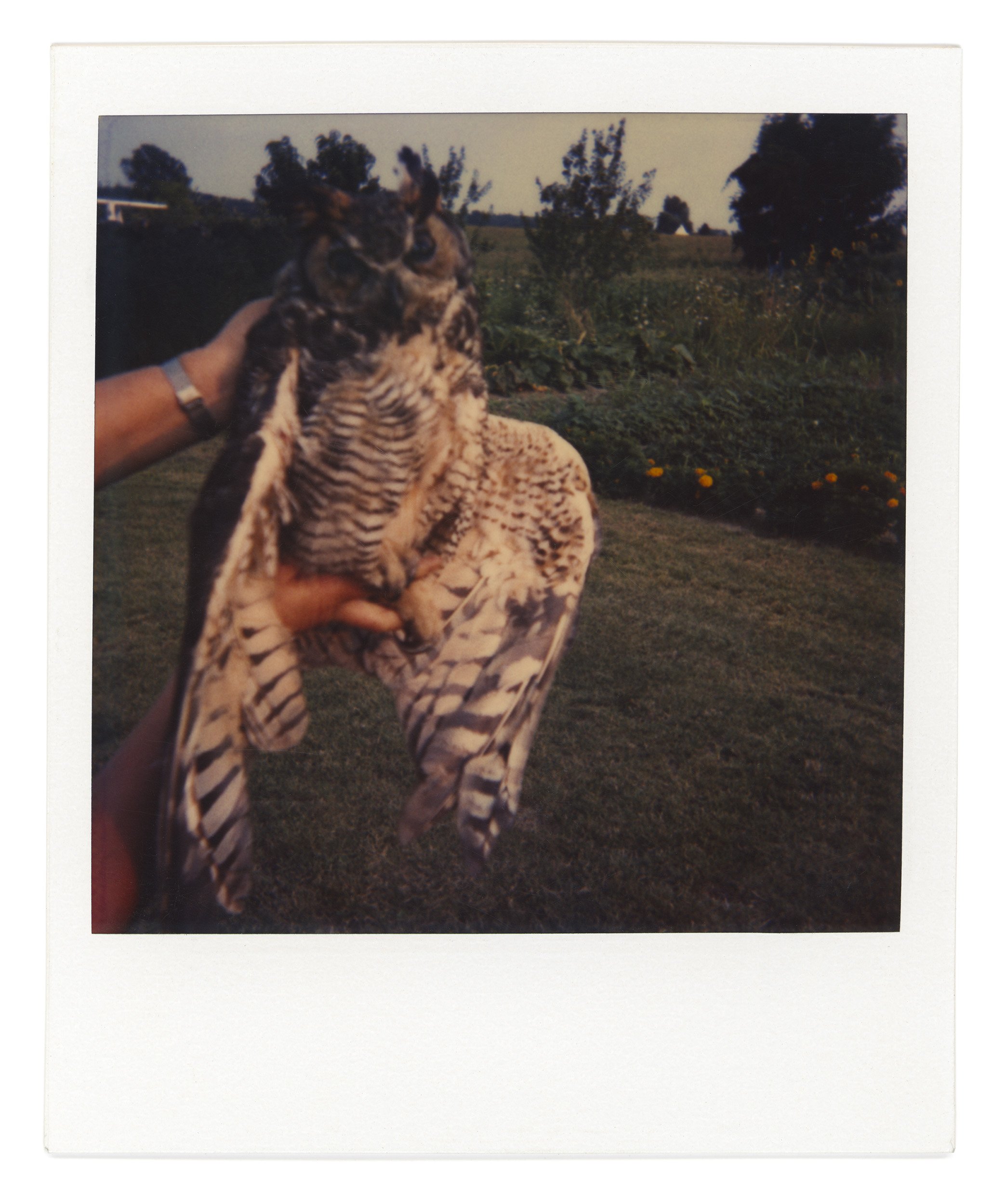
Image from Dairy Character
OE: It’s done when I start visualizing all the photographs I believe I need to make. If I see them in my mind before I see them in the world, I am overlooking other things. I create a lot of work that never leaves the bottom drawer. Committing to doing, being, and experimenting helps me move to the next thing. And it's not always forward movement. Maybe an idea requires me to move sideways.
I don’t feel pressured to do things a certain way, use a specific tool, or stick to one process. It's more about trying to figure something out without needing a clear answer. Potential is truly one of the most exciting things in the world.
One of my favorite parts of making books is imagining someone sitting on a bus or at home in bed, creating something for themselves that I’ll never see or know—looking at pictures and building worlds, forming a relationship with fantasy while being tethered to the real world.
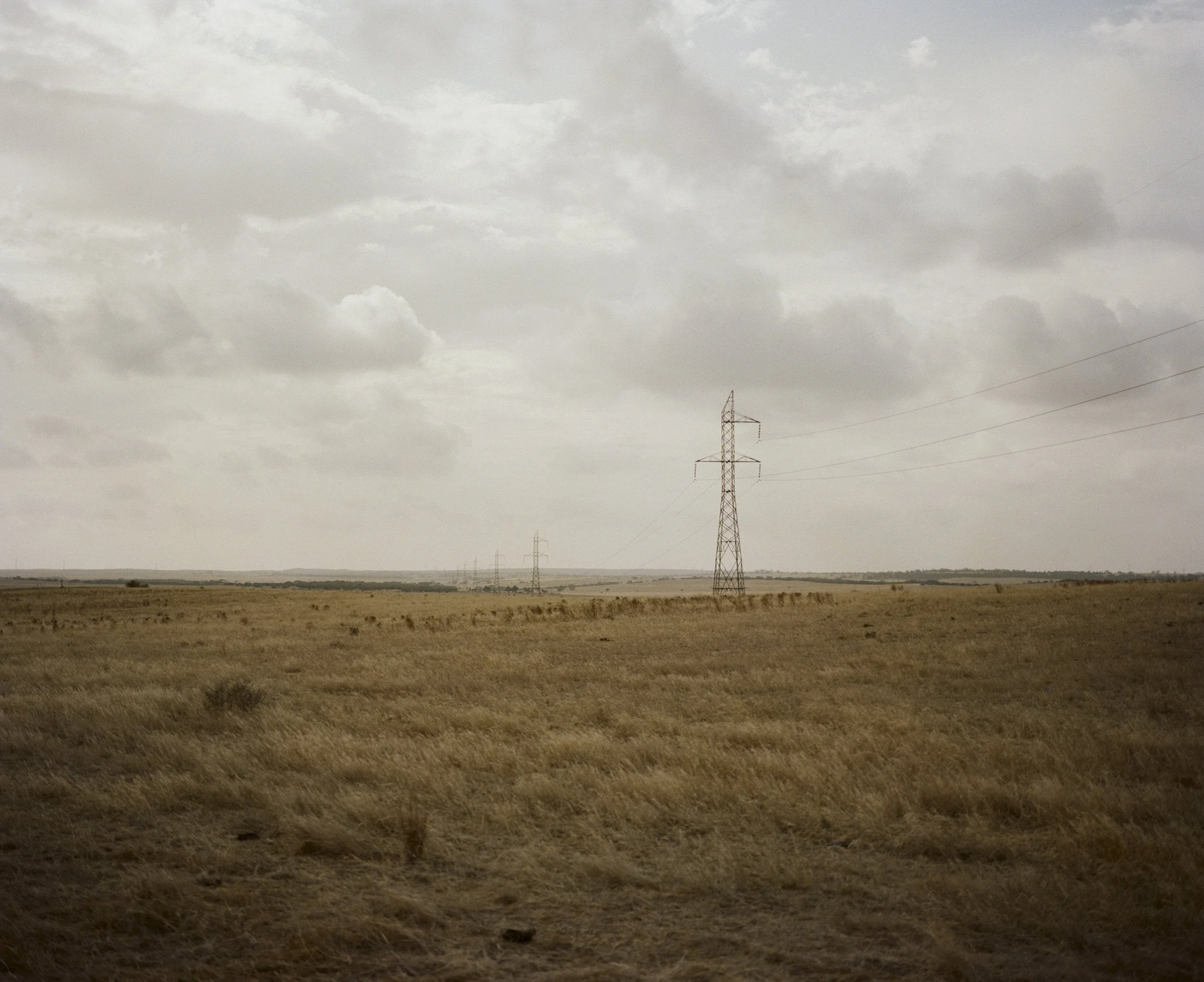
Image from Dairy Character
I’ve realized that ideas, questions, and curiosities only appear when I’m ready to experience them in a certain way. In this sense, my work is never done, because I’ve often looked at the same thing hundreds of times but haven’t truly welcomed it into my being.
LM: I think about that when photographing home or a place I’m familiar with. I’m always going to notice new things. And in a way, nothing's ever exhausted. It's so beautiful that even when a picture is made, it lives on and on in the same way you just said, like someone who looks at your images or buys your book and sifts through it––they are experiencing their own world. And that's so lovely to think about.
To go back to your work on The Long Shadow, when did it evolve into a book?
OE: The project began with a road trip to Virginia in 2020 to see if I could find Marion in the landscape, where she had lived and where scenes she might have been drawn to could be found. I wanted to be guided by the place, the past, my interpretation of it, the weather, the smell of things, the quality of light. I took hundreds of ridiculous photographs—I’m not even sure they qualify as photographs; they were more like indicators or rectangular sketches. I trained as a painter and used to make roughs, preliminary outlines, doodles, scratchings—all precursors to a painting. But with photographs, the pre-photographs are photographs. That process went on for nearly two years before I even considered creating a book.
LM: I was talking to someone about this recently; sometimes I really itch for that kind of preparatory drawing. I usually turn to writing for that. I'm curious to know, what is your pre-photograph other than a photograph?
OE: Good question. Maybe mental imagery? I took photos with my point-and-shoot and Polaroid cameras, but mostly I created ‘indicators’ with my larger cameras, constantly asking myself, why are you looking rather than what are you looking for?
I remember driving home from that first trip thinking it was a waste of time but later realizing that “wasting time” was essential. Looking isn’t wasteful. Thinking isn’t wasteful. Patience isn’t wasteful. I was learning to notice, and every night while I was in Virginia, I’d write about this learning. I resisted making image lists or looking at the pictures I’d taken that day. I was writing photographs as notes. It was an A-ha moment that only revealed itself to me driving out of Virginia.
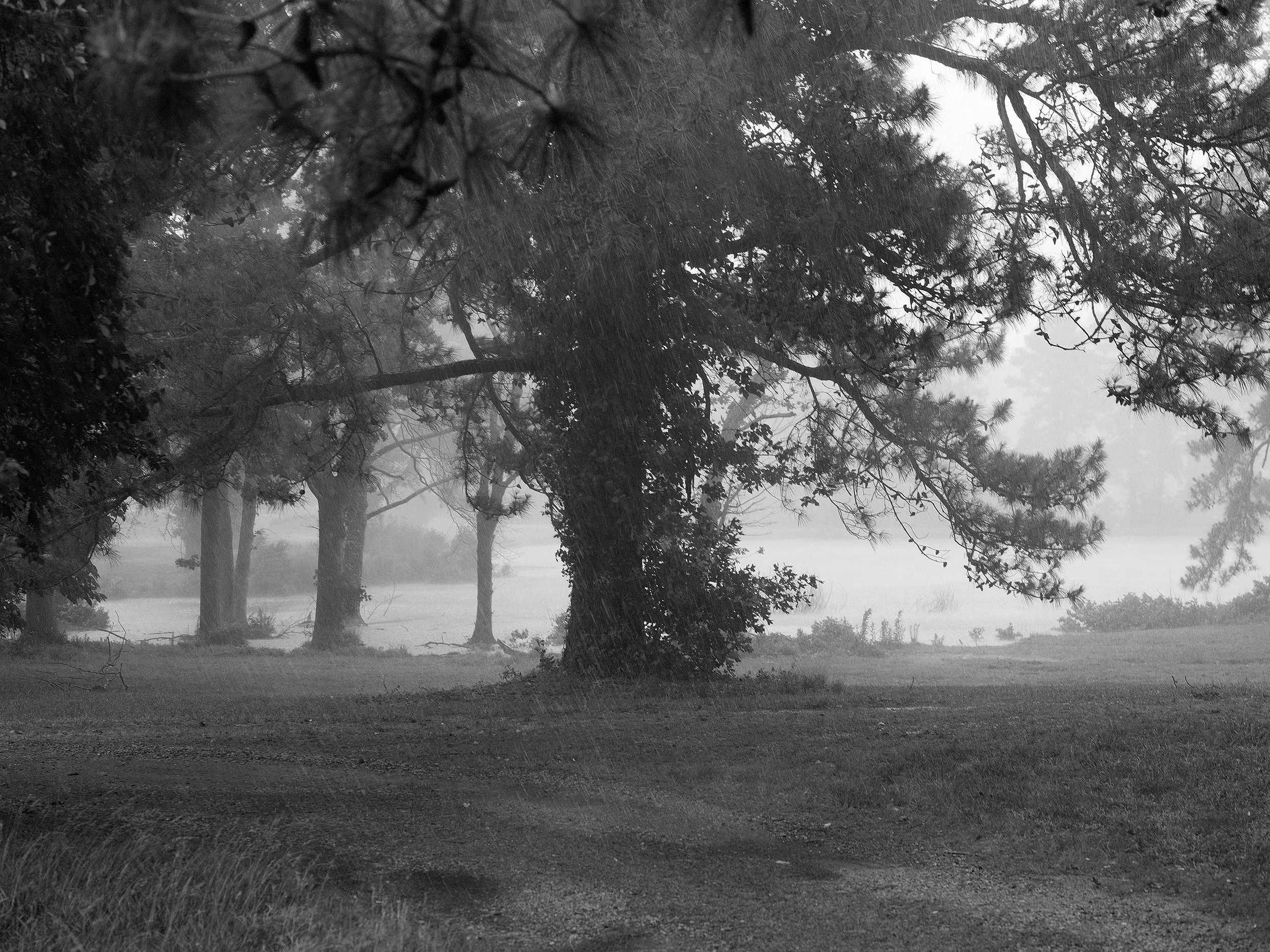
Image from The Long Shadow
LM: I relate to that. Sometimes I leave a situation of photographing and feel like I’ve failed. But that is maybe the pre-drawing. Do you have a takeaway of what you learned from Wolcott or from that time? Did you find yourself in her work?
OE: I made four or five trips to Virginia, each of which uncovered more unknowns than knowns. I also enjoyed two weeks examining Marion’s archive at the Center for Creative Photography in Arizona, with boxes of correspondence, receipts, postcards, and all kinds of paraphernalia that filled in some gaps but created new questions. That’s the beauty of research.
Spending time with some of Marion’s immediate family in Seattle was eye-opening, as I got to know her through them as daughters and granddaughters, rather than just as a well-known photographer. They were gracious and generous.
I now share a special connection with Loudoun County. I kept returning to the same farmhouse, the same fields and sheds, and the same roads, forming a bond with Marion—her past, my present, and our future. It’s more than a tent, not quite a castle—just a beautiful new place shaped through a creative process of breaking down and building up, of relentless looking and questioning. It changed me. It wasn’t until I gathered all the images and shared them with Tony Cederteg at Libraryman that I realized there was something unique there.
Tony’s feedback strengthened the project more than I could have on my own. Every time I let my work stretch or bounce away from me, it becomes richer and better. I remind myself to let it live away from me. Some of the best insights come from letting go before they're ready, and long before I am.
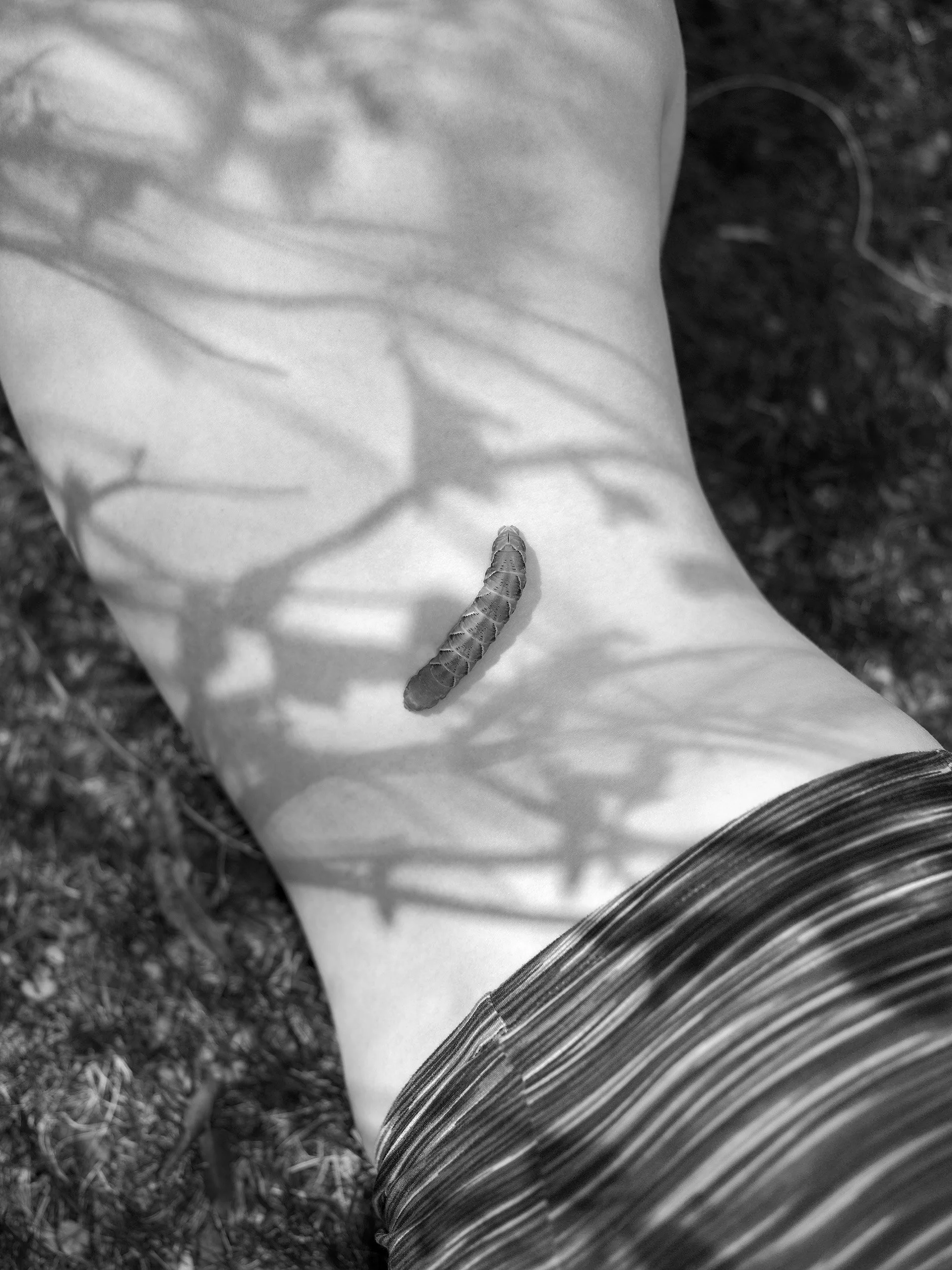
Image from The Long Shadow
LM: I often find myself fighting between the urge to put work out there and the desire to wait.
OE: As artists, it’s vital to nourish our community. Building connections with others, even if the thing you’re working on feels weak, watery, or far from being a “thing,” teaches you something. Let it be a kite; let it have a string; let it hover; and if it falls to the ground, eventually someone else will help you pick it up, and it will start again.
LM: That's very reassuring. I’m realizing that the work is never totally ours.
OE: No photograph I’ve taken feels like it belongs solely to me. I sent a dear friend, who is also a photographer, a picture I took about twenty years ago in New York City and told him I was searching for myself in everything I saw. He replied, "Did you find her?" It was quite the question. I responded that I didn’t think I could; that I believe I will be found by a photograph, not by making one.
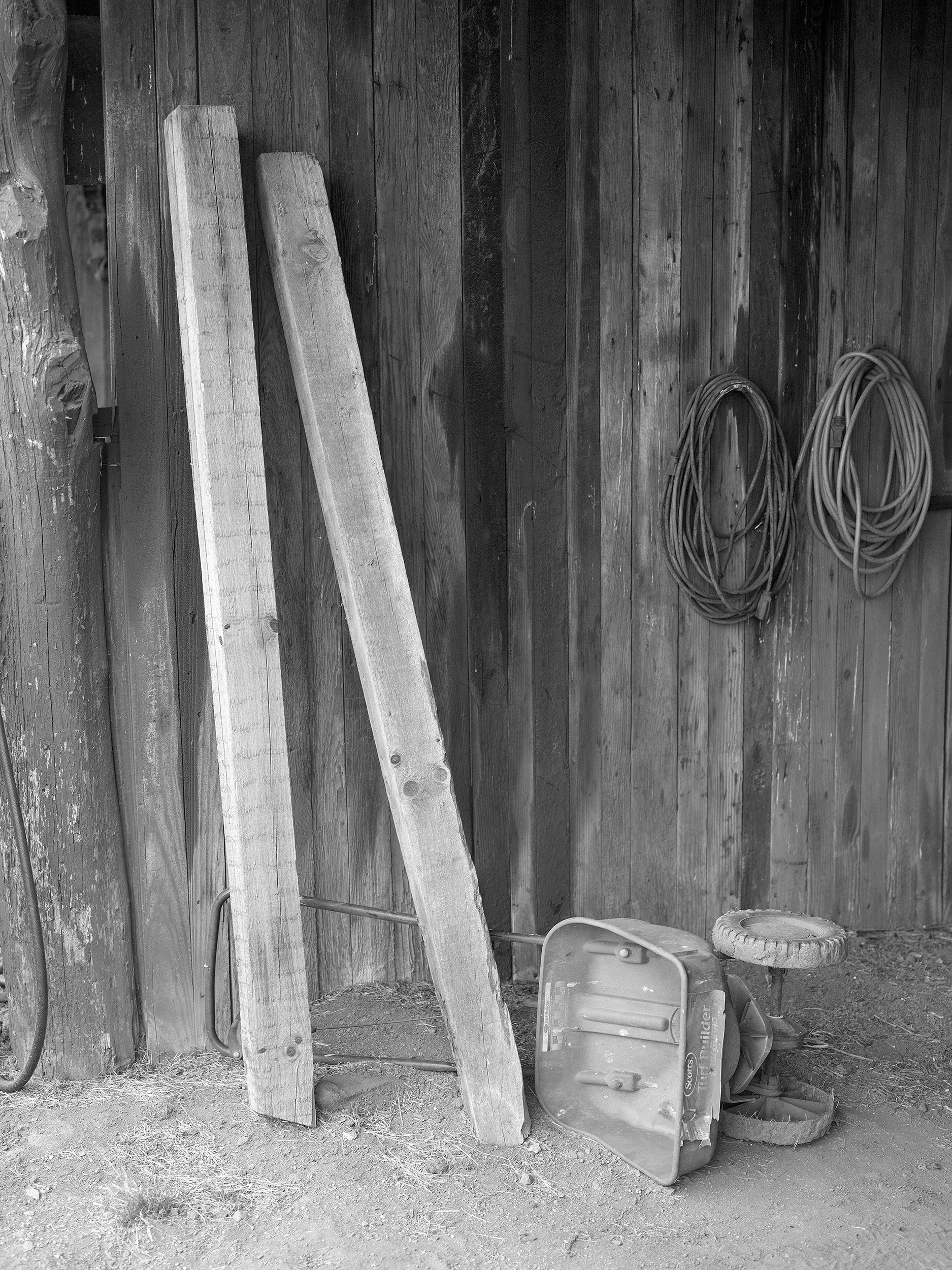
Image from The Long Shadow
LM: Wow. That's beautiful.
OE: I keep these and other conversations close. As artists, we’re very skilled at building cubbies and safe spaces around our thoughts, ideas, wishes, terrors, and tremors. But it's also important to let some of that seep out.
LM: Definitely. And I think it’s not so much about the eventual finding as it is the discovery and the joy of looking. The act of looking is something I continually notice in your images––figures looking toward something we cannot see, or out beyond the edges of the frame. I love those moments because they feel like they are about photography itself. If we get obsessed with the thing being found rather than the finding, I think we miss the point.
OE: I remember Mary Ellen Mark visiting RISD in 2010 when I was a graduate student. She began her lecture by saying, “I go out into the world looking for photographs.” On one hand, I agree because the photographs are there, but I think of myself more like Zorro—carving up the world with my camera, including elements within the frame, rejecting others, and allowing interruptions and distractions to break the rectangle. The camera is a simple box, yet it can surprise us; we can’t notice everything we aim it at. Photographs are sneaky. Maybe that’s why I’d love to live as a photograph—something I’m writing about right now—embracing the limitations and possibilities of being little more than a surface for eyes to caress.
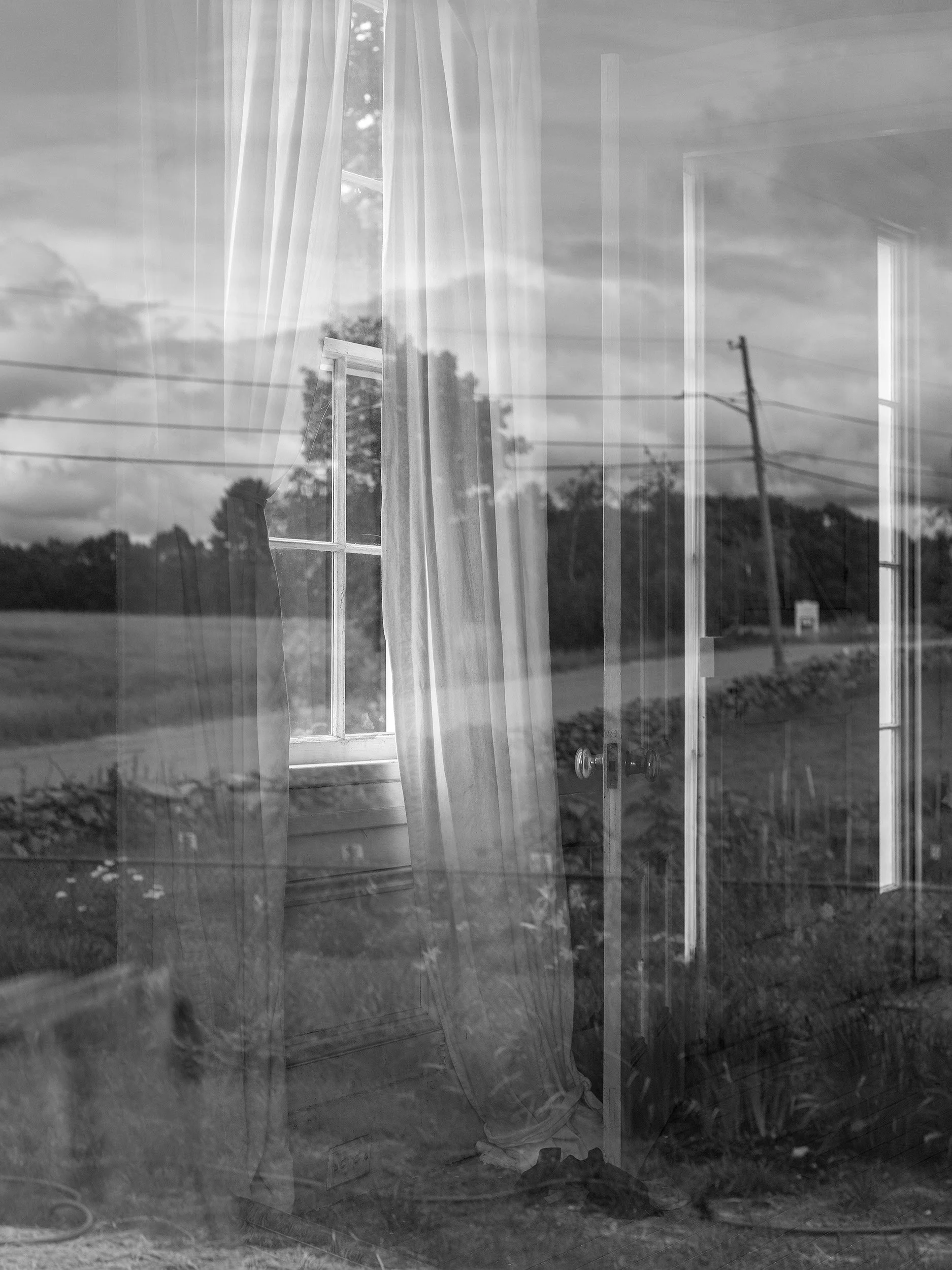
Image from The Long Shadow
LM: I have never thought about that before. What a beautiful concept. I think there are moments or images that feel like they speak to movement, or maybe speak to change better than others. And I wonder if sometimes when you intervene in a picture, if you might be trying to bring that element of movement into something that is otherwise silent and still. Do you ever do that consciously?
OE: I’ve reflected on this in the context of the work I created in 2023 during my residency at PhotoAccess in Canberra. I had a fixed plan for what I intended to make, but within a few weeks, I abandoned it. I wanted to find bewilderment in my pictures and in myself. I started using my camera as a yes tool. I allowed accidental circumstances and other factors to seep through the boundary of what I thought I should photograph. I let the viewfinder, the rectangle, turn into a puddle. I wanted to get muddy and messy, to create pictures that made little or no sense, to make images in resistance to what a ‘good’ photograph should look like or have. If you've ever seen kids, pigs, or dogs in a puddle, they're usually having the best time. I wanted to challenge most of what I’d been taught about photography and have fun. Residencies are great for that.
LM: It seems more like a process of receiving rather than taking. Just being open to things unfolding. Photography is often talked about in terms of capturing, shooting, and taking. But it’s nice to remember that that's not the way it has to be.
OE: The world will always make overtures to us. I was just thinking about Mary Ruefle, the poet, who wrote about taking a little pair of scissors to the world and snipping away. I do that with my cameras all the time.
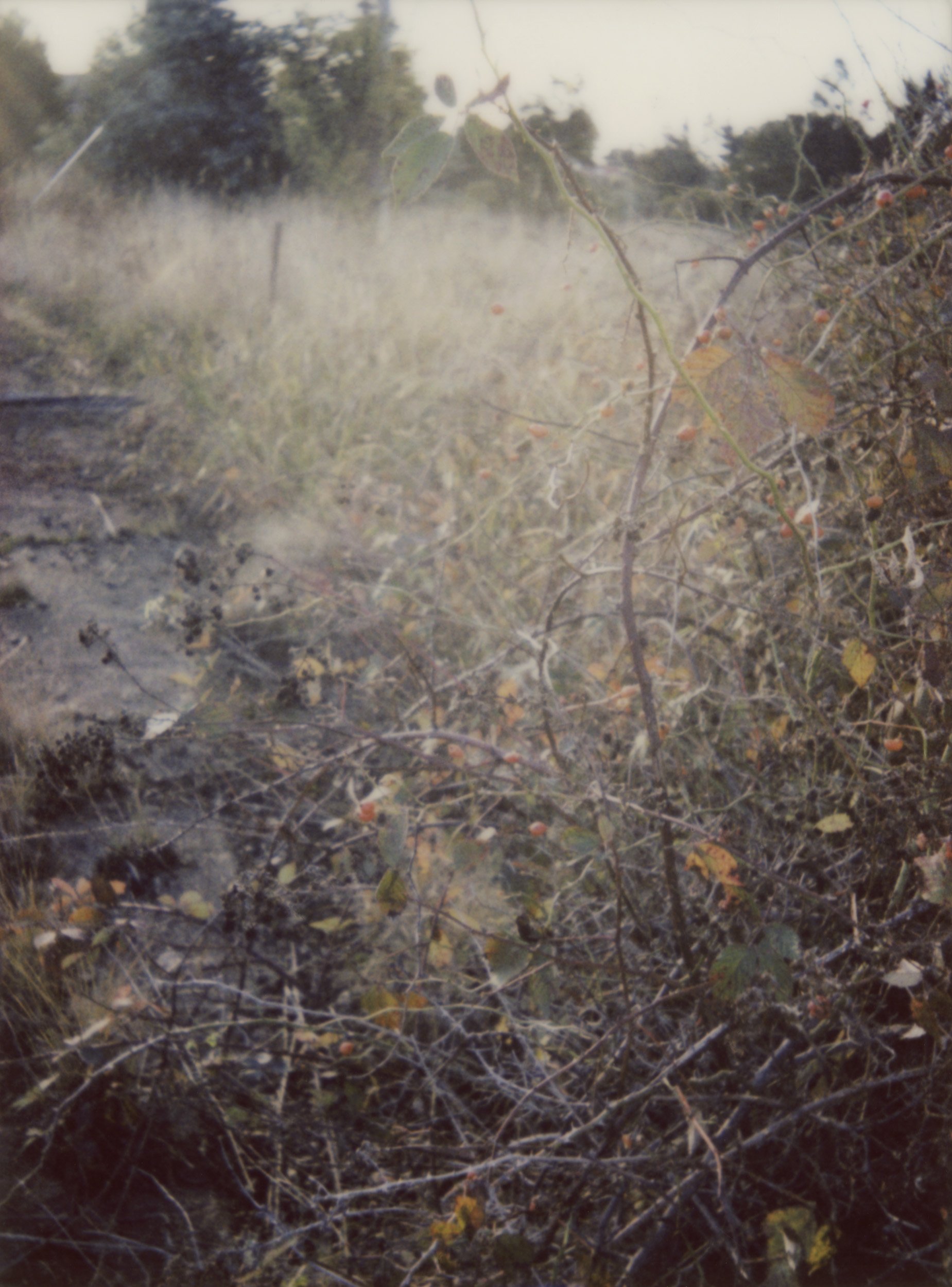
Image from To Be Developed, To Be Continued
LM: Speaking of overtures, you have a new body of work out, which I would love to talk about.
OE: The project, now a book titled ‘To Be Developed, To Be Continued,’ includes work from that residency at PhotoAccess. It could only have been created at that time; it’s a book of urges, not urgent, bittersweet images capturing my daughter as she moves from 12 to 13, and myself approaching 50. It reflects how we were shaped by our environment, by conversations we shared, and by learning to embrace newness as a family of two.
My daughter worked with me on Dairy Character and The Long Shadow. She was a subject, a witness, a companion, a photographer, a critic, and here, a child becoming an adult. We have childhood taught or conditioned out of us so early and so quickly, and some of the changes she was experiencing were only visible to me because I was holding a camera. I began to think about why these changes are more significant than others—why turning 13 is a big deal or turning 40 or 50 is significant. What does it mean to be a girl growing up, a woman aging? What constitutes a milestone? Are we ever too young or too old for anything—what does that look like, and can I photograph it? I’m not sure I was in charge of making the work. It was making me.
LM: I love that.
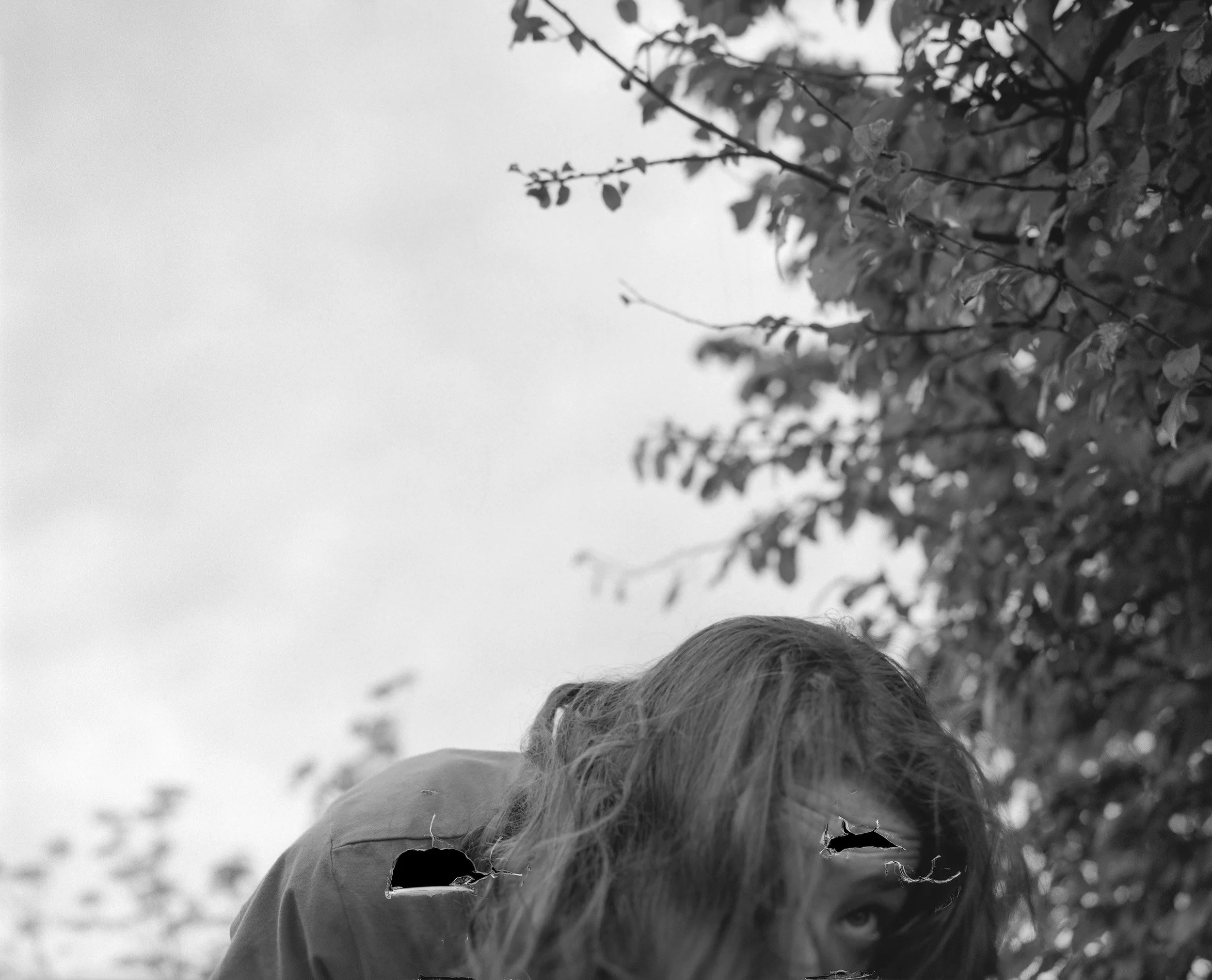
Image from To Be Developed, To Be Continued
OE: I'm trying to find a folder of images to show you. I divide my work into little folders: Odette favorites, Odette okayish, Odette never-ever, Odette riffraff…
LM: The riffraff! Do you have any images from To Be Developed, To Be Continued that you’d like to discuss?
OE: This is a good example of a picture that isn’t perfect but feels just right for the project theme. Flocks of birds used to pass over a field near our apartment every late afternoon. My daughter was sitting in the tall grass, and she stood up in front of my camera just as I was about to photograph the birds. I accidentally clipped the film in the wrong spot after processing it, but the marks made it look like she had an exaggerated eyebrow and a chip on her shoulder. I couldn’t have asked for a better unexpected moment. I am better when I fail.
My daughter and I were building sculptures from fruit, sticks, and other found objects in the field for fun, and I’d photograph the process, not the finished sculpture. I think it’s because it felt like we were rebuilding ourselves, and I wanted to document the process of creating or maybe reconstructing our sense of self. I like photographing the scaffolding rather than the finished piece. This is such a flawed picture, but the wrongness makes it great.
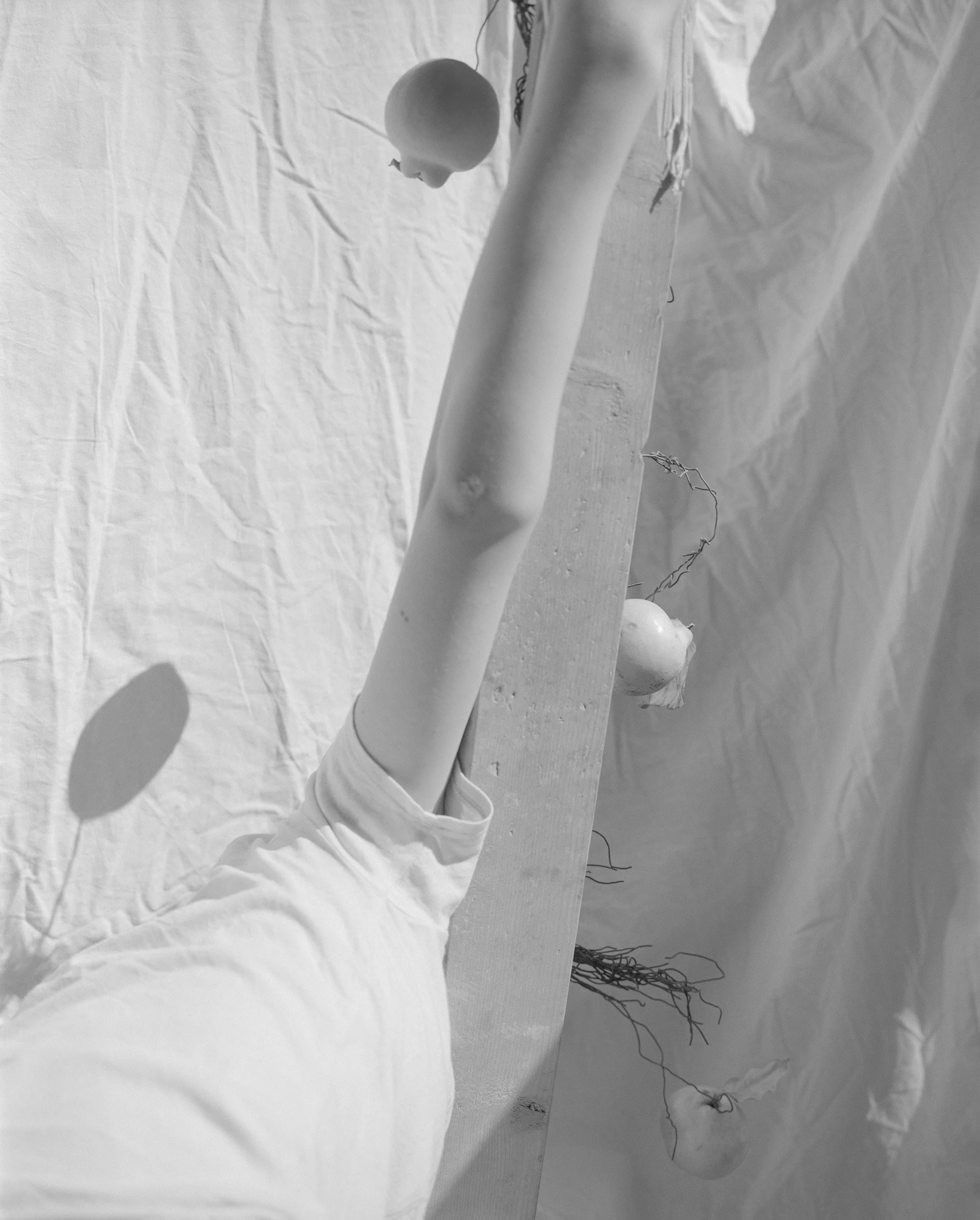
Image from To Be Developed, To Be Continued
LM: I agree. I love it.
OE: Life is a test strip, the thing before the thing, which is probably why I love test strips.
LM: There’s something about this idea of making the wrong picture that is now stuck with me. Like, what is the wrong picture?
OE: That’s a great question. I was annoyed when I saw this picture. I have last-frame failures from breakfast to sundown; almost every great picture I take is the last frame. But the longer I looked at it, I fell in love with the gummy strip down the left, like a curtain of despair threatening the photograph. And I thought, well, that’s me, Odette, you are the gummy strip, your daughter is the magic happening off to the right of the image.
LM: Wow.
OE: And this would happen repeatedly. My frustration with not being able to build the photograph I wanted, and then, over time, accepting the flaws as part of creating more honest images.
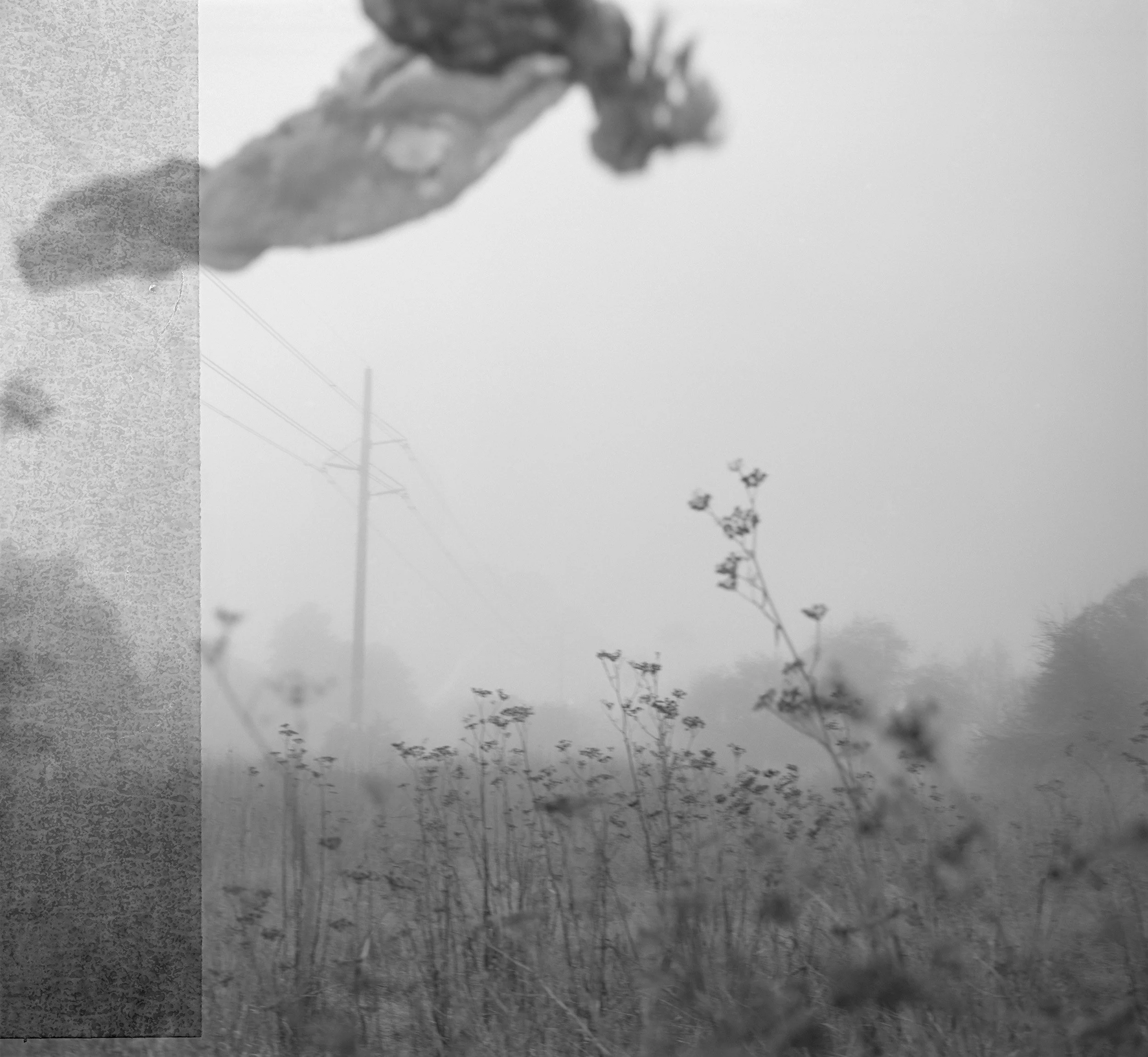
Image from To Be Developed, To Be Continued
LM: I’m struck by the way your pictures never portray the face or body as fully formed. I think that's what is amazing about it.
OE: A face offers us only part of a story, no more than a torso, a foot, or a shoulder. I’ll die happy if I’m never fully formed as an artist or mother and remain somewhat faceless. I’d rather be a punctured negative or test print bumping against the corners of the big tray in the final wash.
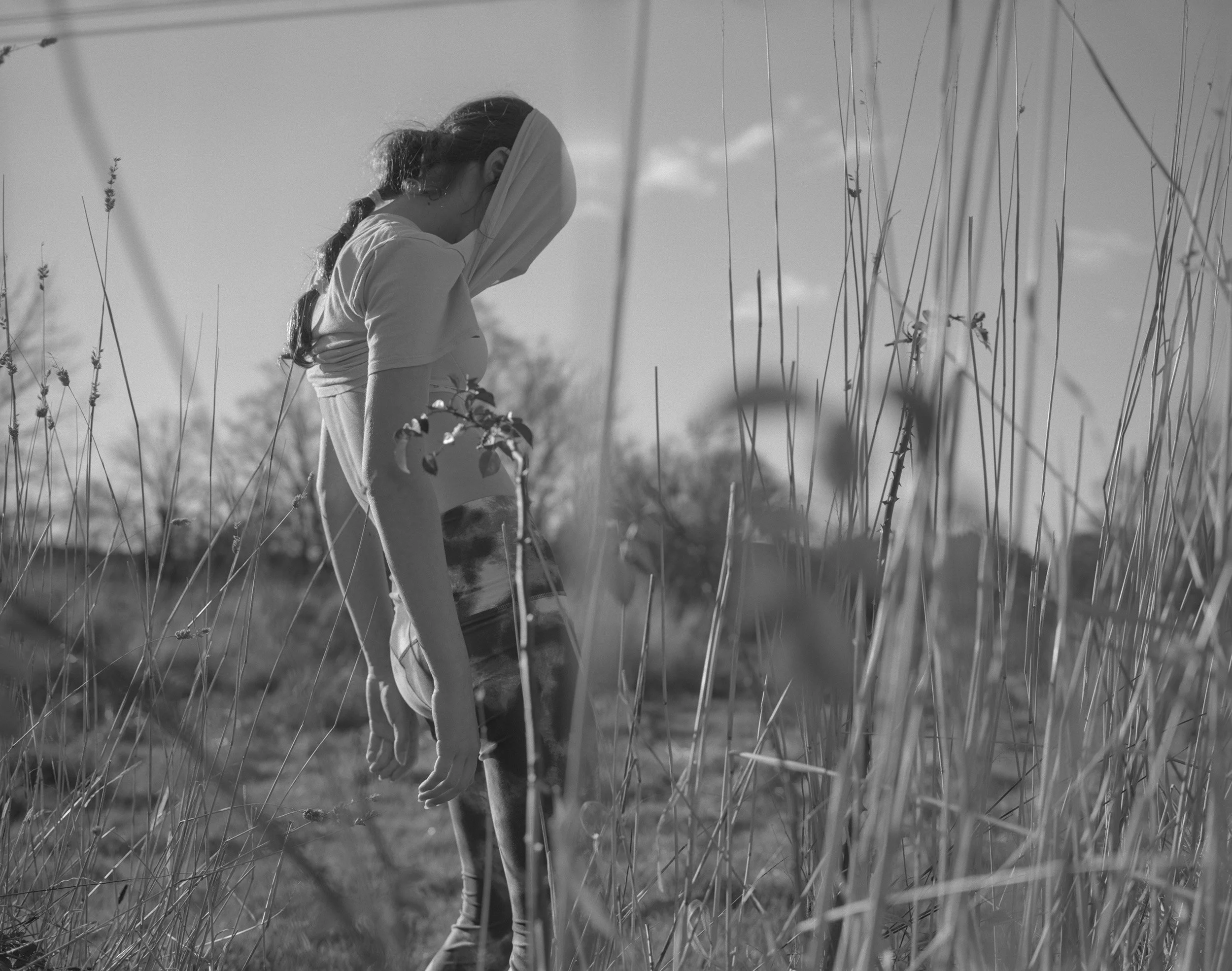
Image from To Be Developed, To Be Continued
LM: Yes! Always developing.
OE: None of the pictures were posed; she’s just doing her thing, I’m doing mine, we’re messing around, laughing. I wasn’t even thinking about composition. Sometimes I didn’t even bother focusing the camera. I wanted to see the moment, not the photograph as it was being made.
LM: And that’s the beauty of play. It’s all about what happens when you go out and you just decide to let things happen.
OE: Speaking of serendipity, what helped with editing and sequencing were the words of writer Season Butler and her book Cygnet, which I found in a small free book library while walking home from PhotoAccess one afternoon. It’s a story about a girl resisting adulthood who lives on a tiny fictional island mostly inhabited by retirees. She lives alone and works as a photo retoucher, often examining old photographs. In the last chapter, chapter 13, she struggles with whether to stay or leave the island and what it means to say goodbye. I loved it, and after finishing the book, I reached out to Season to ask if she would let me use some of her words for my project. She very kindly agreed.
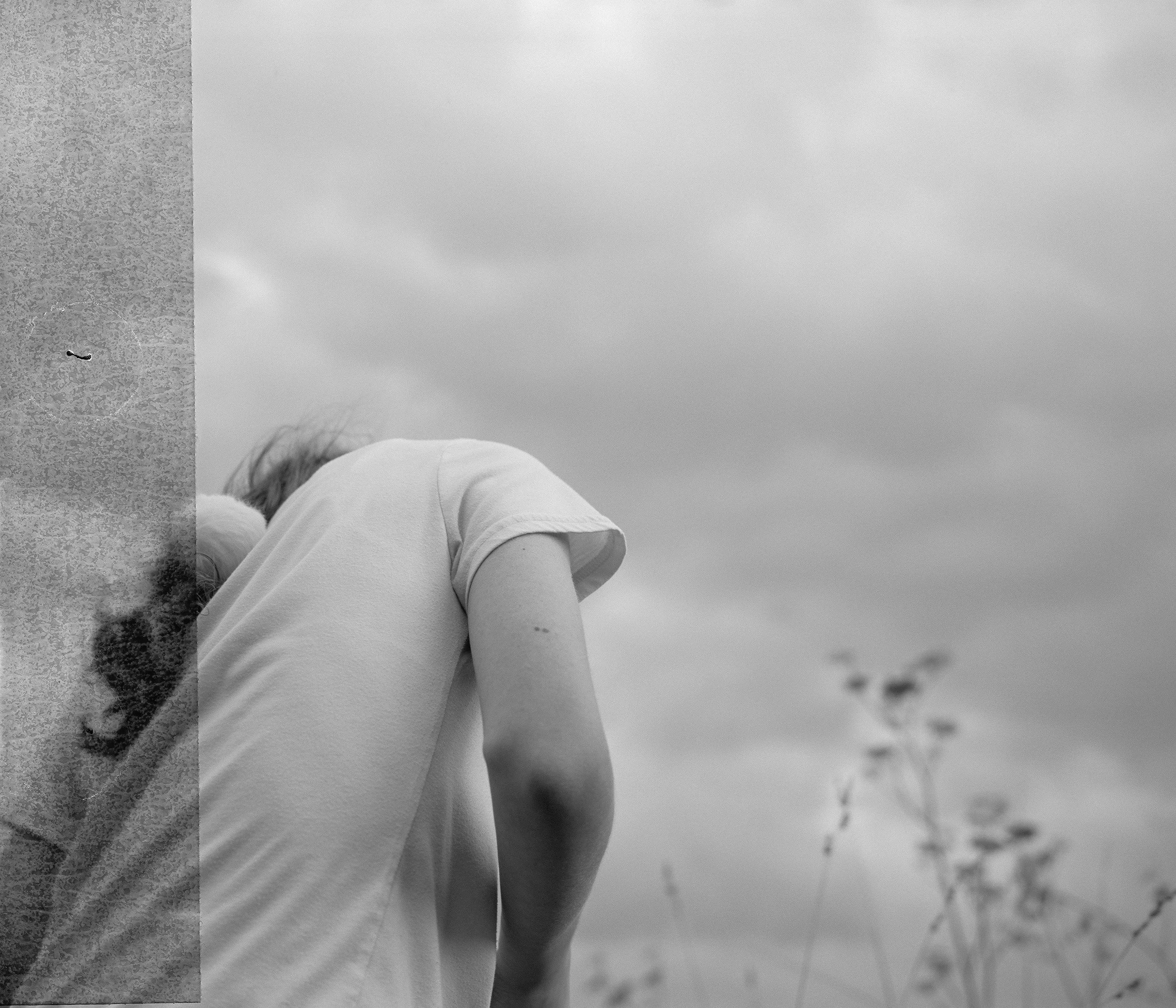
Image from To Be Developed, To Be Continued
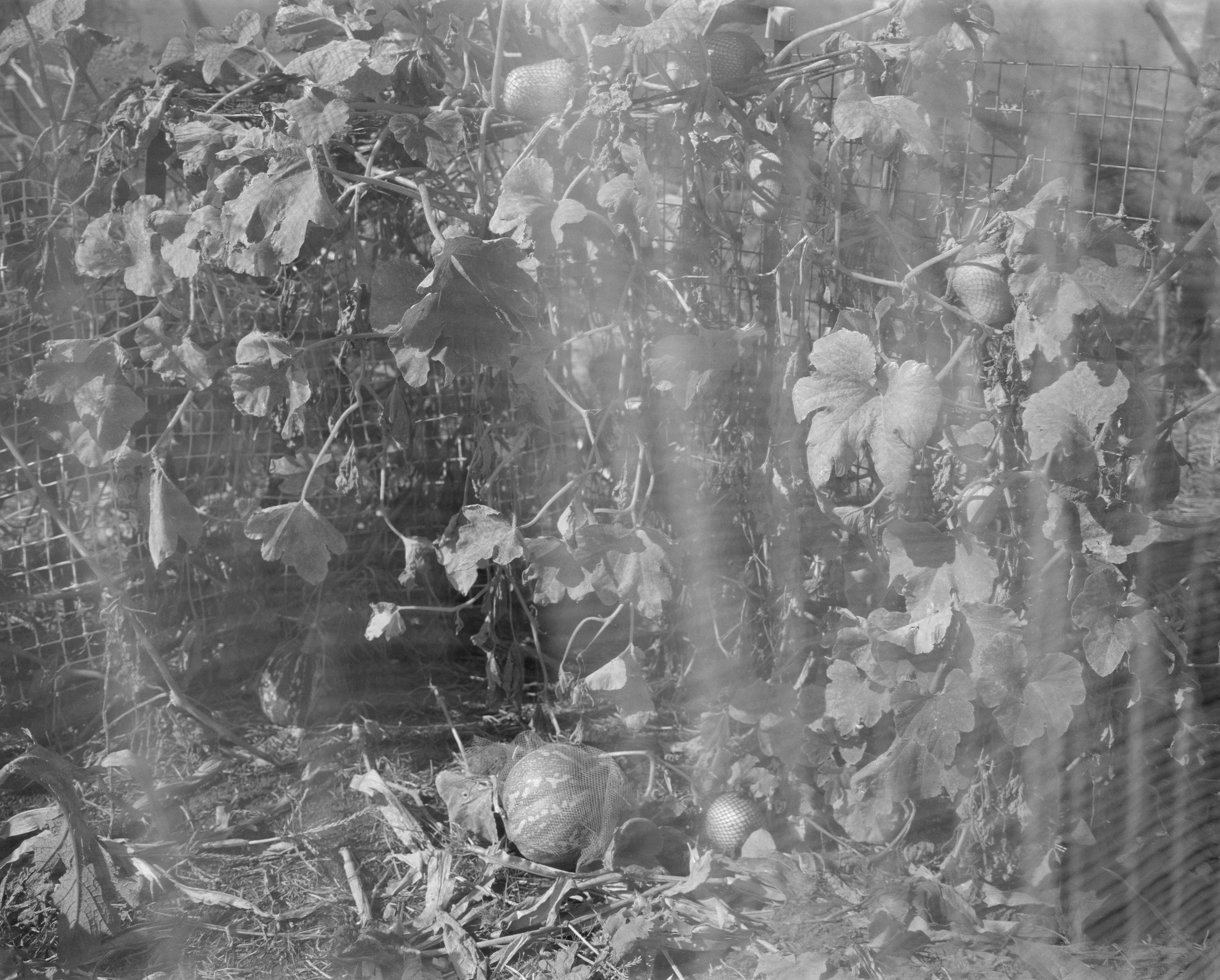
Image from To Be Developed, To Be Continued
LM: That's amazing. Where did you take the photographs?
OE: They were all made in and around the inner south of Canberra, within a few miles of where my daughter and I lived for six months.
LM: What came to my mind just now is that these images feel like a really good day, or like a memory while it is happening.
OE: That’s high praise, thank you.
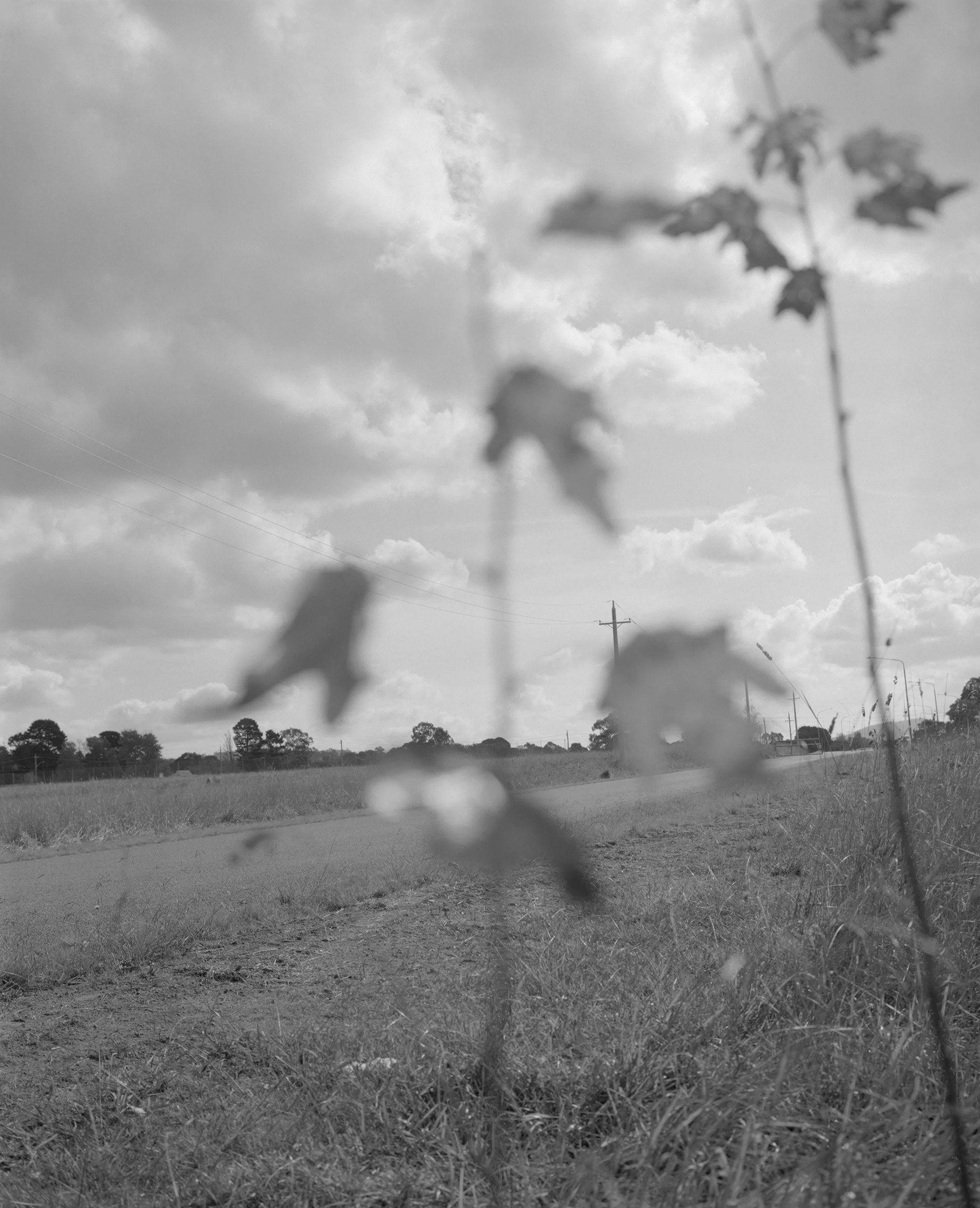
LM: And I get the sense of a kind of shifting mutability, or the awareness of things always being in flux. The ability to capture that predicament–I find it really difficult to do, and I feel it in all of these pictures. Odette, these are stunning.
OE: Thank you. I’ve been fortunate to work with talented minds and good eyes—Matt Dunne at Tall Poppy Press, the team at PhotoAccess, designer Cara Buzzell, writer Season Butler, and my daughter. It’s been a rewarding kind of struggle, not with the process or the pictures themselves, but with the lived experiences that come before the pictures. What happens before ‘Once Upon a Time’ always feels like a struggle to me.
LM: Did you find that with a lot of these pictures it took time for you to like them?
OE: Yes, and there are still some I’m struggling with, maybe because they feel cut out of me, my daughter, or our relationship in some way.
LM: For what it's worth, that made me feel a lot in ways I can't quite put into words, but it feels very cut open and out there.
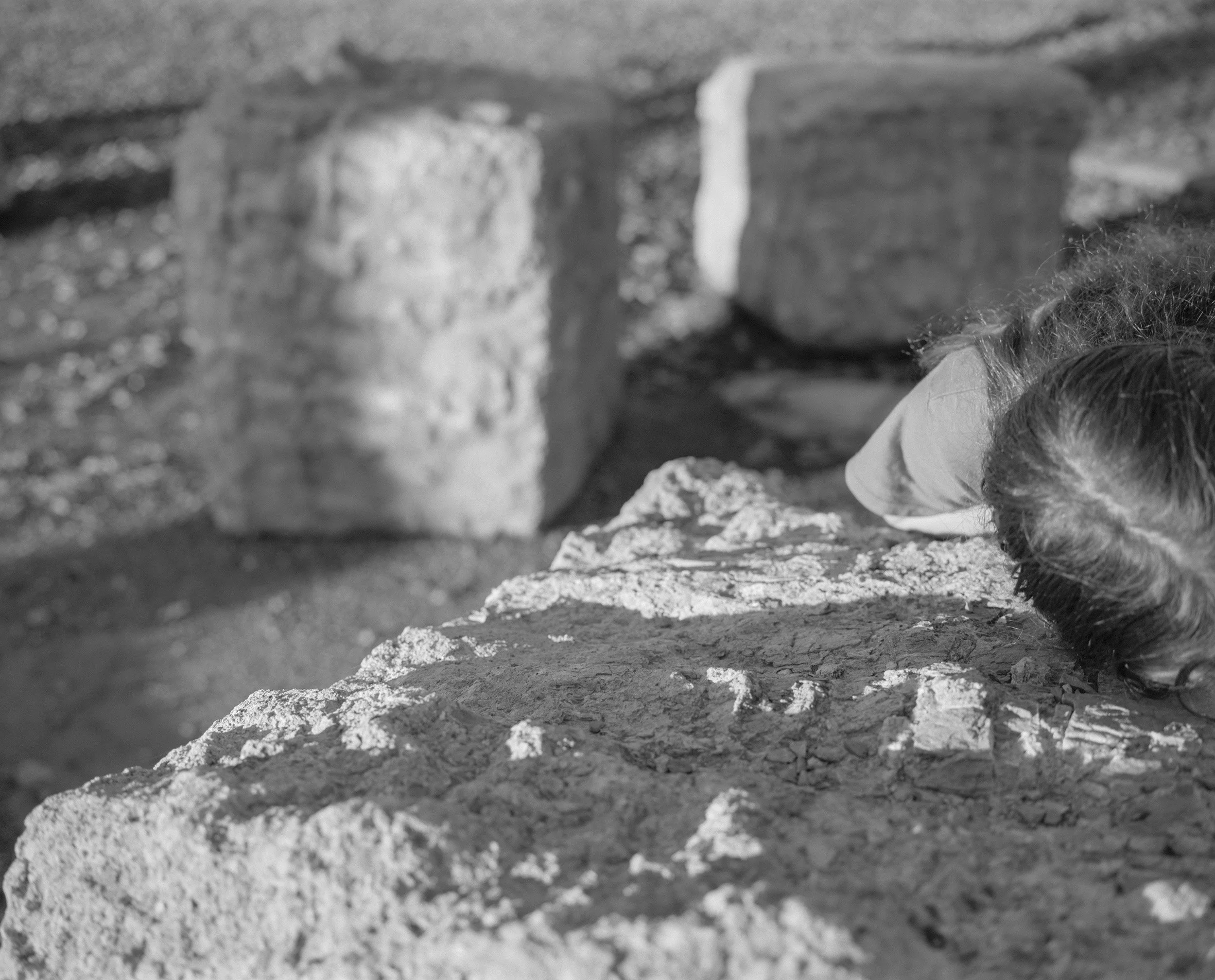
Image from To Be Developed, To Be Continued
OE: That's great: cut open.
LM: Yes! It’s not denying anything. I'm a fan. And I think if you feel not ready it's not necessarily a bad thing. It just might be a sign that it's working.
OE: I feel more comfortable with uncertainty about my work than I did ten years ago. I tell my students, "Live your lives like you’re having open-heart surgery.” Your heart is still beating, but someone else is working on you. Let them, because you will be better for it. The recovery might not be pretty or smooth, but you’ll live better if you let the world work on you.
LM: How stunning. Let the world work on you. I think that’s a perfect place to end. Odette, thank you so much for chatting with me today. This has been deeply inspiring.
OE: Likewise, thank you, Linda.
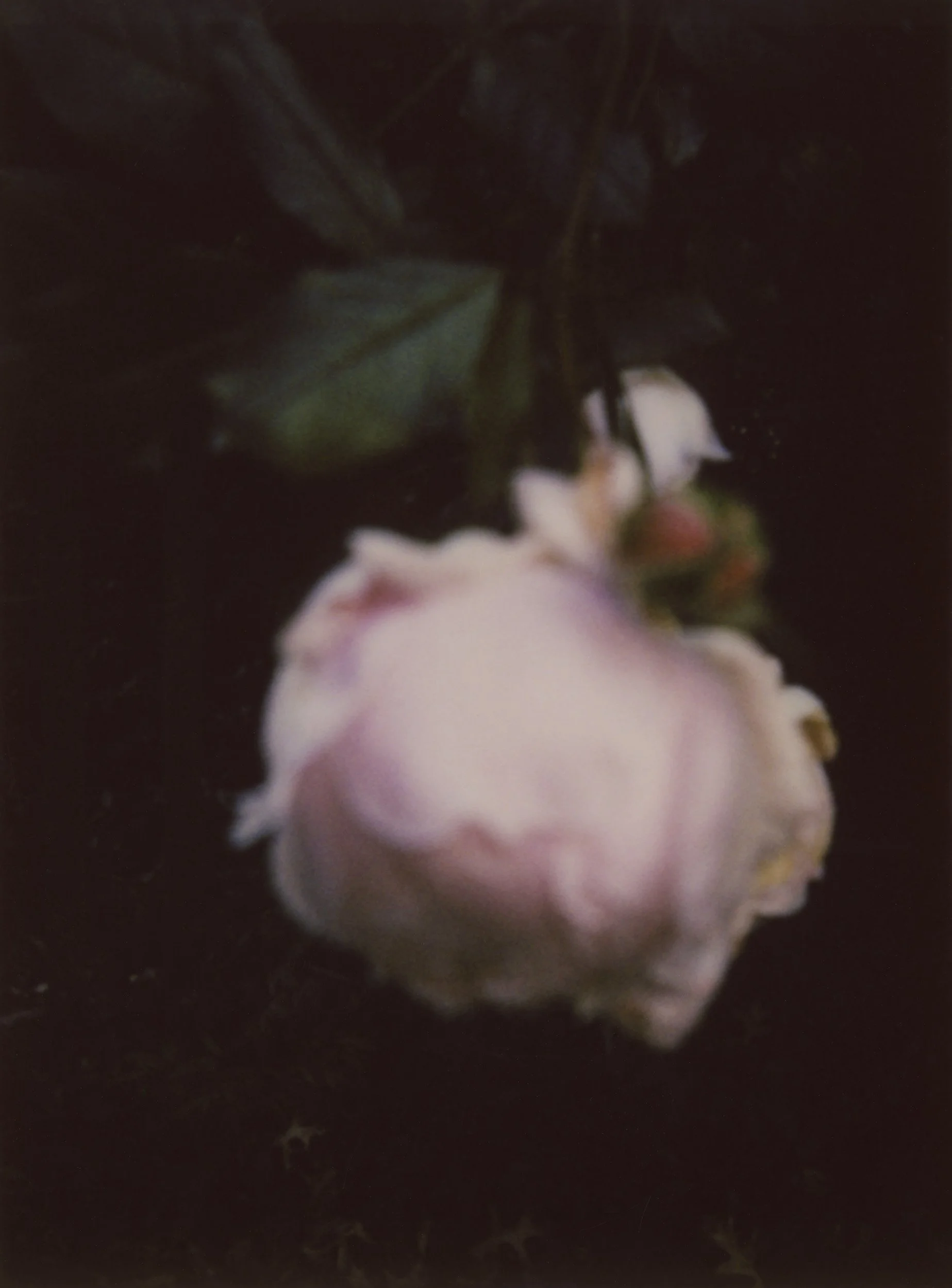
Image from To Be Developed, To Be Continued
© Odette England
Odette Elix England is an artist and writer. She is a 2022 Guggenheim Foundation Fellow and has received grants and awards from the Robert Rauschenberg Foundation, Puffin Foundation, and Anonymous Was a Woman, among many others. She has published six books and will shortly release her first novella Isn’t X Beautiful. Elix England received her MFA in Photography in 2012 and her Ph.D. in 2018. She teaches at the Rhode Island School of Design and at Brown University while working on her second novella, Once I Was A Photograph. See more at www.odetteengland.com